

More news on this day
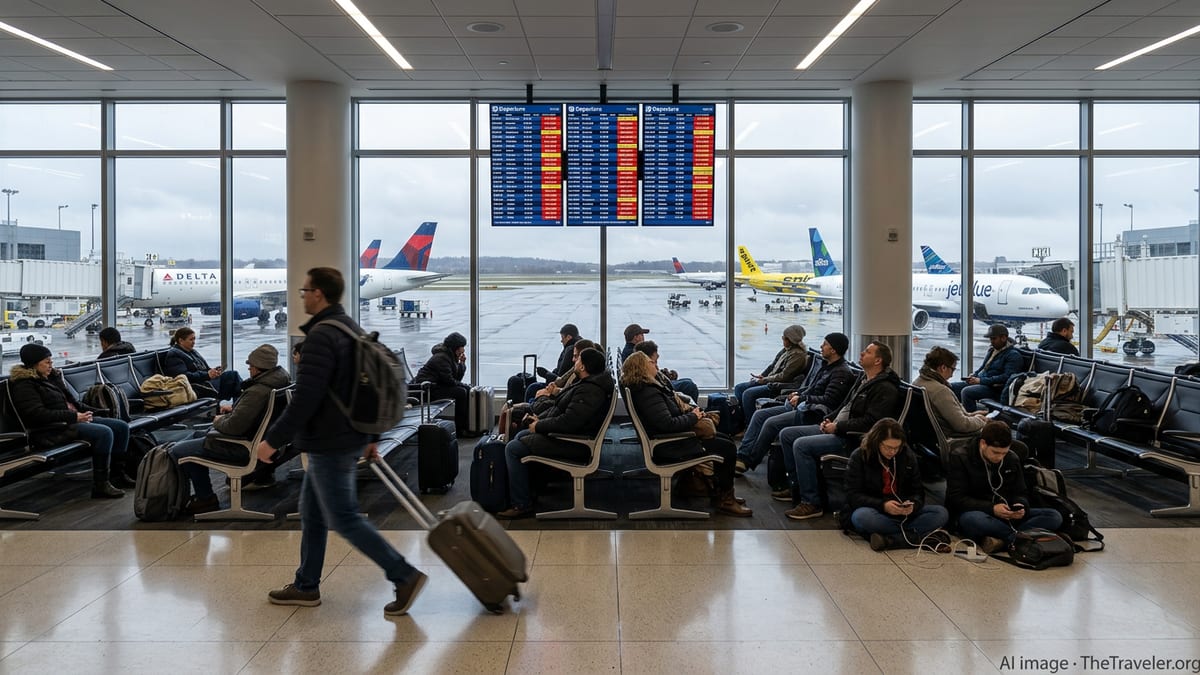
Hundreds of travelers at Boston Logan International Airport faced significant disruption as 276 flight delays and 58 cancellations rippled across the network, affecting key routes to New York, Washington D.C., Miami, London and other major U.S. cities on one of the busiest travel periods of the year.
Get the latest news straight to your inbox!
Wide-Ranging Impact Across Domestic and Transatlantic Routes
The latest disruption at Boston Logan has affected a broad mix of domestic and international services, with Delta Air Lines, JetBlue Airways and Spirit Airlines among the most affected carriers. Publicly available flight-tracking and operations data show that the combined total of 276 delayed departures and arrivals and 58 cancellations translated into hours of uncertainty for passengers across the terminal complex.
The heaviest concentration of disruption has been reported on high-frequency shuttle corridors linking Boston with New York–area airports and Washington D.C., where dense schedules leave operators with limited margin to recover when problems arise. Flights to and from Miami, a key winter and spring leisure gateway, also experienced extended departure queues and rolling schedule changes.
Transatlantic services from Boston to London were not spared, with delays and select cancellations compressing available seats on remaining departures. Travelers connecting through Boston onto European and West Coast routes encountered missed connections and rebookings, underscoring how quickly local disruptions at a major hub can ripple across an airline’s wider network.
The concentration of affected flights on popular business and leisure routes meant that terminals saw a mix of stranded families, short-haul commuters and long-haul international passengers all seeking scarce alternative options, especially during peak evening departure banks.
Delta, JetBlue and Spirit Among Carriers Struggling to Recover
Delta, JetBlue and Spirit, all significant players in the Boston market, have been at the center of the disruption. Publicly available airline-status pages and flight-tracking platforms show that the three carriers together accounted for a large share of the 276 delays and 58 cancellations, particularly on short- and medium-haul routes in the U.S. Northeast and along the East Coast.
JetBlue, which maintains one of its largest operations at Boston Logan, saw recurrent schedule adjustments on shuttle services to New York and key leisure routes to Florida. Recent months have already highlighted how tightly scheduled turn times and crew rotations at major Northeast airports can amplify the effects of even modest operational issues, and the latest wave of disruptions followed a similar pattern.
Delta and Spirit services were also hit, with multiple rotations between Boston and major hubs including New York, Washington D.C. and select Midwest and Southern cities experiencing rolling delays. Published operational data and prior disruption patterns indicate that once early services in the day run late, aircraft and crews can quickly fall out of position, making it challenging for airlines to reset their operations without resorting to targeted cancellations.
While overall passenger volumes through the airport have continued to grow, analysts note that staffing, aircraft availability and tightly packed schedules across the U.S. system leave limited buffer when adverse conditions or system strains emerge, increasing the likelihood of clusters of delays such as those seen at Boston.
Weather, Airspace Constraints and Runway Restrictions Add Pressure
Recent coverage of Boston Logan operations has highlighted a combination of factors that frequently contribute to disruption, including periods of unsettled weather, air traffic control programs in the crowded Northeast corridor and ongoing runway and airfield work. When these elements converge on a busy travel day, the result is often extended ground holds and lengthy departure queues.
Reports indicate that low visibility, gusty winds or winter conditions can quickly reduce the airport’s usable runway capacity, slowing arrivals and departures just as peak-hour traffic builds. As aircraft wait for deicing, improved visibility or more favorable wind conditions, departure banks begin to slide, and airlines are forced to reshuffle aircraft and crews across the day’s schedule.
Airspace constraints over the broader Northeast, including flow-control measures affecting the New York metropolitan area and Washington D.C., have also been noted in recent FAA status updates as regular contributors to delays at Boston. When ground delay or ground stop programs are issued for major destination airports, flights waiting to depart from Boston face additional holds, further compressing departure windows.
Runway and taxiway maintenance work, which is essential to long-term safety and capacity, can temporarily concentrate traffic on fewer movement areas, making it more difficult for controllers and airlines to recover once significant delays have built up. In such conditions, operators sometimes opt to preemptively thin schedules at the most congested hours, which can be reflected in the type of cancellation totals seen in the latest disruption.
Knock-On Effects for Passengers Across the U.S. Network
The disruption at Boston Logan has had knock-on effects well beyond New England. With flights to New York, Washington D.C., Miami and other major cities heavily affected, passengers found that missed connections cascaded into further rebookings across airline networks throughout the day.
Travelers on early morning flights that departed late from Boston often arrived too late to make onward connections, particularly to the Midwest, the West Coast and transatlantic gateways. As remaining seats on alternative services filled, some passengers were rebooked through secondary hubs or faced extended layovers, stretching what should have been same-day itineraries into overnight or multi-day journeys.
Published aviation analyses note that the U.S. air transport system is highly interconnected, and that disruptions concentrated at one or two key nodes in the Northeast can lead to schedule adjustments as far away as the West Coast and Europe. Aircraft and crew assigned to later flights may not reach their next departure cities on time, forcing airlines to adjust rotations well into subsequent days.
The clustering of delays and cancellations at Boston also placed pressure on customer-service and baggage-handling operations. Even when airports remain orderly, large numbers of rebookings, baggage reroutes and schedule changes can increase processing times at check-in counters and gates, lengthening the overall disruption for affected travelers.
What Travelers Can Do When Disruptions Spike
Consumer advocates and travel experts regularly advise passengers to take a proactive approach when extensive delays and cancellations emerge at a hub such as Boston Logan. Publicly available guidance suggests monitoring flight status through official airline channels and the airport’s information systems, and taking advantage of self-service rebooking tools where available to secure alternatives more quickly.
When operational problems are concentrated on specific routes, such as Boston to New York or Washington D.C., passengers sometimes find more options by considering nearby airports and alternative routings. In periods of widespread disruption, however, analysts note that seat availability can tighten across entire regions, making early action particularly important.
Recent federal transportation resources also emphasize that passengers should familiarize themselves with airline-specific service commitments during delays and cancellations, and with applicable consumer-protection frameworks in the United States and, for transatlantic services, in the United Kingdom and European Union. Understanding when meals, accommodation or refunds may apply can help travelers make quicker decisions in the midst of a rolling disruption.
As Boston Logan continues to manage high traffic volumes in a constrained Northeast airspace environment, observers expect periods of concentrated disruption to remain an ongoing challenge, particularly during peak travel seasons and adverse weather patterns, making preparation and flexibility key for anyone planning to pass through the airport.