

More news on this day
Thousands of passengers were left stranded across New Zealand and Australia today as severe disruption rippled through major airports, with dozens of flights cancelled and hundreds more delayed across Auckland, Christchurch, Sydney, Melbourne and regional hubs.
Get the latest news straight to your inbox!
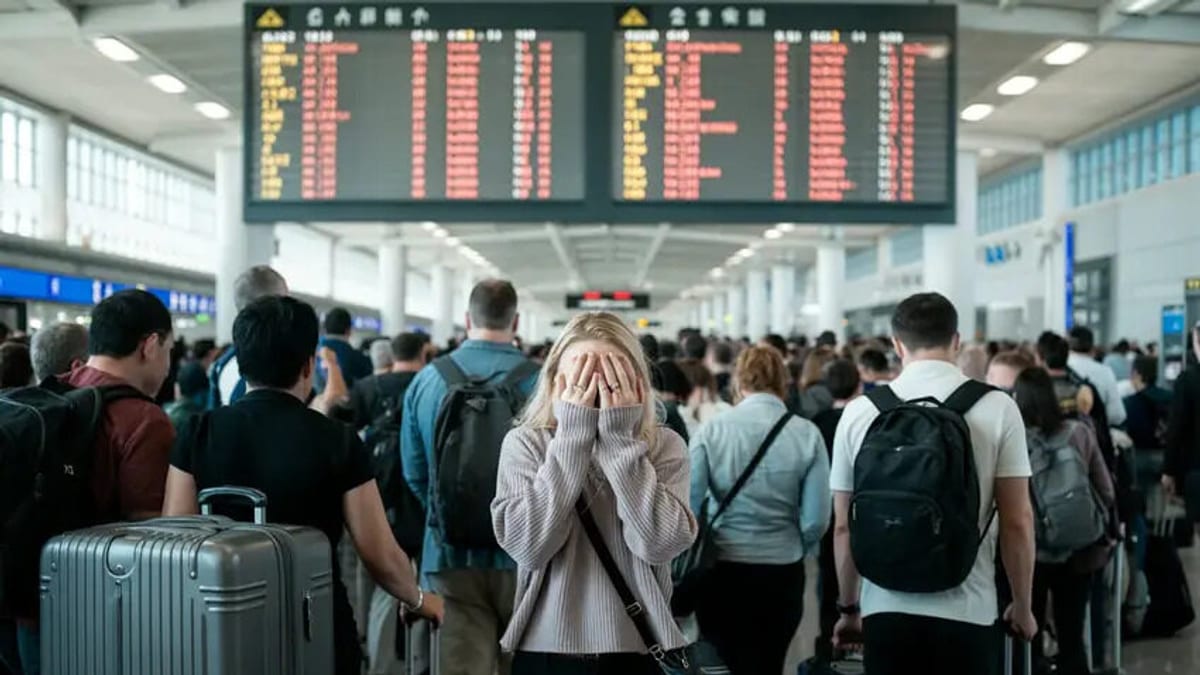
Image by Travel And Tour World
Widespread Cancellations Hit Trans-Tasman Corridors
Airlines operating between New Zealand and Australia faced acute operational pressure as at least 74 flights were cancelled and more than 600 services delayed, according to live tracking data and local media tallies. The disruption concentrated on the busy trans-Tasman corridors linking Auckland, Christchurch, Wellington and Queenstown with Sydney and Melbourne, alongside knock-on impacts at regional gateways.
Publicly available flight boards showed a succession of scrubbed morning and afternoon departures, particularly on Auckland–Sydney, Auckland–Melbourne and Christchurch–Melbourne routes. The cancellations removed thousands of seats from circulation on one of the Southern Hemisphere’s most heavily trafficked international markets at the tail end of the summer travel period.
The wave of schedule changes came on top of elevated cancellation rates already affecting some trans-Tasman routes in recent months, where official performance reports have pointed to weather volatility, tight aircraft utilisation and crew resourcing as recurring pressure points. Today’s events amplified those underlying strains, leaving passengers facing extensive queues at ticket desks and long waits for alternative options.
Compounding the disruption, a series of delayed turnarounds meant aircraft and crews were arriving late into key hubs, creating a rolling backlog across afternoon and evening banks of flights. In practical terms, many flights still operated but departed far behind schedule, further constraining available capacity for stranded travelers hoping for same-day rebooking.
Impact at Auckland, Christchurch, Sydney and Melbourne
Auckland Airport, the primary international gateway for New Zealand, experienced some of the heaviest operational turbulence. Live departure boards indicated clusters of cancellations on short-haul links to Australian cities and domestic connections to hubs such as Wellington, Queenstown and regional centers, limiting options for both international and internal onward travel.
Christchurch, a critical South Island hub, also saw multiple cancellations and extended delays, particularly on routes to Melbourne and Sydney. These services are essential not only for tourism but also for business and family travel between the South Island and Australia, meaning today’s cutbacks had outsized effects on passengers with time-sensitive commitments.
Across the Tasman, Sydney and Melbourne recorded substantial knock-on disruption. As morning services from New Zealand arrived late or not at all, afternoon departures in both directions were rescheduled or cancelled outright. Congestion in terminals grew as travellers from long-haul services, including those connecting from Asia, the Middle East and North America, struggled to secure replacement seats toward New Zealand.
Operational data from recent months has already highlighted congestion patterns at major Australian airports during peak seasons, with tight turnaround windows leaving limited buffer when irregular operations occur. Today’s cascading delays underscored how quickly these complex networks can become imbalanced when a significant cluster of flights is removed or pushed back in a short timeframe.
Flag Carriers and Global Airlines Caught in the Gridlock
The disruption affected a broad mix of carriers, with Qantas, Air New Zealand, Japan Airlines, Emirates and several regional and low-cost airlines all facing significant schedule changes. As the primary flag carriers for Australia and New Zealand, Qantas and Air New Zealand bore much of the visible impact on trans-Tasman routes, where they operate multiple daily frequencies between the main centers.
Publicly available information indicates that long-haul operators such as Emirates and Japan Airlines also encountered flow-on challenges. When feeder services between New Zealand and Australian hubs are cancelled or heavily delayed, passengers booked on through itineraries can miss onward flights to Europe, Asia or the Middle East, triggering complex rebooking exercises and extended layovers.
Regional centers such as Nelson and other mid-sized airports in New Zealand reported schedule changes as aircraft and crews were repositioned to support constrained capacity on trunk routes. When major hubs experience strain, regional links are often adjusted to provide flexibility, leaving smaller communities particularly exposed to last-minute timetable shifts.
Industry performance statistics over the past year have already shown a fragile balance between demand recovery and available capacity in the region. Many airlines have been operating close to their limits on popular routes, meaning even modest operational shocks can create outsized disruption across multiple carriers and markets.
Thousands of Passengers Facing Missed Trips and Overnight Stays
By late afternoon, passenger accounts across social platforms described crowded terminals, long queues at customer service counters and uncertainty over replacement flights. With 74 cancellations and more than 600 delays recorded, the number of disrupted journeys ran well into the thousands, spanning holidaymakers, business travelers and people connecting to family events or medical appointments.
Travelers on point-to-point trans-Tasman itineraries often faced same-day rebooking onto later departures, but in many cases seats were unavailable, pushing journeys back by 24 hours or more. For those connecting onto long-haul services in Sydney and Melbourne, missed connections meant complex rerouting via alternative hubs or overnight hotel stays.
New Zealand’s own aviation statistics have highlighted that even on normal days, weather events and air traffic constraints can cause measurable ripples across the domestic network. When those disruptions coincide with busy weekends or school holiday travel, the practical experience for passengers can involve extended waits, reissued boarding passes and unplanned accommodation costs.
Travel insurers and consumer advocates have frequently reminded passengers that compensation or assistance varies depending on whether delays are caused by controllable operational issues or external factors such as severe weather or air traffic restrictions. Today’s mix of causes means entitlements will likely differ case by case, adding a further layer of complexity for affected travelers.
Ongoing Recovery and What Travelers Can Expect Next
By evening, airlines were working to restore regular schedules, but the sheer volume of cancellations and delays meant that operational recovery was expected to extend into upcoming days. Aircraft and crews displaced by today’s events will need to be repositioned across multiple cities, and some lightly booked flights may be consolidated to free up capacity for passengers who were left behind.
Past episodes of widespread disruption in New Zealand and Australia have shown that network imbalances can persist even after weather or technical triggers ease, as carriers gradually realign aircraft rotations and crew rosters. Passengers scheduled to travel on affected routes in the coming 24 to 48 hours are being advised, in public guidance, to monitor booking tools and airport boards closely.
Analysts tracking regional aviation trends note that the sector in Australasia remains in a delicate phase, with persistent staffing challenges, aircraft maintenance cycles and infrastructure works at some airports limiting resilience to shocks. Episodes such as today’s highlight the ongoing tension between robust demand for travel and the operational capacity required to deliver it reliably.
For now, thousands of passengers remain in limbo across terminals from Auckland to Melbourne, waiting for space on re-timed services as airlines navigate one of the most disruptive operational days in the region’s skies so far this year.