

More news on this day
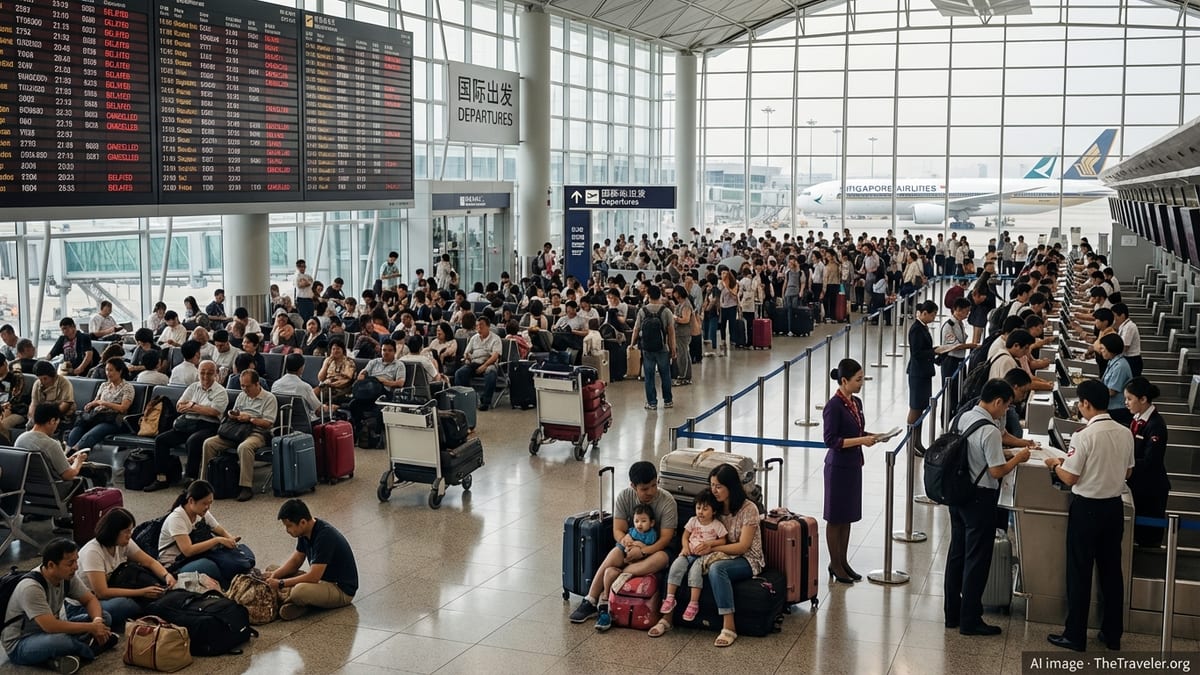
Surging visitor arrivals in Malaysia and Singapore at the start of 2026 are signaling a powerful new phase in Southeast Asia’s tourism recovery, as fresh data, major events and infrastructure investments combine to redraw regional travel flows.
Get the latest news straight to your inbox!
Malaysia’s Visitor Surge Sets the Pace
Malaysia has entered 2026 with clear momentum, as international arrivals continue to climb despite geopolitical and economic headwinds. Published figures for March indicate that the country welcomed more than 2.8 million international visitors in the first 26 days of the month, a modest but significant increase on the same period in 2025. Publicly available information shows that arrivals from within Southeast Asia remain the backbone of Malaysia’s tourism base, supported by improved air and land connectivity.
Analysts tracking the sector note that this near-term strength follows a solid full-year performance in 2025, when Malaysia is estimated to have attracted more than 26 million visitors, putting it firmly back among the region’s leading destinations. Research coverage from Malaysian financial institutions describes tourism as one of the country’s standout post-pandemic recovery stories, with growth driven by visa relaxations, competitive airfares and the rapid return of short-haul regional markets.
The government-backed Visit Malaysia Year 2026 campaign is adding further momentum. Strategy papers and budget notes indicate an ambitious target of around 47 million international arrivals, supported by promotional spending, route expansion and destination development across both peninsular and East Malaysia. For travelers, this push is translating into more frequent flights, competitive package pricing and a widening mix of urban, coastal and nature-based experiences.
Recent commentary also highlights the outsized role of Singaporean travelers in Malaysia’s numbers. Cross-border trips by road and rail contribute heavily to the arrival totals, with repeat same-day visits common along the causeway. While this inflates headline statistics, it also underscores how tightly connected the two markets have become and how integral weekend and short-break traffic now is to Malaysia’s retail, dining and entertainment sectors.
Singapore Builds a Mega-Event Tourism Pipeline
Singapore, meanwhile, is leaning into its role as a high-yield gateway city, with tourism planners positioning 2026 as a record-setting year. Reporting by regional business outlets on updated forecasts from the Singapore Tourism Board indicates that the city-state is targeting up to 18 million visitor arrivals in 2026, alongside tourism receipts in the range of 31 to 32.5 billion Singapore dollars. Those goals build on a robust 2024, when arrivals climbed to around 16.5 million and tourism receipts reached new highs.
The growth strategy for 2026 is anchored in an unusually dense calendar of major events. Trade and consumer shows, global concerts, and high-profile sports fixtures are all slated to take place, including a sprint-format edition of the Formula 1 Singapore Grand Prix and large-scale entertainment residencies. Cruise tourism is another pillar, with industry coverage pointing to the deployment of a large new vessel homeported in Singapore and Disney-branded sailings that will radiate across Southeast Asian waters.
Changi Airport’s performance reinforces this trajectory. Aviation industry reports show that the hub handled close to 68 million passengers in 2024 and continues to narrow the gap with pre-pandemic volumes. Forward-looking plans for a new terminal and associated rail links are intended to lift capacity sharply over the coming decade, but even before those projects come online, the airport is using schedule additions and hub partnerships to funnel more traffic into Southeast Asia.
For travelers, Singapore’s strategy means a growing number of itineraries that combine high-energy urban stays with regional side trips. Frequent flights to secondary cities in neighboring countries allow visitors to pair a concert or convention in the city-state with beach, nature or cultural experiences elsewhere in the region, often within a single week.
Regional Recovery Accelerates Around Two Hubs
The broader Southeast Asian tourism outlook has brightened notably in early 2026, with Malaysia and Singapore increasingly at the heart of intra-regional flows. A recently released ASEAN tourism outlook report describes the region as “almost back to full recovery,” with intra-ASEAN travel again dominating overall visitor numbers. Market watchers observe that Malaysia and Singapore function as complementary hubs, channeling visitors onward to Thailand, Indonesia, Vietnam and the Philippines.
Aviation data from the International Air Transport Association for late 2025 and early 2026 points to steady growth in global passenger demand, with Asia Pacific carriers regaining market share. Air traffic volumes in the region are now sustained by a mix of returning long-haul routes and sharply expanding low-cost networks that stitch together secondary cities. This has made multi-stop journeys both more affordable and more flexible than in the immediate post-pandemic years.
Across Southeast Asia, new regional initiatives are also reshaping the policy environment. The ASEAN Sectoral Plan for Tourism 2026–2030, launched earlier this year, sets targets for more seamless cross-border travel, digitalized visitor services and diversified source markets. Public information on the roadmap emphasizes resilience, sustainability and community benefits, suggesting that headline arrival figures will increasingly be evaluated alongside environmental and social indicators.
For destination marketers, this environment rewards partnerships. Regional campaigns that bundle multiple countries into a single promotion, such as those spotlighting “concert tourism,” cruise corridors or heritage circuits, are gaining visibility. In this context, Malaysia’s value-focused positioning and Singapore’s premium brand are viewed as complementary rather than competitive, drawing in different traveler segments who often combine both on the same trip.
Key Travel Opportunities for 2026 Itineraries
For leisure travelers planning 2026 trips, these trends translate into concrete opportunities. The combination of relatively soft airfares, expanded seat capacity and dense event calendars in Singapore is creating favorable conditions for city breaks and stopover stays. Travel agencies and online platforms are promoting packages that tie in marquee concerts, sporting events or trade shows with curated dining and cultural experiences in established districts and emerging neighborhoods.
In Malaysia, the Visit Malaysia Year 2026 campaign is driving promotional offers that span beach resorts, highland retreats and nature-based adventures in Borneo. Industry briefings suggest that mid-range hotels and family-oriented attractions are particularly active in discounting, as operators seek to capture both regional visitors and long-haul travelers looking for better value than in some competing markets. Urban centers such as Kuala Lumpur, Johor Bahru and Penang are simultaneously emphasizing food tourism and cultural festivals to encourage longer stays.
Multi-country itineraries are another growth area. Improved air links between Singapore and secondary Malaysian cities, combined with low-cost flights onward to Thailand, Vietnam or Indonesia, make it feasible to visit three countries in a 10- to 14-day trip without excessive transit time. Travel consultants highlight routes such as Singapore–Johor–Kuala Lumpur combined with island destinations in Thailand or Indonesia as especially popular among younger, budget-conscious travelers.
Business travel and meetings are also benefiting from the rebound. Convention centers in both Malaysia and Singapore are reporting fuller calendars for 2026, with regional association meetings, incentive trips and large-scale corporate gatherings returning. This is expected to generate spillover demand for pre- and post-event leisure stays, particularly in nearby coastal and heritage destinations that can be reached within a short flight or overland journey.
Practical Considerations for Travelers
Despite the upbeat outlook, travelers are being advised by industry observers to plan carefully. While average airfares are expected to ease in real terms over 2026, peak periods around major events and regional holidays can still see sharp price spikes. Booking flights and accommodation well in advance remains important for securing preferred options, especially for high-demand weekends linked to concerts, sporting events or school breaks.
Visa facilitation remains a relative strength for the region. Malaysia’s recent moves to expand visa-free entry for key markets, including trial waivers for travelers from China and India, have been cited in research reports as important drivers of demand. Singapore continues to rely on its established air hub status and efficient border processing to keep transit times low. However, visitors are encouraged to monitor entry rules and travel advisories, as requirements can vary by nationality and may be adjusted in response to global events.
Another consideration is capacity pressure in popular hotspots. As arrivals move closer to or beyond pre-pandemic levels, some coastal and island destinations are grappling with congestion and environmental strain. Policymakers in ASEAN have signaled a shift toward more sustainable practices, including visitor caps, conservation fees and stricter regulations on marine and heritage sites. Travelers may find advantages in exploring lesser-known locations or visiting well-known destinations outside of peak months.
Finally, the rapid digitalization of travel services in Southeast Asia is reshaping the on-the-ground experience. Contactless payments, ride-hailing platforms and super apps that integrate transport, attractions and food delivery are now widely used in Malaysia and Singapore. For visitors, being comfortable with these tools can make it easier to navigate, discover local businesses and respond to last-minute changes, further enhancing the appeal of the region as it enters a new phase of post-pandemic growth.