

More news on this day
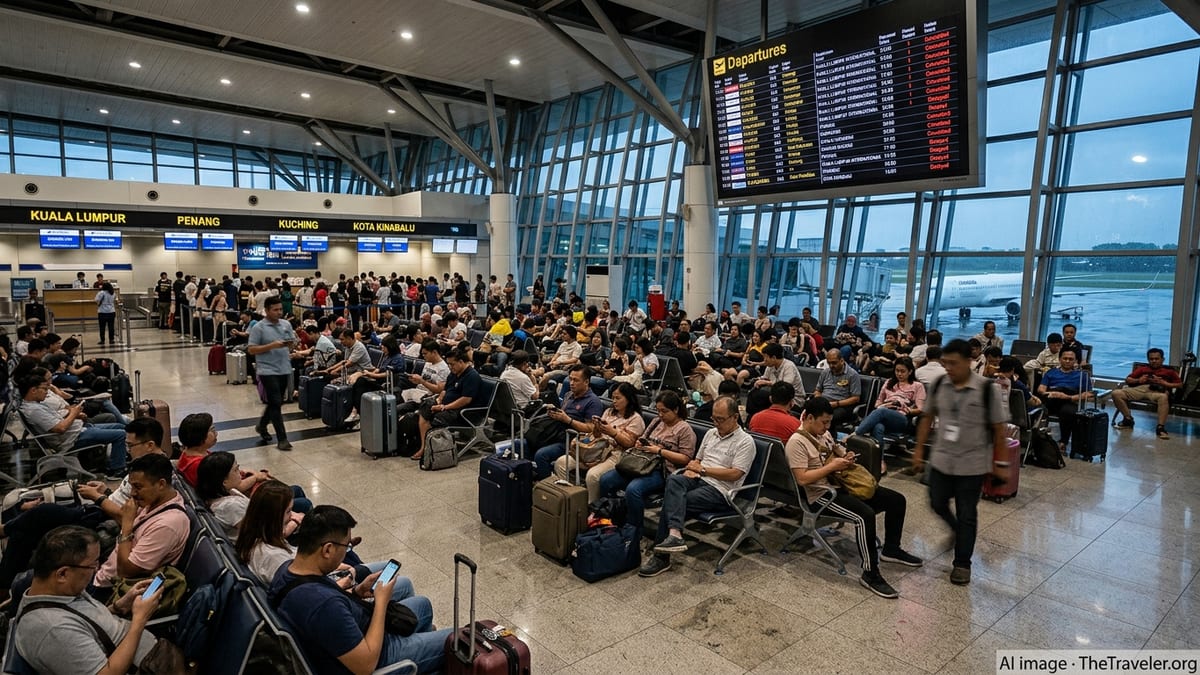
Thousands of air travelers across Malaysia are facing major disruption after more than 70 flights were reportedly cancelled at several key airports, leaving passengers stranded at Kuala Lumpur, Penang, Sultan Abdul Aziz Shah, Kota Kinabalu, Kuching, Tawau, and Senai and triggering a ripple effect across domestic and regional routes.
Get the latest news straight to your inbox!
Widespread Cancellations Hit Malaysia’s Busiest Hubs
Published coverage and live flight-tracking data indicate a sharp wave of cancellations affecting services at Kuala Lumpur International Airport, Penang International Airport, Sultan Abdul Aziz Shah Airport in Subang, Kota Kinabalu International Airport, Kuching International Airport, Tawau Airport and Senai International Airport in Johor. More than 70 flights are understood to have been pulled from schedules within a short window, freezing travel plans at some of the country’s most important aviation gateways.
The disruption appears to be concentrated on short-haul domestic and regional routes, including heavily used corridors such as Kuala Lumpur to Penang, Kuching, Kota Kinabalu and Johor Bahru, alongside Sabah and Sarawak links through Tawau and Kuching. These routes are vital for business travel, migrant workers, and family visits, meaning even a few dozen cancellations can rapidly translate into thousands of disrupted journeys.
Publicly available operational data from Malaysia’s aviation regulator and airport operator show that the affected airports together handle hundreds of daily movements, so a cancellation cluster of this scale can quickly overwhelm check-in halls, departure lounges and baggage areas as delayed passengers accumulate faster than seats can be reallocated.
Reports from local media and passenger accounts on social platforms describe long lines at airline counters from the early morning, with travelers seeking clarification, rebooking options and overnight arrangements as departure boards at multiple terminals filled with “cancelled” and “delayed” indicators.
What Is Behind the Sudden Disruptions?
At the time of writing, open sources point to a combination of operational and network-planning issues rather than a single catastrophic event such as a major safety incident or prolonged airport closure. Across the region, carriers have been fine-tuning schedules in response to aircraft availability, ongoing maintenance cycles and fluctuating demand on certain domestic routes.
Industry analysts note that Malaysia’s aviation sector has been operating on tight capacity, with some airlines stretching aircraft utilisation and crew rosters to restore connectivity after the pandemic and subsequent structural changes in the market. Sudden bottlenecks, such as an aircraft taken out of service for unscheduled maintenance or a crew duty-time limit being reached, can force late-stage cancellations when there are few spare planes or standby crews available.
Weather can also play a role. Malaysia is prone to intense rainfall and localized storms that may not shut an airport entirely but can trigger flow-control measures, temporarily reducing runway capacity and forcing airlines to consolidate or cancel weaker-performing flights. When this happens across several hubs on the same day, the impact can cascade, particularly on multi-leg itineraries using Kuala Lumpur or Kota Kinabalu as connection points.
Published commentary from aviation observers in the country further suggests that domestic point-to-point routes operated at thinner margins are especially vulnerable to being cut when disruptions ripple through a network, leaving smaller cities such as Tawau or secondary airports like Senai and Subang exposed to last-minute schedule changes.
Immediate Impact on Travelers at Malaysian Airports
Passengers at Kuala Lumpur International Airport, Subang’s Sultan Abdul Aziz Shah Airport and Penang International Airport have reported lengthy waits to access service counters, with some travelers queueing for several hours to secure alternative flights. The impact is particularly acute for those without flexible tickets or travel insurance, as lower-cost fares often provide limited entitlement to complimentary changes or overnight accommodation.
At East Malaysian gateways such as Kota Kinabalu, Kuching and Tawau, the cancellations are hitting travelers who rely on air links as their primary means of long-distance transport. In these regions, where rail alternatives are limited and road journeys can be long, a cancelled flight may mean a missed offshore rotation, medical appointment, or school term start, amplifying the economic and social cost of the disruption.
Families connecting between Peninsular Malaysia and Borneo are also affected, particularly where separate tickets were booked on different carriers. When a domestic sector is cancelled, follow-on international legs from Kuala Lumpur or Johor Bahru can be missed, and rebooking across multiple airlines becomes more complex and expensive.
Airport facilities are experiencing crowding as stranded passengers seek power outlets, food, and places to rest. While Malaysian airports generally provide seating, basic amenities and in some cases landside hotels, a surge in overnight stays can strain capacity, especially at smaller terminals that were not designed for prolonged mass disruptions.
What Stranded Passengers Can Do Right Now
Travel industry guidance based on similar disruption events in the region suggests that passengers affected by cancellations in Malaysia should first verify their flight status using official airline channels and airport departure boards, as same-day reinstatements or re-timings are sometimes possible when aircraft or crew become available.
Once a cancellation is confirmed, travelers are generally advised to contact their airline through multiple channels at once, including mobile apps, customer-service hotlines and airport ticket desks. Online rebooking tools, where available, often update faster than physical queues, allowing some passengers to secure scarce replacement seats before they are exhausted.
Those with travel insurance or coverage through premium credit cards should review policy documents for disruption benefits. Many policies include compensation for meals, hotels and essential purchases following significant delays or cancellations, provided receipts are retained. For travelers who booked through online travel agencies, it can be faster to use the agency’s own support channels for rebooking, particularly when itineraries combine several carriers.
Passengers connecting to onward international flights may wish to proactively contact downstream airlines to flag the disruption and explore options for date changes or waived penalties, even before officially missing a segment. Although policies vary by carrier and fare type, early engagement can sometimes secure better outcomes, especially when many passengers are competing for limited inventory.
How the Disruption Could Affect Travel in the Coming Days
Travel analysts caution that the impact of more than 70 cancellations in a compressed period rarely resolves within a single day, particularly in a network where aircraft rotations and crew schedules are tightly interlinked. Even once operations stabilize, stranded aircraft and displaced passengers can create a backlog that takes several days to clear.
Malaysia’s key airports, including Kuala Lumpur, Penang, Kota Kinabalu, Kuching, Senai and Subang, serve as both origins and transit nodes for domestic and regional travel. When flights are removed from the schedule, connections evaporate and load factors on remaining services typically surge, leading to higher last-minute fares and fewer open seats for rebooking.
Travel agencies in the region are already reporting stronger demand for bus, ferry and rail alternatives on shorter domestic legs, as passengers seek to bypass congested airports. While these alternatives can offer relief on routes such as Kuala Lumpur to Penang or Johor, they are less viable for cross-sea journeys between Peninsular Malaysia and Borneo, where flying remains the most practical option.
Prospective travelers planning trips over the next few days are being urged, in publicly available advisories, to monitor schedules closely, build longer connection times into their itineraries, and consider booking slightly earlier or later departures on the same day to create buffers in case further adjustments are made.