

Choosing between Malaysia and Thailand can feel like an impossible decision. Both Southeast Asian neighbors promise warm seas, lush jungles, layered cultures and famously good food. Yet they offer distinct experiences, from Thailand’s high-energy beach towns and temple-packed cities to Malaysia’s mix of Malay, Chinese and Indian heritage, ultra-modern skylines and quieter islands. This guide compares the two destinations across what matters most to travelers today so you can decide which one is the better fit for your next trip, or how to combine them into a single itinerary.
Overall Vibe and First-Time Impressions
Most travelers land in either Bangkok or Kuala Lumpur, and the first hours in each capital set the tone for the trip. Bangkok is intense from the outset: hot, loud and kinetic, with tuk-tuks weaving through traffic, neon-lit streets and a nightlife scene that has long drawn backpackers and short-break tourists. Even as authorities promote more sustainable and higher-spending tourism, Thailand’s capital still feels like a city that rarely sleeps, with street food until late, bustling markets and temples tucked between skyscrapers.
Kuala Lumpur, by contrast, feels more measured. Its skyline is anchored by the Petronas Twin Towers and office blocks, but neighborhoods shift quickly from air-conditioned malls to leafy residential streets and older shophouses. The mood is still urban and busy, yet it tends to be less chaotic than Bangkok, with a more businesslike rhythm during the day and a dining scene that feels local-focused rather than party-driven at night.
For a first-time visitor to Southeast Asia, Thailand can feel like jumping straight into the deep end of the region’s sensory overload. Malaysia often feels gentler as an introduction, especially for travelers who prefer orderly public transport, a bit more personal space and a less alcohol-centric tourism culture. Neither choice is inherently better, but your tolerance for crowds and nightlife should influence which destination you pick first.
When it comes to how widely each country is known, Thailand still enjoys stronger name recognition, attracting tens of millions of international visitors in recent years. Malaysia has seen solid recovery too, with tourism once again contributing significantly to GDP, but it receives fewer international arrivals and remains under the radar for many Western travelers. That relative obscurity can translate to less crowded sights and a feeling of discovery in Malaysia compared with Thailand’s busiest hotspots.
Culture, Heritage and Languages
Thailand presents a largely unified cultural narrative built around Theravada Buddhism, the Thai language and a monarchy that features prominently in public life. Golden temples, saffron-robed monks, spirit houses and royal portraits are part of the everyday streetscape. Outside the hill-tribe regions and some Muslim-majority provinces in the south, ethnic and religious minorities are less visible to short-term visitors, so the impression is of a broadly cohesive Thai culture with regional quirks.
Malaysia, on the other hand, is defined by its diversity. The population is primarily Malay Muslim, but large Chinese and Indian communities have shaped everything from food to festivals. Travelers encounter mosques, colorful Hindu temples and ornate Chinese clan houses often within walking distance of each other, especially in Penang, Melaka and older districts of Kuala Lumpur. This mix is also reflected in public holidays, with Islamic, Chinese and Hindu festivals all visible in the calendar and on the streets.
Language is another key difference. In Thailand, Thai script and language dominate, and while people working in tourism speak some English, communication outside major hubs can be challenging. In Malaysia, Bahasa Malaysia is the national language, but English is widely spoken in cities and tourist areas, a legacy of British colonial administration and the country’s role as a regional business hub. Many signs and official communications are bilingual, which can make navigation and everyday interactions feel smoother for English-speaking visitors.
From a cultural immersion perspective, Thailand’s temples, traditional dance performances and markets remain compelling. Malaysia offers those same Southeast Asian touchpoints, layered with visible Chinese and Indian heritage and a more commonplace use of English. Travelers seeking a deeper dive into religious diversity, colonial-era architecture and multicultural neighborhoods may find Malaysia especially rewarding, while those interested in Buddhist art, meditation retreats and long-established backpacker circuits often favor Thailand.
Landscapes, Beaches and Outdoor Experiences
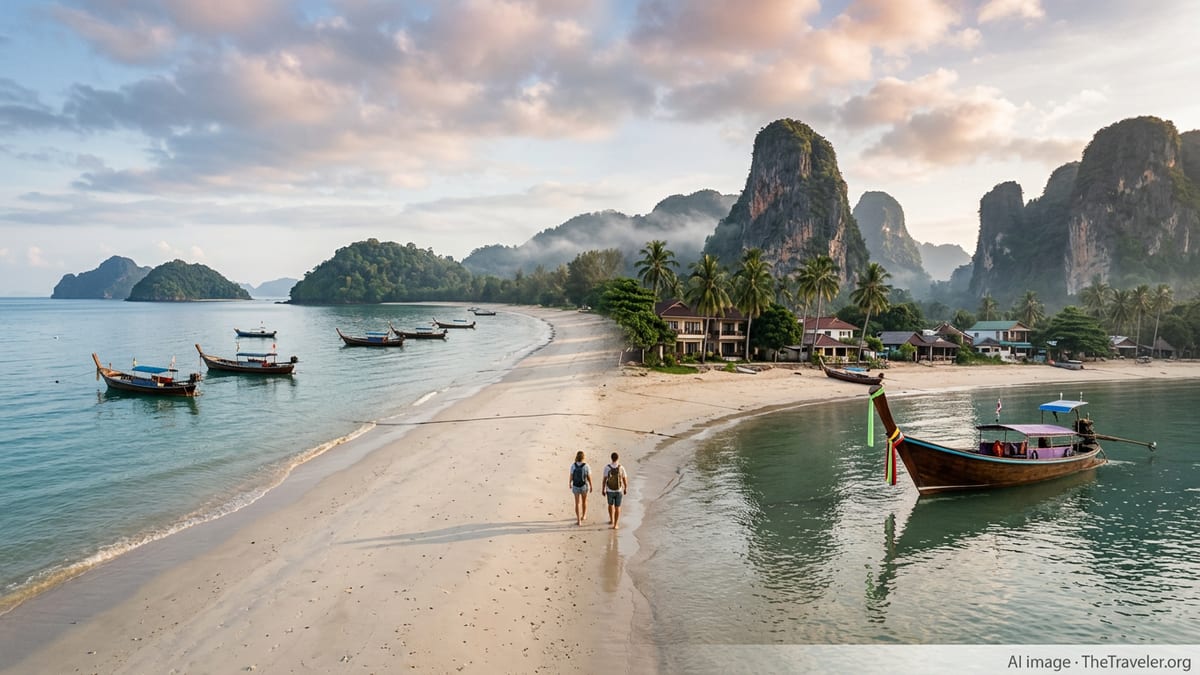
Both countries boast warm seas and dramatic landscapes, but the style of beach holiday they offer differs significantly. Thailand’s Andaman coast and the Gulf of Thailand are lined with famous names: Phuket, Krabi, Koh Samui, Koh Phangan and Koh Tao among others. These islands and peninsulas range from heavily developed resort strips with international chains to still-rustic villages with basic bungalows. Longtail boats, limestone cliffs and sandbars have become synonymous with the Thai seascape in global travel imagery.
Malaysia’s coastline is quieter overall. The islands of Langkawi in the northwest and the Perhentian and Redang groups on the east coast attract a mix of families, divers and independent travelers who prefer a calmer scene. Compared with many Thai islands, nightlife is subdued, beaches are often less crowded and development can be more spaced out. On Borneo, the Malaysian states of Sabah and Sarawak add another layer entirely, with wildlife-rich jungles, river safaris and access to Mount Kinabalu, one of Southeast Asia’s highest peaks.
For diving and snorkeling, Thailand offers popular sites around the Similan Islands, Koh Tao and parts of the Andaman Sea, with well-established dive schools and liveaboards. Malaysia counters with renowned coral atolls such as Sipadan and the surrounding islands off Sabah, along with accessible reefs near Redang and the Perhentians. Marine conditions can shift from year to year with climate-related changes, but both countries continue to draw divers, with Malaysia sometimes perceived as slightly less crowded and more focused on the underwater experience than nightlife.
If your ideal trip is island-hopping with beach bars, social hostels and a constant stream of other travelers, Thailand’s islands are hard to beat. If you lean toward quiet beaches, family-friendly resorts, birdwatching, wildlife encounters and highland escapes such as the Cameron Highlands or Kundasang, Malaysia may edge ahead. Weather patterns also differ by coast and season, so trip timing matters: some Thai and Malaysian islands face heavy monsoon closures at certain times of year, and it is worth checking recent information for your travel dates before committing.
City Life, Food and Nightlife
Bangkok remains one of the world’s great city-break destinations, with everything from street-side noodle stalls to globally ranked fine-dining restaurants and rooftop bars. Chiang Mai in the north offers a slower-paced urban experience with a dense concentration of temples, coffee shops and digital-nomad hangouts. Beach towns like Phuket, Pattaya and Koh Samui have nightlife scenes ranging from family-friendly night markets to adult-oriented entertainment districts, which some travelers love and others prefer to avoid.
In Malaysia, Kuala Lumpur anchors the urban experience with modern shopping centers, wet markets and food courts where Malay, Chinese and Indian influences meet. Penang’s George Town is often singled out for its food, with hawker centers and street stalls serving dishes that reflect centuries of trade and migration. Melaka adds another historic city option, with riverside promenades, colonial buildings and a strong Peranakan heritage. Nightlife exists in all these places, but on a smaller, more localized scale than in Thailand’s hardest-partying hubs.
On food alone, many travelers struggle to choose between the two countries. Thailand’s curries, salads and noodle dishes are world-famous, with regional specialties from the north, northeast and south that reward explorers who go beyond familiar classics. Malaysian cuisine is more overtly fusion-driven, combining Malay dishes such as nasi lemak with Chinese-style stir-fries and dim sum, Indian curries and breads, and hybrid creations like Penang’s char kway teow and Nyonya laksa.
For nightlife, Thailand is clearly more developed, from beach parties and music festivals to city club scenes. Malaysia is more restrained, with alcohol subject to higher taxes and less prominent in public life, especially in more conservative areas. If you want late nights and a social atmosphere that runs well past midnight, Thailand has the edge. If your priorities are food exploration, café culture and low-key evenings rather than large parties, Malaysia can be equally satisfying, if not more so.
Costs, Infrastructure and Ease of Travel
Both Malaysia and Thailand are generally considered affordable by Western standards, though prices have risen in recent years as tourism has rebounded and local costs have climbed. Budget travelers can still find inexpensive guesthouses, street food and public buses in both countries, while mid-range visitors can enjoy comfortable hotels and regular restaurant meals without overspending. Exact price differences fluctuate, but many backpackers still perceive Thailand as slightly cheaper at the most budget-conscious end, particularly in highly competitive destinations where there is an oversupply of hostels and simple restaurants.
Malaysia often comes across as better value in the mid-range bracket, especially for modern city hotels, long-distance trains, and domestic flights linking Peninsular Malaysia with Borneo. Its road network is extensive, and intercity buses and trains are usually straightforward to book. The urban rail network in Kuala Lumpur simplifies cross-city journeys to airports, business districts and shopping areas. Thailand also has a wide network of buses, trains and domestic flights linking cities and islands, but some transfers require boats and multiple connections, and travel around peak seasons can be congested.
From an administrative perspective, both countries have gradually expanded e-forms and digital arrival systems. Travelers should always check current entry requirements before flying, as rules around digital arrival cards, visa exemptions and health documentation can change. Overall, most visitors from Europe, North America and many parts of Asia find it relatively easy to enter both countries for short stays, provided their passports have sufficient validity and they comply with any pre-arrival registration requirements in place at the time.
Connectivity is strong in both destinations, with widely available mobile data plans and good Wi-Fi in cities and tourist hubs. Outside remote areas and some islands, staying online is usually simple and inexpensive. For digital nomads or remote workers, Thailand’s established expat scenes in Bangkok, Chiang Mai and certain islands remain attractive, while Malaysia’s stronger English usage, good urban infrastructure and growing co-working spaces in Kuala Lumpur and Penang provide a credible alternative.
Safety, Health and Travel Practicalities
In broad terms, both Malaysia and Thailand are considered safe for the vast majority of visitors, with millions traveling annually without serious problems. Petty crime such as bag snatching and scams does occur in busy tourist areas in both countries, so normal urban precautions apply: keep valuables secured, be cautious with late-night transport and be alert around entertainment districts where alcohol is common. Road safety is a concern in both destinations, particularly for motorbike rentals and intercity bus travel, and accident statistics in the region remain high by global standards.
Travel advisories from foreign governments periodically highlight specific risks, which can include isolated incidents of political unrest, rare terror-related events or localized crime. These advisories are updated regularly and can change quickly in response to events, so travelers planning trips for specific dates should review the latest information close to departure. In practice, the main travel routes and major tourist centers in both countries typically remain calm and functioning even when isolated incidents occur elsewhere.
Health considerations are similar too. Tap water is generally not considered safe to drink in either country, so travelers rely on bottled water, filtered systems or refill stations. Food hygiene in tourist areas is usually acceptable, but sensitive stomachs may need time to adjust to local spices and preparation styles. Pharmacies are widespread, basic medical care is accessible in cities, and both Thailand and Malaysia have developed medical tourism sectors, with private hospitals in major urban centers catering to international patients.
Respectful behavior goes a long way in both destinations. Modest dress is appreciated in temples and mosques, and removing shoes before entering religious buildings or some homes is standard. In parts of Malaysia with a more conservative social environment, public behavior and clothing norms can be stricter than in Thailand’s beach areas or nightlife districts, although large cities tend to be quite relaxed. Alcohol and pork are widely available in Thailand, while in Malaysia they are common in non-halal venues but less visible in predominantly Muslim neighborhoods.
Best For Different Types of Travelers
Deciding whether Malaysia or Thailand is “better” often comes down to traveler type rather than an absolute ranking. Backpackers looking for well-trodden routes, sociable hostels, frequent buses, and an atmosphere geared toward young independent travelers will find Thailand highly accommodating. Its islands and northern towns have long catered to this segment, with inexpensive accommodation, endless tour options and a constant supply of fellow travelers with whom to share experiences.
Families with children or travelers seeking a slightly more low-key environment may lean toward Malaysia. Its cities feel structured and easy to navigate, many beaches are less crowded and nightlife is usually tucked away rather than spilling onto every main street. The mix of wildlife attractions, such as orangutan sanctuaries in Borneo, and educational cultural experiences in Penang, Melaka and Kuala Lumpur can lend itself well to multi-generational trips.
For food-focused travelers, both countries are strong contenders. Thailand shines with its bold flavors, street market culture and regional variations. Malaysia excels in variety, with Malay, Chinese, Indian and hybrid cuisines available within a short walk in most cities. Travelers who enjoy exploring religious architecture, historic quarters and multicultural neighborhoods may find Malaysia particularly fascinating, while those drawn to meditation retreats, temple complexes and hill villages often gravitate to Thailand’s north.
Adventure travelers and nature lovers can find plenty to do in both places. Thailand offers trekking around Chiang Mai and Mae Hong Son, rock climbing in Krabi and island-based diving. Malaysia adds highland hikes, extensive national parks in Borneo with caves and longhouse communities, and some of Southeast Asia’s most celebrated dive sites. The choice between them may depend on whether you prefer combining outdoor adventures with a vibrant nightlife scene or with quieter coastal towns and multicultural urban centers.
The Takeaway
No single verdict can declare Malaysia or Thailand universally “better” for travelers, because each excels in different ways. Thailand is more established as a tourism powerhouse, with a dense network of islands, party hubs, backpacker routes and wellness retreats. It is ideal if you want high energy, extensive nightlife, easy socializing with other travelers and countless tour options that can be arranged at short notice.
Malaysia, by contrast, blends modern infrastructure with a striking mix of Malay, Chinese and Indian cultures, plus the ecological riches of Borneo. It typically offers quieter beaches, strong value in the mid-range segment and an urban experience where English is widely used and multiculturalism is built into everyday life. Many travelers find it easier to move at their own pace in Malaysia, encountering fewer crowds outside a handful of headline destinations.
If you have time, the best solution is often not to choose at all, but to combine both countries in a single trip, using low-cost flights or overland routes to connect Bangkok or Chiang Mai with Kuala Lumpur, Penang or Borneo. If you must pick one, consider your priorities: nightlife, party beaches and a highly social backpacking ecosystem point toward Thailand; multicultural cities, calmer islands and wildlife-focused excursions suggest Malaysia. Either way, both countries reward slow travel, curiosity and a willingness to explore beyond the most famous stops.
FAQ
Q1. Is Malaysia or Thailand cheaper for travelers?
Both are affordable by global standards. Thailand can be slightly cheaper at the very budget end in popular backpacker areas, while Malaysia often offers strong value for mid-range hotels, transport and city stays.
Q2. Which country is better for a first-time visitor to Southeast Asia?
Thailand’s tourism infrastructure is extremely mature and well known, making it an easy first stop for many. Malaysia can feel calmer and more structured, which some first-time visitors prefer, especially if they value widespread English usage.
Q3. Where will I find better beaches, Malaysia or Thailand?
Thailand is famous for its dramatic limestone cliffs and busy island scenes, especially around Phuket and Krabi. Malaysia’s islands are generally quieter, with Langkawi, the Perhentians and Redang offering calmer alternatives that often see fewer crowds.
Q4. Which destination is safer for solo travelers?
Both Malaysia and Thailand are broadly safe for solo travelers who take normal precautions. Major tourist areas in each country see large numbers of solo visitors every year; the main risks tend to be petty crime, road safety and occasional scams rather than targeted violence.
Q5. Where is English more widely spoken, Malaysia or Thailand?
English is generally more widely spoken in Malaysia, especially in cities and tourist centers, and many signs are bilingual. In Thailand, English is common in tourist businesses but less so in rural areas, and Thai script is more dominant in everyday signage.
Q6. Which country is better for food lovers?
Both countries are excellent for food. Thailand is known for its bold flavors and street markets, while Malaysia offers a unique mix of Malay, Chinese, Indian and hybrid cuisines. Many travelers find Malaysia’s diversity especially appealing, while Thai dishes are often more familiar internationally.
Q7. How do visa and entry rules compare between Malaysia and Thailand?
Both countries offer relatively straightforward short-term entry for many nationalities, sometimes with visa exemptions and digital arrival procedures. Exact rules, permitted lengths of stay and any pre-arrival forms can change, so travelers should always check the latest official requirements before departure.
Q8. Which destination is better for families with children?
Malaysia’s calmer beaches, structured cities and mix of wildlife, cultural sites and modern attractions often suit families well. Thailand also caters to families, particularly in resort areas, but some beach towns and nightlife districts may feel more adult-oriented.
Q9. Is it easy to visit both Malaysia and Thailand on the same trip?
Yes. The two countries are well connected by flights and several overland routes. Many travelers combine them in one itinerary, pairing Thai islands or northern cities with Kuala Lumpur, Penang or parts of Malaysian Borneo.
Q10. Which country offers better opportunities for nature and wildlife experiences?
Thailand has excellent trekking, marine parks and national parks, particularly in the north and along the Andaman coast. Malaysia adds extensive rainforest areas in Borneo, opportunities to see orangutans and other wildlife, and notable highland regions, making it a strong choice for rainforest and biodiversity-focused trips.