

More news on this day
Malaysia is fast-tracking new cross-border and urban rail projects just as Thailand, Singapore and Vietnam advance their own high-speed lines, creating what observers describe as an emerging rail-powered tourism corridor stretching across mainland Southeast Asia.
Get the latest news straight to your inbox!
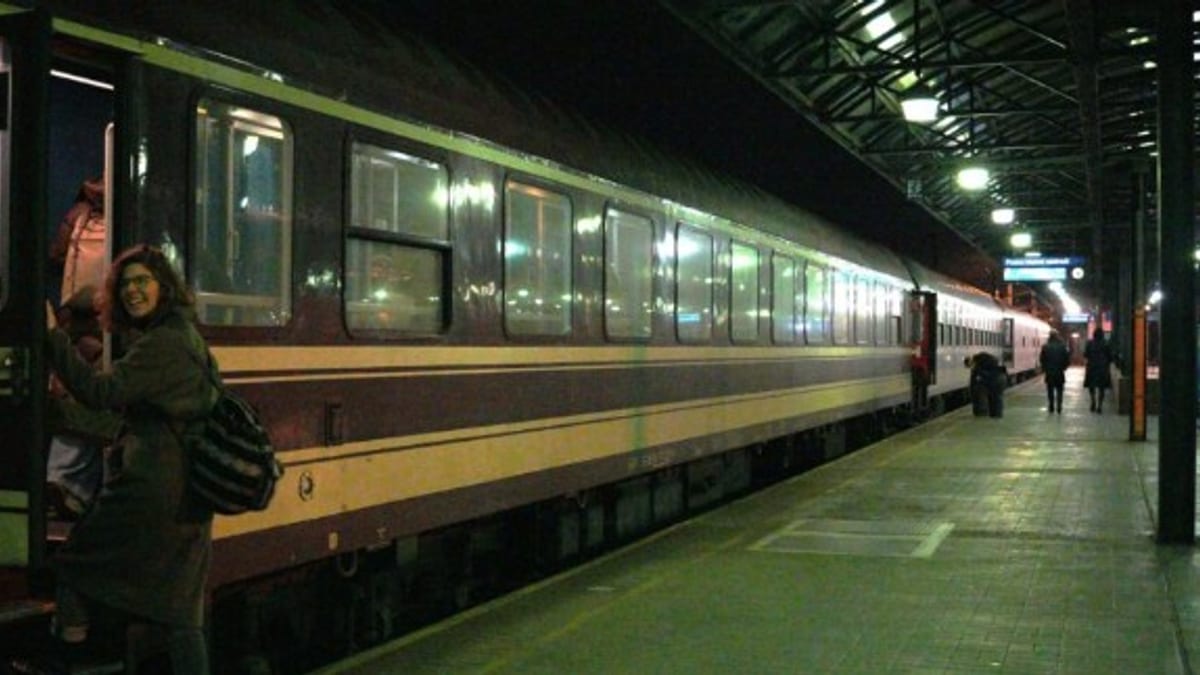
Image by Latest International Railway News, Global Rail Industry News
Malaysia Bets on Rail to Anchor a Regional Tourism Super-Corridor
Malaysia is positioning itself as a central node in Southeast Asia’s next wave of rail-led tourism growth, with a series of projects designed to plug into an emerging regional grid. The flagship is the Johor Bahru–Singapore Rapid Transit System (RTS) Link, a cross-border shuttle slated to connect Bukit Chagar in Johor Bahru with Woodlands North in Singapore in just a few minutes. Publicly available information indicates that the system is being built to carry up to 10,000 passengers per hour in each direction, targeting one of the world’s busiest land crossings for a long-awaited upgrade.
While the RTS is technically a rapid transit operation rather than a classic high-speed intercity line, its role in releasing chronic congestion on the Johor–Singapore Causeway is expected to be significant for tourism. Travel data published by regional outlets show that hundreds of thousands of people traverse the border daily, many on short leisure and shopping trips. Faster, more predictable rail journeys are expected to make weekend and even same-day cross-border tourism more attractive for both Malaysians and Singaporeans.
Malaysia is also exploring longer-distance concepts that would extend the country’s reach within the region. Coverage of policy discussions points to renewed interest in a reconfigured high-speed rail link from Kuala Lumpur toward the south, with Johor officials proposing integration of any future line with the RTS and a planned light rail network into a T-shaped “super node” for the Johor–Singapore Special Economic Zone. Feasibility work on a separate Trans-Borneo rail vision connecting Sabah, Sarawak, Brunei and Indonesia’s Kalimantan signals that Malaysia views rail as a long-term tourism and economic catalyst on both its peninsular and Bornean flanks.
These initiatives build on improvements to existing urban systems. In the Klang Valley, the proposed MRT3 Circle Line has cleared planning milestones and is intended to close gaps in Greater Kuala Lumpur’s rail loop. Transport performance reports in 2025 show sharp gains in reliability on Malaysia’s urban rail, underscoring efforts to make rail a more appealing backbone for both residents and international visitors.
Thailand Connects to China–Laos High-Speed Rail for Tourism Growth
To Malaysia’s north, Thailand is pressing ahead with a long-delayed high-speed rail link from Bangkok to Nong Khai on the Lao border. This line, developed in cooperation with China, is being delivered in phases. Cabinet decisions in early 2025 approved the second stage between Nakhon Ratchasima and Nong Khai, locking in funding for a corridor that is frequently described in regional analysis as the “missing link” between Bangkok and the China–Laos high-speed network.
Once completed, the Bangkok–Nong Khai high-speed railway is expected to connect seamlessly with the China–Laos line that already runs from Kunming to Vientiane. Tourism and logistics briefings highlight that the China–Laos route has carried tens of millions of passengers since opening, many of them leisure travelers combining cross-border rail with regional itineraries. Thailand’s strategy is to tap this flow by marketing multi-country journeys, allowing visitors to arrive by rail from China, transit northern Laos and continue on to Bangkok and the beaches and heritage destinations beyond.
Infrastructure updates also underscore the importance of new bridge and standard-gauge connections across the Mekong River between Nong Khai and Vientiane. These links are designed to support both passenger and freight operations, reinforcing Thailand’s stated ambition to become an Association of Southeast Asian Nations rail hub. Policymakers and tourism agencies are reportedly aligning marketing plans around themed rail itineraries that would combine city breaks, temple circuits and eco-tourism along the Mekong.
At the same time, recent coverage of construction incidents and delays serves as a reminder that the region’s rail build-out is complex and multi-year in nature. For travelers and industry planners, the key takeaway is that Thailand’s most transformative high-speed links are moving forward, but full benefits for tourism will materialize progressively over the next decade as sections are completed and integrated.
Singapore’s Cross-Border Rail Links Reframe Short-Haul Travel
Singapore’s role in this rail resurgence is centered on efficient interconnection rather than building extensive high-speed corridors of its own. The RTS Link with Johor Bahru is the headline project, but it is also part of a broader effort to better knit Singapore into regional land transport. The city-state’s transport agencies have reported steady progress on civil works and rail systems installation, and officials on both sides of the border have repeatedly noted that the shuttle remains on track to open before the end of the decade.
Singapore’s broader position on high-speed rail reflects a willingness to revisit previously shelved plans if conditions are right. The earlier Kuala Lumpur–Singapore High-Speed Rail project was cancelled in 2021 after cost and alignment disagreements, but subsequent parliamentary statements in Singapore have signalled openness to considering any fresh Malaysian proposal starting from what has been described as a “clean slate.” For tourism, that leaves the door open to a future revival of a true high-speed connection that could cut Kuala Lumpur–Singapore travel to around 90 minutes by rail.
Even ahead of any such revival, the RTS is expected to change the way visitors combine Singapore with southern Peninsular Malaysia. Real estate and investment reports show billions of ringgit being channelled into mixed-use developments around the Bukit Chagar terminus, including malls, hotels and residences positioned to serve cross-border commuters and tourists. For travelers, the practical outcome is likely to be a new cluster of rail-linked city breaks and integrated resort-style stays spanning both sides of the strait.
Industry observers note that Singapore’s Changi Airport and seaport will continue to dominate long-haul arrivals, but the growing web of bus, conventional rail and future high-speed connections to Malaysia and beyond will give visitors more flexibility in how they move around the region once they land.
Vietnam Joins the High-Speed Club with North–South Megaproject
Vietnam is emerging as the newest high-speed rail entrant in Southeast Asia with its decision to proceed with a North–South high-speed line between Hanoi and Ho Chi Minh City. A resolution approved by Vietnam’s National Assembly in late 2024 set a broad investment policy for a roughly 1,500-kilometre electrified corridor, with published estimates placing the cost at around 67 billion US dollars. Construction is expected to begin in the second half of this decade, with the first operational segments targeted for the 2030s.
Government planning documents and subsequent analysis describe a phased approach focusing initially on priority stretches such as Hanoi–Vinh and Ho Chi Minh City–Nha Trang. These segments cover many of Vietnam’s most visited coastal and cultural destinations, suggesting that early benefits will be strongly tied to tourism. Projections cited in local economic studies indicate that the line could lift national gross domestic product growth by close to one percentage point annually once fully operational, driven in part by domestic leisure travel and international visitors extending their stays.
Beyond the headline Hanoi–Ho Chi Minh City line, Vietnam is also prioritising improved rail links from key cities to border crossings and major ports. Official strategies reference upgrades on axes such as Lao Cai–Hanoi–Hai Phong, which would strengthen connections between Vietnam’s northern tourist areas, its capital and gateways to China. Taken together, these projects form the backbone of a national rail modernisation plan meant to complement the rapid roll-out of expressways and airport expansions.
For travellers, the long lead times mean that high-speed journeys in Vietnam remain a medium-term prospect. However, the policy certainty has already begun to influence hotel investment, tour design and marketing, with operators promoting the idea of future “rail and sail” or “rail and coastal” itineraries that chain together heritage cities, bays and beaches along the country’s spine.
What Malaysia’s New Rail Push Means for Future Itineraries
The convergence of Malaysia’s rail ambitions with Thailand’s China-linked high-speed corridor, Singapore’s cross-border RTS and Vietnam’s North–South plan is reshaping how future visitors may experience mainland Southeast Asia. Analysts point out that as each country completes its respective links, a traveler could feasibly stitch together a largely rail-based journey from Singapore and Johor Bahru through Kuala Lumpur and Bangkok, on to Vientiane and Kunming, with Vietnam’s coastal cities forming a complementary eastward arc.
In the near term, the most immediate changes will come where projects are closest to completion. Malaysia’s Johor Bahru–Singapore RTS Link is expected to unlock more spontaneous weekend tourism on both sides of the border, while initial segments of Thailand’s Bangkok–Nakhon Ratchasima high-speed line will begin to reframe domestic travel between the capital and the northeast. Over time, as additional sections open and Vietnam advances construction, rail is set to evolve from a scenic but slow option into a competitive alternative to short-haul flights.
Industry players are already adapting to this shift. Hotel groups and developers are clustering projects around future rail hubs in Johor Bahru, Bangkok, Vientiane and Vietnamese coastal cities, anticipating higher passenger throughput and demand for rail-adjacent accommodation. Tour operators are piloting concepts built around station-to-station discovery, such as food-focused city hops, heritage rail trails and cross-border festival circuits.
For travelers planning trips in the late 2020s and early 2030s, the key message is to watch rail timelines as closely as airline schedules. As Malaysia joins Thailand, Singapore and Vietnam in pushing ahead with new high-speed and high-capacity routes, the region is quietly laying the tracks for a new era in Southeast Asian tourism, where the journey by train becomes as central to the experience as the destinations themselves.