

More news on this day
Mallorca is moving to curb the tide of cruise tourism in its capital, Palma, with a fresh agreement that tightens passenger limits at the island’s main port in a bid to protect its historic center and ease mounting pressure on local life.
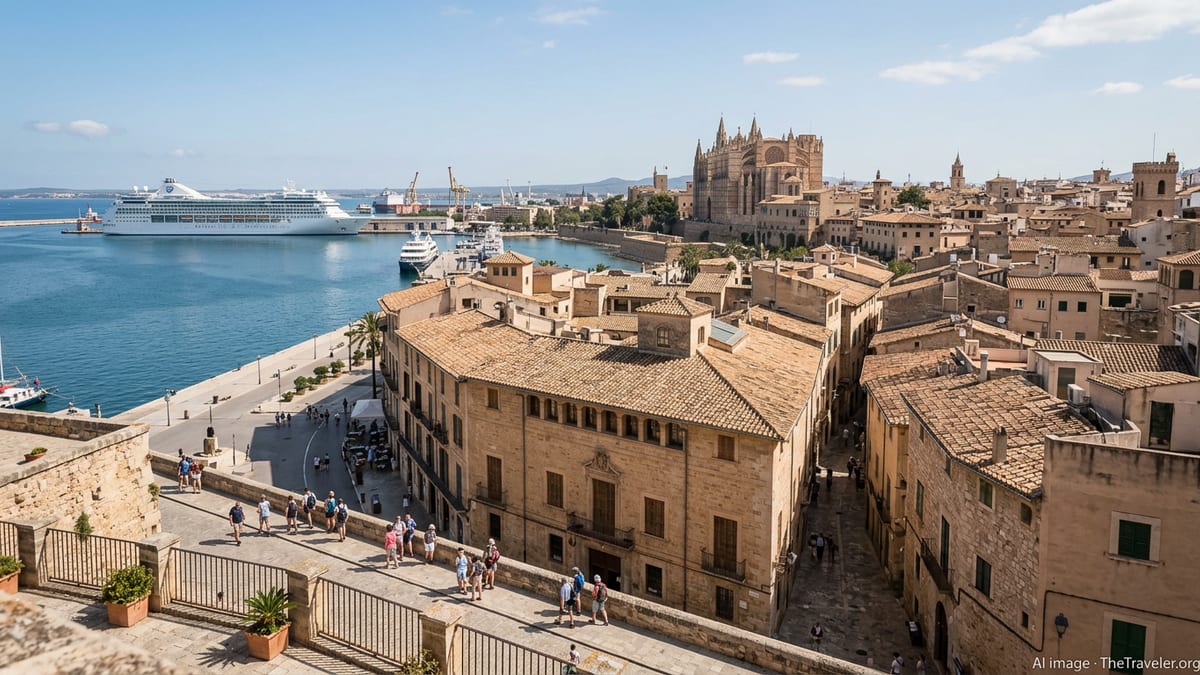
New Passenger Caps Aim to Calm a Port Under Pressure
Under a new deal announced by regional authorities and cruise operators, Palma will further restrict the number of cruise passengers allowed to disembark during the busy summer season from 2027. The agreement reduces the daily cruise capacity from a current ceiling of 8,500 passengers to 7,500 between June and September, while maintaining existing limits during the rest of the year. Officials say the goal is to smooth out peaks that have left the old town streets choked with tour groups and buses.
The longstanding rule that no more than three large cruise ships can dock in Palma on the same day remains in place, with only one of those vessels permitted to carry more than 5,000 passengers. The new measures refine that framework by adding a stricter cap on the average daily number of passengers across each summer week. Port authorities will monitor bookings to ensure that, when the week is over, the daily average has not exceeded the new threshold.
Regional leaders describe the move as a necessary recalibration rather than a radical cut. Cruise arrivals in Palma climbed again in 2025, topping 1.9 million passengers, and projections for coming seasons point to further growth if no new controls are applied. By locking in lower summer averages while keeping the three-ship rule, the government hopes to slow that trajectory without cutting ties altogether with an industry that supports thousands of jobs on the island.
Historic Streets Strain Under Mass Tourism
The Old Quarter of Palma, with its narrow Gothic streets, shaded patios and landmark cathedral, has become the focal point of concern over cruise tourism. On peak days, as multiple ships dock within hours of each other, crowds spill from coaches into the same handful of arteries that thread through the medieval core. Residents and local businesses report blocked doorways, noise late into the evening and congestion that makes daily errands difficult.
Urban planners and cultural heritage experts warn that the pressure is not just social but physical. Heavy footfall accelerates wear on centuries-old paving stones, while the steady stream of coaches serving cruise excursions contributes to air pollution and traffic around the city walls. Business owners in the historic center say the shift toward quick-turnover souvenir shops and chain outlets catering to day-trippers has pushed out traditional trades and raised commercial rents, reshaping the character of entire streets.
City officials argue that reducing cruise peaks is essential to preserving Palma’s appeal as a lived-in historic city rather than an open-air theme park. They frame the latest limits as part of a broader effort to disperse visitors, promote longer stays and encourage spending in neighborhoods beyond the most photographed plazas. For tour operators, that will likely mean rethinking itineraries and group sizes, especially during the hottest months of the year.
Island Protests Turn Up the Heat on Politicians
The tightening of cruise rules follows two summers of noisy demonstrations across the Balearic Islands, where residents have marched against what they call the “touristification” of their neighborhoods. In Palma, thousands have taken to the streets carrying banners that link cruise crowds to rising housing costs, packed public transport and declining quality of life for year-round residents.
Social movements and neighborhood associations have been especially critical of mega-cruise ships, arguing that they deliver large waves of day visitors who contribute relatively little to the local economy while overwhelming public space. Environmental groups have also highlighted emissions from vessels docked close to the urban core. Campaigners say that for years their appeals for tougher limits were dismissed as anti-tourist, but recent protests and international attention have made it harder for officials to ignore their demands.
Regional leaders now publicly acknowledge that Mallorca has reached or even exceeded its capacity during parts of the high season. While they insist that tourism remains the backbone of the island’s economy, they have started to argue that managing volume is essential to its long-term survival. The new cruise agreement is being presented as a response not only to data on congestion and emissions, but also to the social tension visible on Palma’s streets.
Balancing Cruise Revenue With Quality of Life
Cruise tourism is a significant source of income for Mallorca, generating business for guides, coach companies, restaurants, shops and port services. Local chambers of commerce and some business associations have warned that overly strict limits could push ships toward rival Mediterranean ports and cost the island much-needed revenue. They argue that the challenge is to better integrate cruise passengers into the wider tourism offer rather than simply reduce their numbers.
The Balearic government counters that quality of life indicators now weigh as heavily as pure arrival numbers in its decisions. Alongside the cruise deal, it has moved to ban new tourist flats in Palma, restrict certain party-focused activities and increase tourism-related taxes during peak months. Officials say these measures, combined with new visitor caps at the port, are intended to relieve pressure on housing, reduce antisocial behavior and encourage a shift toward higher-value, lower-impact tourism.
For many locals, the question is whether the latest package of measures will be enough. Activist groups that once called for a cap of just one cruise ship per day say they will continue to push for tougher restrictions if daily life in Palma’s historic neighborhoods does not visibly improve. With the new cruise passenger limits set to be phased in from 2027 and the current agreement stretching into the early 2030s, the island has effectively launched a long-term test of whether carefully calibrated controls can reconcile a global tourism hotspot with the needs of its residents.
What Visitors Can Expect in the Seasons Ahead
Travelers planning a cruise call in Palma over the next few years are unlikely to notice immediate, drastic changes, but the experience is expected to evolve. As ship numbers and passenger flows are more tightly managed in summer, days with four or more large vessels in port should become rarer, easing the heaviest crowding in the old town. Tour operators are being encouraged to stagger excursion times, promote visits to less congested districts and highlight cultural experiences beyond the well-trodden circuit around the cathedral and waterfront.
Visitors may also encounter clearer signage and guidance about respecting residential areas, particularly in narrow streets where noise carries easily. Authorities are working with tourism businesses to communicate the reasons behind the new limits, emphasizing that they are designed to protect the very atmosphere that draws people to Palma in the first place. Cruise passengers who wander beyond the main arteries to explore local markets or quieter plazas are likely to find a warmer welcome and more authentic encounters.
For the island as a whole, the coming seasons will be a delicate balancing act. Mallorca is seeking to remain one of the Mediterranean’s most desirable cruise destinations while proving that tighter controls can deliver a better experience for both visitors and residents. The new limits in Palma’s port mark a decisive step in that direction, signaling that the island is prepared to trade some volume for the chance to preserve its historic streets and local way of life.