

More news on this day
Long associated more with congestion than cuisine, Manila’s Ninoy Aquino International Airport is rapidly reinventing itself as a surprisingly strong culinary gateway, as new food halls, homegrown café openings and international recognition for its layover dining scene put airport food firmly on the travel agenda.
Get the latest news straight to your inbox!
From Problematic Hub To Food-Focused Gateway
Ninoy Aquino International Airport, the primary international gateway to the Philippines, has spent much of the last decade trying to shake off a reputation for cramped facilities and limited amenities. Recent changes are increasingly focused on food, with the airport’s expanding dining footprint now central to broader modernization efforts. Publicly available information shows that NAIA handled more than 50 million passengers in 2024, a record figure that is helping drive demand for better quality and more varied places to eat across its four terminals.
The most visible shift is the move toward transforming waiting time into dining time. Reports from local media and travel guides indicate that passengers are now encountering a much more diverse mix of Filipino, Asian and international brands than in previous years, with options spread across pre-departure, arrivals and landside areas. This has helped make the airport a more practical place to eat between flights, not just a stopgap before passengers head into Metro Manila.
The change has also begun to register internationally. Recent coverage of a ranking by UK-based travel research firm Airport Parking and Hotels notes that NAIA has been listed among the world’s best layover hubs for food, credited with more than 130 restaurants and cafés serving passengers who pass through Manila. For an airport that has long played second fiddle to regional competitors on service and infrastructure, this kind of recognition is quietly repositioning NAIA’s image among frequent flyers.
New Food Halls Reshape The Terminal 3 Experience
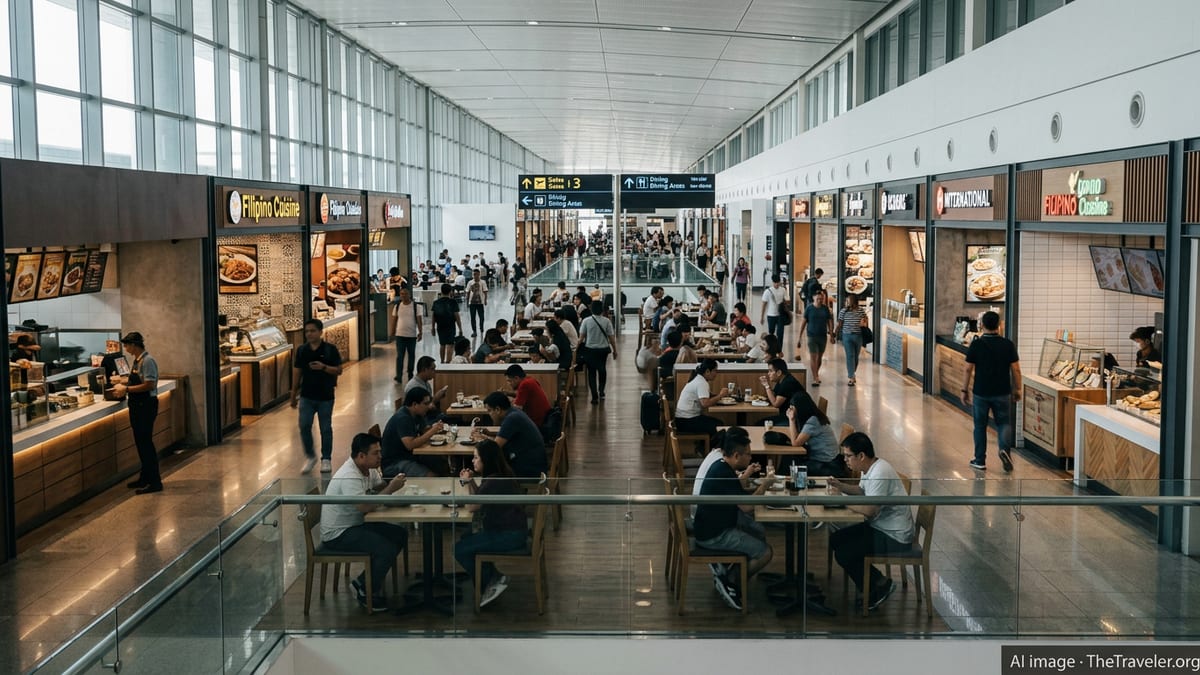
Terminal 3 has become the showcase for NAIA’s culinary overhaul. A 6,000 square meter Mezzanine Food Hall on the second level, formally opened in late 2025, now anchors the terminal’s pre-flight dining. Coverage in Philippine lifestyle outlets describes a bright, mall-like space where travelers can choose from a mix of global fast-food names, international café chains and well-known Filipino restaurant brands, turning what was once a purely functional mezzanine into a busy dining destination.
Passengers can find familiar international players serving coffee, pastries and quick western meals alongside regional concepts that lean into Southeast and East Asian comfort food. Reports highlight brands offering everything from roasted meats and Tex-Mex plates to Singapore-style kopi tiam experiences, giving travelers with long layovers the ability to sit down for a proper meal rather than relying only on snack kiosks at the gate.
The Mezzanine Food Hall is not the only development. Transport and infrastructure briefings, along with local business coverage, point to additional food halls now under construction or recently unveiled within Terminal 3, including concepts marketed as Tambayan and airside food villages. These newer areas emphasize homegrown and regional Filipino flavors, with around a dozen or more local brands showcasing dishes and products from across the archipelago. For tourists who might not have time to explore Manila’s food neighborhoods, these spaces effectively function as a compressed tasting tour of the country’s cuisine.
Terminal 2 And Other Wings Catch Up
While Terminal 3 is drawing the most attention, other parts of NAIA are gradually catching up. On March 3, 2026, Philippine media reported the opening of a new Café France outlet in Terminal 2’s departure hall, adding another homegrown café option for travelers seeking coffee, pastries and light meals before boarding. The addition reflects a broader pattern of domestic brands choosing to expand inside the airport as passenger volumes recover and spending on food rebounds.
Travel guides updated for 2025 and 2026 describe a growing mix of casual Filipino eateries, sit-down restaurants and bakery-cafés across the airport’s terminals. Terminals 1 and 4, which previously offered limited choice, are seeing incremental upgrades that include more mainstream fast-food chains and locally run kiosks. Though the range is still narrower than in newer regional hubs, the direction of change is toward greater choice and more standardized pricing compared with city outlets.
Despite the upgrades, information compiled from traveler reports suggests that not all areas are equally well served. Some international departure zones in Terminal 3, for instance, still have fewer options than the main food halls, and passengers transiting overnight or during very early morning hours may find a reduced number of outlets open. Tourists planning to rely on airport dining are advised to factor in the terminal they are using, the time of day they are traveling and whether their ticket allows them to move between landside and airside zones to reach the newer food spaces.
What Tourists Can Expect – And What To Watch For
For visitors arriving in the Philippines for the first time, NAIA’s evolving food scene now offers a relatively accessible entry point to Filipino flavors. The newer halls and upgraded corridors feature stalls highlighting regional specialties, snacks and desserts that can introduce travelers to dishes they might later seek out in the city, from rice meals and noodle dishes to baked goods and coffee pairings. Many outlets clearly display menus and pricing, which helps first-time visitors navigate unfamiliar items and currencies more easily.
At the same time, travelers should be prepared for typical airport trade-offs. Comments gathered in public forums and user reviews note that, while NAIA has added more budget-friendly options, prices are still generally higher than in nearby malls or neighborhood eateries. Quality can vary between outlets, and peak travel periods such as holidays and long weekends can lead to queues at the most popular chains and coffee shops.
Dietary needs require some advance planning. Information from independent travel guides indicates that certified halal and kosher options remain limited within the terminals, and vegetarian or vegan travelers may need to rely on international chains or snack-style meals rather than dedicated plant-based venues. Passengers with specific requirements may find it easier to eat in the city before heading to the airport, or to carry appropriate snacks for longer layovers.
Making The Most Of A Layover At NAIA
For tourists using Manila as a stopover before continuing to Philippine beach destinations or regional flights, the airport’s emerging role as a “tastiest gateway” can make a multi-hour layover more manageable. With more than one major food hall now operating in Terminal 3 and additional expansions underway, passengers with at least three to four hours between flights can reasonably plan to clear formalities, locate a dining area, and sit down for a full meal without feeling rushed.
Publicly available operations data shows that NAIA’s terminals can still experience congestion at immigration and security, especially during late afternoon and evening banks of international flights. Travelers are therefore encouraged to allow generous buffers before boarding, building meals around these formalities rather than cutting them too close. The concentration of outlets near central concourses means that it is often possible to grab a final snack or drink within sight of departure gates, even after leaving the larger food halls.
For those heading directly into Metro Manila, the airport’s upgraded food offerings may now be worth a brief pause before facing city traffic. Conversely, departing visitors can treat a final airport meal as a last taste of Filipino comfort food before flying out. Either way, NAIA’s recent culinary upgrades are reshaping expectations of what it means to pass through the country’s busiest gateway, turning time on the ground into a more flavorful part of the journey.