

More news on this day
Philippine President Ferdinand Marcos Jr. has sounded a fresh alarm over the country’s tourism performance, publicly highlighting a stark gap with regional rival Thailand and casting Cebu as a critical hub in efforts to finally close the divide.
Get the latest news straight to your inbox!
A Stark Comparison with Thailand’s Tourist Surge
Speaking at a recent event in Cebu, President Ferdinand Marcos Jr. drew attention to what he described as a worrying discrepancy between the Philippines and Thailand in attracting foreign visitors. Published coverage of his remarks indicates that the president cited Thailand’s ability to draw around 30 million tourists annually, compared with only about 5 to 6 million in the Philippines, underscoring how far the country remains from matching its Southeast Asian neighbor’s scale.
Available data from the Philippine Department of Tourism shows that international visitor arrivals have recovered from pandemic lows but remain well below the 8.3 million inbound tourists recorded in 2019. The Philippines registered about 5.4 million international arrivals in 2023 and just under 6 million in 2024, according to government statistics and industry reports, while official targets had envisioned closer to 7 to 8 million visitors in the same period. These figures confirm the broad contours of the gap that the president referenced.
By contrast, Thailand’s tourism sector has rebounded more rapidly. Global tourism rankings and recent national data place Thailand consistently among the world’s top destinations by international arrivals, with numbers returning toward pre-pandemic levels. For Philippine policymakers, the comparison is not only symbolic but also financial, as it points to missed opportunities in tourism receipts, employment and investment that could support broader economic growth.
Analysts and tourism advocates note that the president’s decision to publicly frame the situation as a lagging performance signals a shift from celebratory messaging about partial recovery toward a more urgent call to match regional competitors. It also sets the stage for infrastructure and policy initiatives that will likely concentrate on key gateways and high-potential regions.
Tourism Recovery: Progress, But Short of Ambitious Targets
Publicly available statistics indicate that the Philippines has made steady progress in rebuilding its tourism industry since borders fully reopened. The Department of Tourism reported about 5.45 million international visitors in 2023, surpassing its initial 4.8 million baseline target, before edging higher in 2024 as airlines restored routes and new markets reopened. However, the country still fell short of more ambitious internal projections of more than 7 million arrivals for 2024.
Tourism receipts have told a more positive story. Government information for 2024 and 2025 points to record or near-record levels of tourism revenue, even with lower-than-expected visitor counts. Longer average stays and higher per-capita spending among certain markets, such as South Korea, the United States and Australia, have helped offset headwinds from weaker arrivals from China and other sources. This suggests that while the volume gap with Thailand and other neighbors remains considerable, the value of each visitor has quietly risen.
Industry bodies and regional chambers cited in local coverage argue that the Philippines’ geography, archipelagic layout and air connectivity challenges continue to limit its ability to scale up quickly. Visitors often require multiple domestic flights or boat transfers to reach popular islands, raising costs and complexity relative to more centralized destinations. Concerns about congestion in key gateways, patchy last-mile transport and uneven digital infrastructure in secondary destinations have also been flagged as constraints.
Despite these challenges, forward-looking indicators remain broadly positive. International organizations such as the World Travel and Tourism Council have forecast a growing economic contribution from Philippine travel and tourism, supported by expanding hotel investments, the rise of meetings and incentive travel, and renewed interest from major airlines in restoring or adding routes to Manila and secondary hubs.
Cebu Emerges as Strategic Gateway and Test Bed
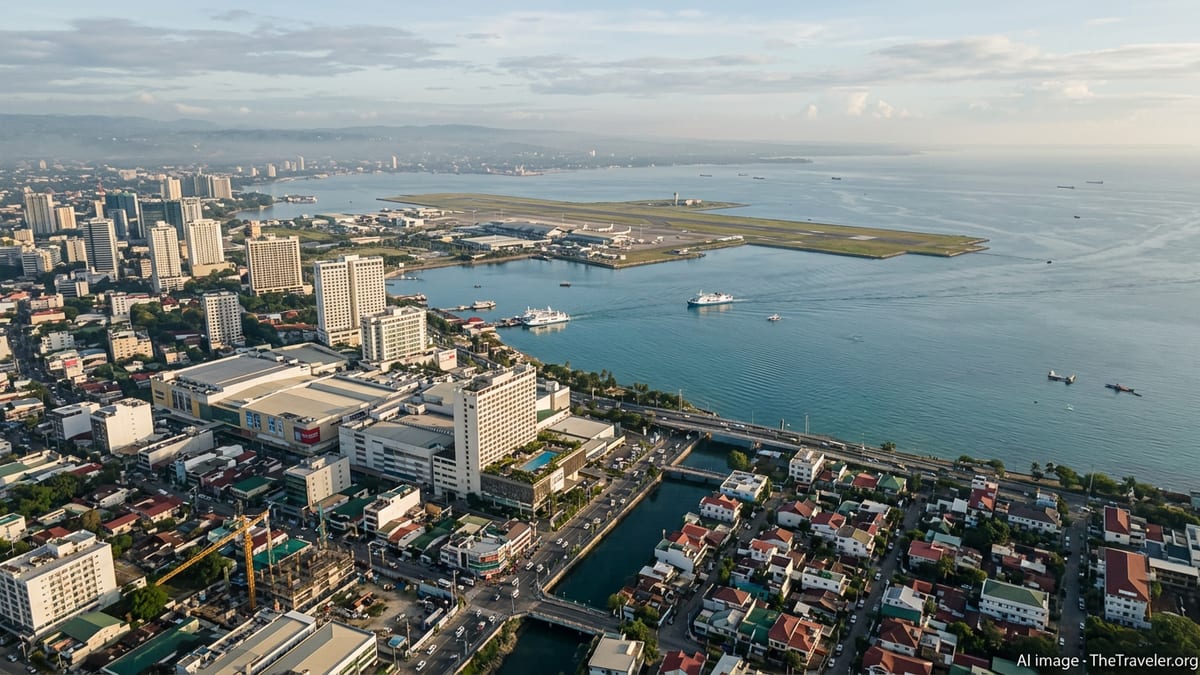
Against this backdrop, Cebu is increasingly being positioned as a linchpin of the country’s tourism strategy. Data from the Mactan-Cebu International Airport shows passenger traffic rising to more than 11 million in 2024, up from around 10 million the previous year, on the back of new and restored domestic and international routes. Airport operators have described this growth as evidence of Cebu’s importance in connecting the Visayas and Mindanao regions to global markets.
Central Visayas tourism statistics for 2024, as reported by regional authorities and local media, indicate that the area has recovered a large share of its pre-pandemic visitor volume. Domestic arrivals in the region are estimated to be near or above 2019 levels, while international arrivals are approaching two-thirds of their pre-crisis baseline. Cebu, with its mix of urban attractions, heritage sites and nearby island resorts, has been the main driver of this rebound.
Recent reports highlight efforts to expand Cebu’s appeal beyond its traditional beach and dive markets. Local tourism campaigns are promoting the island province as a hub for meetings, incentives, conferences and exhibitions, supported by new convention facilities and hotel developments. Heritage districts in Cebu City and neighboring localities are being pitched for cultural tourism, while neighboring islands such as Bohol and Negros Oriental benefit from spillover demand facilitated by improved ferry and air links through Cebu.
Urban infrastructure projects are also expected to influence Cebu’s role as a tourism gateway. Proposals such as the Lapu-Lapu Expressway, which aims to ease connectivity between Mactan-Cebu International Airport and the mainland, are frequently cited as examples of how transport upgrades could improve visitor experience and help distribute tourists more evenly across the region.
Policy Shifts and Infrastructure Push to Close the Gap
The president’s comments in Cebu have drawn renewed attention to the national government’s tourism agenda, particularly in the areas of infrastructure, connectivity and product diversification. Official documents and speeches in recent years have emphasized the need to streamline airport expansion, modernize seaports and improve roads linking gateways to tourist sites. Cebu, with its rapidly growing airport and surrounding road networks, is often pointed to as a priority corridor for such investments.
Policy adjustments are also underway to make the country more accessible. Public statements from the Department of Tourism and other agencies highlight moves to expand visa-free entry for selected markets, explore simplified e-visa systems and coordinate with airlines on opening new direct international routes to Manila, Cebu, Clark and emerging secondary gateways. Stakeholders argue that offering more non-stop connections to Cebu in particular could help bypass congestion in the capital and shorten overall travel times.
Beyond access, officials and industry groups have stressed the importance of raising service standards and ensuring that key destinations can absorb more visitors without damaging the environment. Cebu’s experience with crowding in popular beaches and dive spots has informed local regulations on carrying capacity, as well as campaigns to promote less-visited attractions in the highlands and neighboring islands. These initiatives are seen as crucial if the Philippines is to grow arrivals to Thailand-like levels while preserving its natural assets.
The interplay between national strategy and regional execution is becoming more visible. Cebu’s airports, ports, resorts and heritage districts offer a concentrated testing ground for reforms in visitor facilitation, digital ticketing, environmental regulation and community engagement. If successful, these approaches could be replicated in other destinations such as Palawan, Siargao and Davao, making Cebu both a beneficiary and a blueprint in the country’s effort to close its tourism gap with regional leaders.