

More news on this day
Air travelers in and out of Moscow and St. Petersburg are facing widespread disruption as major cancellations at Sheremetyevo and Pulkovo airports ripple across domestic and international networks, prompting fresh warnings for passengers to recheck flight status before heading to the airport.
Get the latest news straight to your inbox!
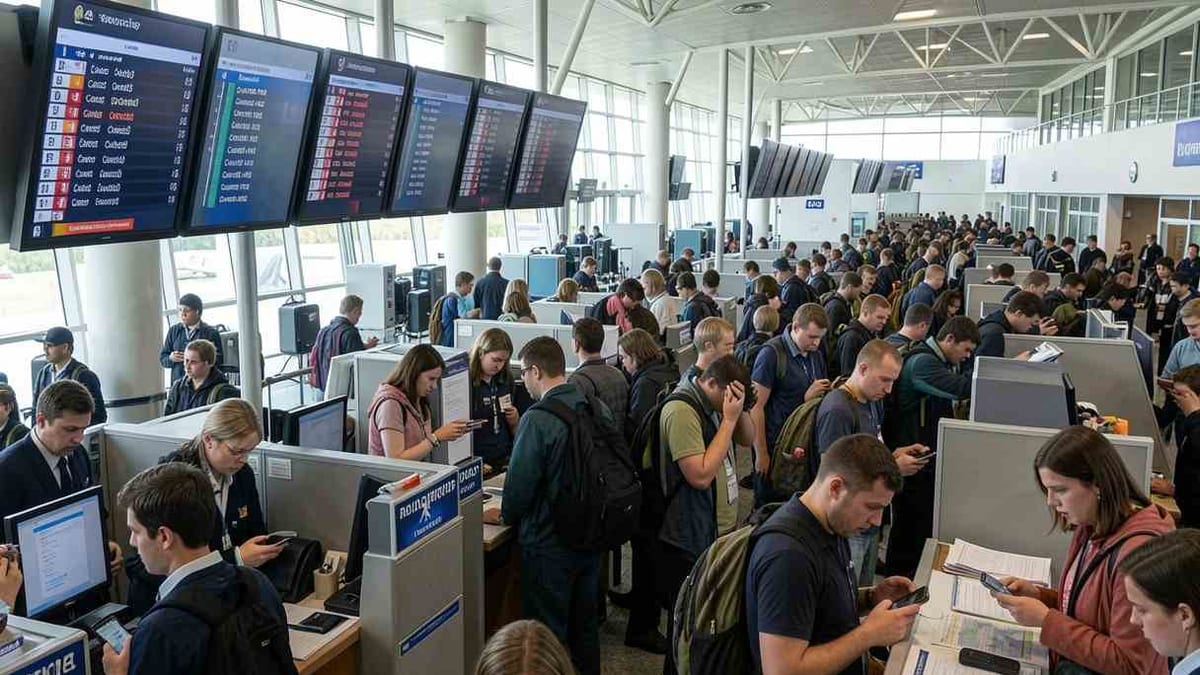
Image by Global Travel Alerts, Advisories, International Travel Alerts
What Is Happening at Sheremetyevo and Pulkovo
Publicly available flight-tracking boards and Russian-language travel forums on March 30 indicate an unusual spike in cancellations and heavily delayed departures at Sheremetyevo International Airport in Moscow and Pulkovo Airport in St. Petersburg. While some disruption is common during late winter, the current pattern involves clusters of flights being removed from schedules over short windows of time rather than isolated operational issues.
The irregularities are most visible in peak morning and late-evening waves, when both airports normally process dense banks of departures to other Russian cities and key international hubs. On several days leading up to March 30, travelers reported last‑minute cancellations and same‑day schedule changes, often with limited advance notification beyond standard airline app alerts and email messages.
Operational data suggests that the impact is not confined to a single carrier. Aeroflot and Rossiya, which dominate traffic at Sheremetyevo and Pulkovo respectively, are seeing cancellations alongside services operated by other Russian and foreign airlines. The pattern points to a combination of airspace, scheduling and resourcing pressures, rather than a single, clearly defined technical fault.
These issues are unfolding against an already tense backdrop for aviation in the region, with earlier disruptions tied to drone activity, heightened security measures and rerouted overflights that have complicated network planning for airlines using Russian airspace.
Key Domestic and International Routes Affected
Based on current departure and arrival boards, high‑frequency domestic corridors are among the hardest hit. Travelers are reporting cancellations and consolidations on routes linking Moscow and St. Petersburg with cities such as Sochi, Kaliningrad, Yekaterinburg, Kazan and Novosibirsk. In many cases, multiple daily flights appear to have been merged into fewer departures, leaving gaps in the timetable and pushing more passengers onto remaining services.
Internationally, services connecting Sheremetyevo and Pulkovo with nearby states and select long‑haul destinations are also experiencing irregular operations. Flights to hubs in the South Caucasus, Central Asia and the Middle East, which already contend with evolving airspace restrictions, have seen temporary suspensions, aircraft swaps and shortened booking windows. Some passengers report being rebooked through alternative Russian airports or via third‑country hubs at short notice.
European links, already limited due to earlier geopolitical developments, remain particularly fragile. Where services do operate, travelers are encountering last‑minute departure time shifts and equipment changes, which in turn complicate onward connections. Even when flights are not cancelled outright, extended delays can cause missed links on separate tickets or with partner airlines, adding to the disruption for long‑haul itineraries.
These route‑level challenges are compounded by higher seasonal demand as spring travel begins to build, meaning that spare capacity on alternative flights can be scarce. Passengers attempting to switch to earlier or later departures on the same day often report only waitlist options or rerouting several days later, especially on busy trunk routes between Moscow, St. Petersburg and leisure destinations.
Why Flights Are Being Disrupted Now
The recent wave of cancellations is emerging amid a broader period of volatility for aviation across Eastern Europe and the wider region. Over recent weeks, international coverage has highlighted repeated instances of drone activity and military‑related airspace concerns that have forced temporary restrictions and reroutings in and around Russian territory and neighboring states. These events add strain to air traffic control, routing options and airline operating margins.
Industry analyses also point to lingering staffing and fleet challenges. Russian carriers continue to manage fleets under sanctions‑related parts limitations, which can increase the time aircraft spend on the ground for maintenance and reduce flexibility when irregular operations occur. When multiple aircraft require checks or parts at once, schedules at primary hubs like Sheremetyevo and Pulkovo can quickly become unstable.
Seasonal weather remains another factor. Late winter and early spring in western Russia often bring low visibility, snow and freezing rain, conditions that can force temporary runway closures and de‑icing bottlenecks. Even when storms are short‑lived, the resulting backlog during peak periods can cascade through the day’s operations and trigger tactical cancellations of less heavily booked flights to protect overall schedule integrity.
In combination, these pressures help explain why passengers are seeing cancellations bunched around particular timeframes and route groups rather than uniformly across the schedule. Airlines appear to be prioritizing routes with sustained high demand and better connectivity, while trimming or consolidating services where operational risk and commercial returns are harder to balance.
How Travelers Can Check if Their Flight Is Affected
For anyone scheduled to fly through Sheremetyevo or Pulkovo in the coming days, the most important step is to verify flight status repeatedly, starting at least 24 hours before departure and again on the day of travel. Airline mobile apps and text or email alerts generally update more quickly than airport screens, and some carriers now proactively offer self‑service rebooking options within these digital channels when a cancellation is loaded into the system.
Travelers are also advised to monitor the live departure and arrival boards for both airports on the day of travel, paying close attention to patterns on their route, not just to a single flight. If several earlier flights on the same city pair are cancelled or consolidated, there is a higher chance that later departures may also be adjusted. In some cases, airlines appear to be moving passengers forward or backward by several hours on the same calendar day, especially where only one or two daily frequencies remain.
Passengers with connections, separate tickets or nonrefundable ground arrangements should build in additional buffers where possible. Leaving longer gaps between flights, traveling with cabin baggage only when practical, and avoiding tight late‑night connections can all reduce the risk of being stranded if a leg is cancelled or heavily delayed. Travelers who have not yet departed may wish to explore voluntary date changes if flexible ticket conditions or travel insurance policies allow.
Those already at the airport should expect longer lines at airline service desks during disruption peaks. Self‑service kiosks and mobile tools often provide faster access to rebooking options, particularly for straightforward same‑day changes. Where hotel or meal support is not automatically offered, travelers may need to keep receipts and seek reimbursement later under applicable fare rules or consumer protections.
What to Watch in the Days Ahead
In the short term, travelers can expect continued volatility as airlines and airport operators adjust schedules in response to operational constraints and any further regional security or airspace developments. Timetables for early April may continue to see rolling changes as carriers refine capacity plans and respond to evolving demand and route viability.
Some carriers may choose to consolidate flights further, particularly on routes where multiple daily frequencies remain, while preserving strategic long‑haul or transit‑critical services. This could lead to reduced choice of departure times even if overall connectivity remains in place. For travelers, that means popular morning and evening slots may sell out more quickly, leaving only midday or overnight options.
Analysts are watching closely for signs that these disruptions could trigger a broader reshaping of route networks touching Sheremetyevo and Pulkovo. Earlier episodes of airspace closure and geopolitical tension have already pushed airlines to experiment with new routings and alternative hubs. Any prolonged instability at Russia’s two key northern gateways could accelerate that trend, encouraging more traffic to flow through other cities in the region.
For now, the most practical response for travelers is vigilance and flexibility. By closely tracking bookings, understanding the specific conditions attached to their tickets, and preparing backup options where possible, passengers can better navigate the current wave of cancellations and minimize the risk of unexpected overnight stays or missed connections at Sheremetyevo and Pulkovo.