

More news on this day
Detroit Metropolitan Wayne County Airport faced significant disruption on March 7, with well over 140 delayed flights and more than 60 cancellations reported across multiple carriers, affecting connections to major domestic hubs including Chicago, New York, Atlanta and Los Angeles.
Operational Turbulence at a Key Midwest Hub
The latest disruption at Detroit Metropolitan Wayne County Airport comes as the busy Midwest hub grapples with a surge in delayed and cancelled services concentrated over the course of Saturday. Operational data reviewed from airline trackers and airport performance dashboards indicates that carriers collectively recorded more than 140 delays and upward of 60 cancellations linked to Detroit, straining schedules across the national network.
Delta Air Lines and regional partner SkyWest, which together handle a large share of movements at Detroit, were among the most heavily affected. Dozens of departures and arrivals under the Delta banner, including those operated by SkyWest, encountered extended ground holds, gate changes and late turns as crews and aircraft struggled to stay on schedule. Spirit Airlines, which maintains a substantial presence at the airport, also reported multiple cancellations and late departures out of its Detroit operations.
Airport authorities have not pointed to a single root cause, but data patterns suggest a combination of weather-related flow restrictions across the Midwest and Northeast, aircraft routing challenges and ongoing staffing and maintenance pressures. The result for travelers was a cascade of knock-on delays that spread throughout the day, magnifying the effect well beyond southeastern Michigan.
Detroit’s status as a major connecting hub amplified the disruption. Even flights operating relatively close to schedule occasionally departed with missing passengers as tight connections evaporated, forcing rebookings and contributing to crowding at service desks and gate podiums.
Ripple Effects Across Chicago, New York, Atlanta and Los Angeles
Because Detroit serves as a critical spoke and connecting point in several national route networks, the impact quickly cascaded into other major cities. Flights between Detroit and Chicago O’Hare, already among the busiest short-haul corridors in the country, were especially vulnerable as delays at one end of the route propagated to the other. Travelers reported rolling departure estimates and aircraft being held at gates while downline arrival slots were renegotiated.
New York area airports, including LaGuardia and JFK, also saw knock-on effects. Services linking Detroit to the New York market were subject to combined constraints from air traffic programs in the Northeast and schedule disruptions in the Midwest. Passengers connecting through Detroit to reach East Coast destinations faced re-routes through alternative hubs or lengthy layovers as carriers worked to rebuild their banked schedules.
Farther south, Atlanta, one of the country’s busiest hubs, experienced disruptions tied to Detroit-originating and Detroit-bound traffic. Some Detroit–Atlanta flights departed significantly behind schedule, contributing to missed onward connections across the Southeast and into Latin America. In some cases, travelers reported being moved to later evening departures or, where possible, rebooked through other hubs to keep onward journeys intact.
Connections to the West Coast, including services to Los Angeles, were not spared. Delayed equipment and crew rotations in Detroit meant that some long-haul departures pushed back later than scheduled, compressing arrival windows into already congested nighttime operations in Southern California. The resulting passenger displacement forced airlines to juggle seat availability on subsequent departures out of Los Angeles as well.
Delta, SkyWest and Spirit at the Center of the Disruption
Delta Air Lines, which uses Detroit as one of its primary hubs, bore a substantial share of Saturday’s operational strain. Regional flights operated by SkyWest on behalf of Delta, often connecting smaller Midwestern and Great Lakes cities into Detroit, were particularly sensitive to delays, as a late inbound aircraft could disrupt multiple subsequent departures. Aviation performance data from recent weeks already shows some Detroit-linked regional services carrying elevated average delay times, leaving networks with little margin when fresh disruptions emerge.
SkyWest’s dual role as a regional operator for several major airlines compounded the effect. When Detroit-based flights ran late, aircraft and crew assignments across its broader network were affected, forcing schedule adjustments that reached into secondary markets and smaller airports. Travelers on short-haul links who rely on tight connections through Detroit to reach larger hubs were among those most vulnerable to missed flights.
Spirit Airlines, which operates a significant leisure-focused schedule out of Detroit, also contended with cancellations and delays that rippled through its point-to-point network. Because many Spirit itineraries are sold as single daily flights on specific city pairs, a cancellation or multi-hour delay can leave passengers with limited same-day alternatives. In several instances, travelers were offered rebooking on flights departing a day or more later, or refunds for those opting to make their own arrangements.
Other carriers, including United, Southwest and regional affiliates such as Envoy and PSA, reported smaller but still noteworthy numbers of affected flights tied to Detroit. While some of their operations could be absorbed by using spare aircraft or rerouting customers through different hubs, the interconnected nature of US air travel meant that Detroit’s rough day was felt across multiple networks.
Travelers Face Long Lines, Missed Plans and Rebookings
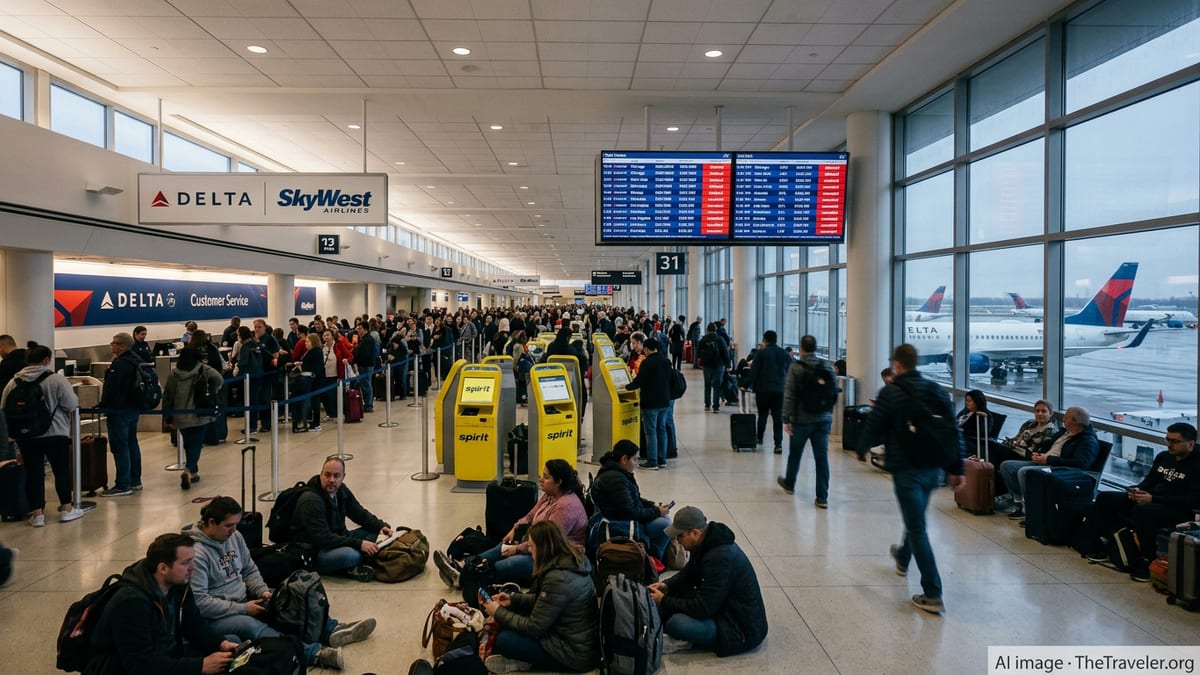
For passengers, the operational statistics translated into a day of uncertainty and frustration. At Detroit, lines formed at ticket counters and service desks as travelers sought new itineraries after missed connections or cancellations. Gate agents fielded repeated questions as departure times slid in 15- and 30-minute increments, while overhead announcements urged affected customers to use airline apps and websites where possible to avoid the longest queues.
Families traveling for spring break, business travelers with tightly scheduled meetings and passengers returning from international trips all reported disrupted plans. Some were forced into unplanned overnight stays in Detroit and other hub cities after evening connections disappeared, leading to a run on nearby airport hotels. Others chose to abandon connections and pursue ground transport to nearby destinations such as Chicago or Cleveland when alternative flights were unavailable or heavily overbooked.
The strain was particularly acute for those flying on separate tickets or across different airlines, who had less built-in protection when delays snowballed. With spare seat capacity limited on popular routes, last-minute walk-up fares for remaining open seats could be steep, leaving some travelers weighing whether to wait for rebooking or absorb significant out-of-pocket costs to keep moving.
Airport staff and airline ground crews, meanwhile, worked under pressure to turn aircraft quickly, coordinate de-icing and towing operations where required, and manage boarding processes for flights likely to depart close to their revised times. Observers described packed gate areas and standing-room-only conditions in some concourses during the peak disruption period.
What Passengers Should Do if Flying Through Detroit
With Detroit once again illustrating how quickly disruptions at a major hub can spread nationwide, travel planners and frequent flyers are urging extra caution for those scheduled to pass through the airport in the near term. Passengers are being advised to monitor flight status early and often on airline apps, sign up for text alerts, and pay close attention to any changes in gate assignments or posted departure times.
Travel experts suggest building in longer connection windows on itineraries that route through Detroit, particularly during peak travel periods or seasons when weather-related delays are more common. Where possible, booking through fares on a single carrier or alliance can provide stronger protection, as airlines are generally more flexible in rebooking passengers on their own metal or that of close partners when major disruptions occur.
For those already at the airport when problems arise, early proactive action can make a difference. Joining customer service lines as soon as a significant delay appears likely, while simultaneously using airline apps or phone support, can increase the chances of securing scarce alternative seats. Travelers with flexibility in their schedules may also find it worthwhile to ask about re-routing through secondary hubs if primary routes such as Chicago, New York, Atlanta or Los Angeles are heavily constrained.
As Saturday’s disruption demonstrated, even a localized surge in delays and cancellations at Detroit can quickly reverberate across the United States. For now, airlines are working to reposition aircraft and crews to restore normal operations, while passengers and industry watchers alike keep a close eye on one of the country’s most important and occasionally fragile aviation hubs.