

More news on this day
Travelers at Montreal-Pierre Elliott Trudeau International Airport are facing widespread disruption as publicly available data show at least 25 flight cancellations and 159 delays affecting services operated by Air Canada, WestJet, Jazz Aviation, Emirates and other carriers, with knock-on impacts across the United States, Mexico, Canada, the Caribbean and Europe.
Get the latest news straight to your inbox!
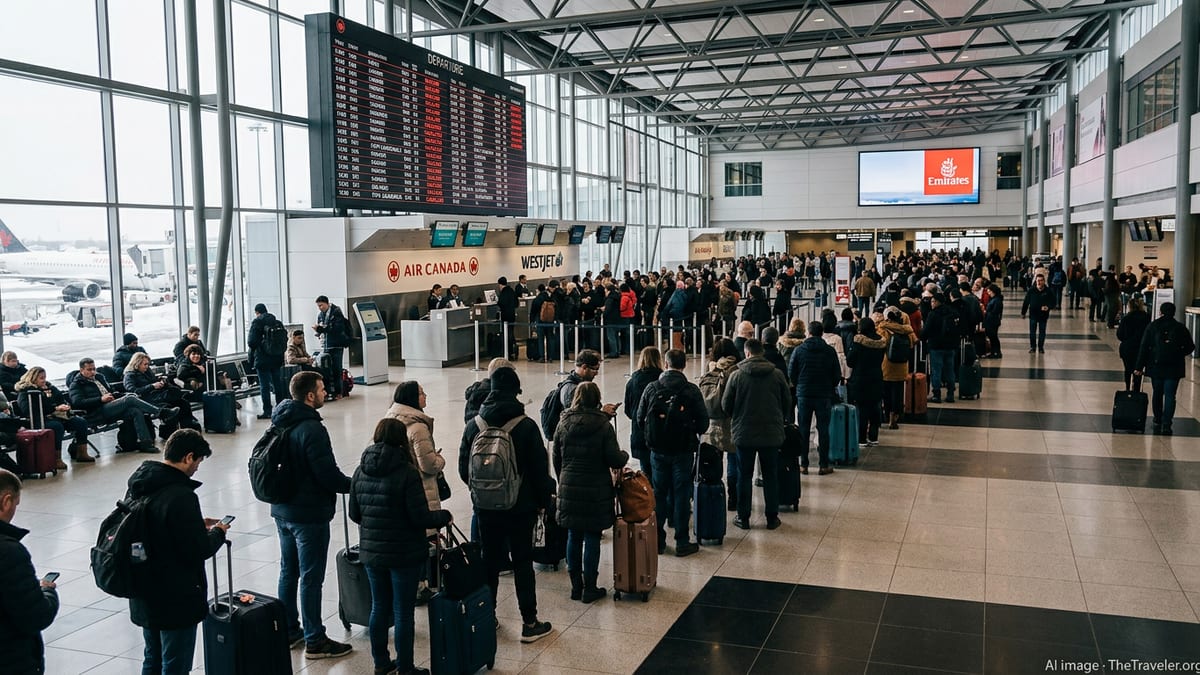
Widespread Cancellations and Delays at Montreal-Trudeau
Operational data from flight-tracking platforms on Tuesday indicate that Montreal-Trudeau has become one of the most affected airports in North America, with a cluster of cancellations and delays across multiple airlines and alliances. Air Canada, WestJet, regional operator Jazz Aviation and long-haul carriers including Emirates appear among those with disrupted schedules, encompassing both departing and arriving services.
The figures, showing 25 cancelled flights and 159 delayed services linked to the airport, point to a significant interruption for a hub that connects Canada with key destinations in the United States, Europe, Mexico and the Caribbean. The disruption compares unfavourably with typical daily cancellation rates reported for North American carriers in recent months, suggesting an above-average level of operational stress.
Publicly available information shows that delays at Montreal-Trudeau are spread across domestic, transborder and international routes rather than concentrated on a single segment. This pattern increases the likelihood of missed connections and extended layovers, as passengers seeking to travel beyond Montreal, particularly through major hubs in the United States and Europe, encounter rolling knock-on effects.
Impact Spreads to US, Mexico, Caribbean and Europe
Montreal-Trudeau functions as an important gateway for traffic moving between Canada and a range of popular leisure and business destinations, and the current wave of delays and cancellations is reverberating across that network. Flight-status data from multiple tracking services show disrupted services linking Montreal with major US airports, Mexican resort destinations, Caribbean islands and European hubs.
Connections through major US cities are particularly sensitive to schedule disruption in Montreal, since many itineraries rely on tight transfer windows. When an initial leg from Montreal departs late or is cancelled, passengers risk missing transcontinental or onward international segments, turning a short delay into an extended, multi-leg disruption involving rebookings and overnight stays.
Services to Mexico and the Caribbean appear notably exposed as well, with delays affecting sun destinations that are currently in high demand with Canadian travelers. When outbound flights depart late or are cancelled, return rotations may also be pushed back, leaving travelers temporarily stranded at resort airports and compressing aircraft availability on subsequent days.
Across the Atlantic, long-haul operations to and from European hubs can be particularly difficult to recover once delays compound. Publicly available coverage of earlier disruption events involving Canadian carriers shows that single-day operational issues can take several days to fully unwind when long-haul aircraft and crews are out of position, a dynamic that may again be influencing today’s schedule.
Key Airlines Under Pressure
Air Canada, the dominant carrier at Montreal-Trudeau, accounts for a large share of flights passing through the airport and therefore a significant proportion of the delays and cancellations. Recent transportation statistics for North American carriers have highlighted a modest overall cancellation rate, but passengers regularly report that localized weather, crew scheduling challenges and tight aircraft rotations can quickly push an airline’s operation beyond its available buffers.
WestJet and its affiliated services are also listed among impacted flights, underscoring the vulnerability of Canada’s concentrated airline market when one or more carriers encounter issues on the same day. Past regulatory decisions and enforcement actions in Canada have emphasized carrier obligations around treatment, rebooking and compensation when delays and cancellations are within airline control, though passengers often describe complex and time-consuming claims processes.
Jazz Aviation, operating many regional services under the Air Canada Express brand, is a crucial link between smaller Canadian cities and Montreal-Trudeau. When regional feeders experience delays or cancellations, passengers aiming to connect onward to the United States, Mexico, the Caribbean or Europe can lose entire itineraries. Industry analyses have repeatedly noted that regional networks are especially sensitive to crew availability and aircraft rotations, meaning even minor disruptions can cascade through the schedule.
Emirates, which operates long-haul services connecting Montreal to the Middle East and beyond, also appears among airlines with delayed flights. Long-haul carriers typically have fewer daily frequencies on a given route, so when a single flight experiences significant delay, passengers may face limited same-day alternatives, particularly for journeys requiring onward connections in Europe, Asia or Africa.
Passenger Experience: Long Queues and Rebooking Challenges
Reports from travelers posting on social platforms and aviation forums describe long check-in and customer-service lines at Montreal-Trudeau as passengers attempt to secure rebooked flights and clarify their rights. Some accounts reference extended waits at call centres and difficulty obtaining clear information on whether hotel accommodation, meal vouchers or alternative routing on other airlines will be provided.
Previous episodes of disruption involving major Canadian carriers have shown that passengers often experience a patchwork of responses, with outcomes varying depending on whether delays are categorized as within the airline’s control, related to maintenance, staffing or scheduling, or attributed to external factors such as weather and air traffic constraints. Guidance materials distributed by consumer advocates highlight that classification as a controllable delay can significantly influence eligibility for compensation and support.
Travelers attempting to connect through Montreal to international destinations report particular concern about missed onward flights in the United States and Europe. Because many itineraries are ticketed on a single booking across alliance partners, a delay on the first segment can trigger automatic rebookings across multiple carriers. While this can help preserve travel plans, it may also result in significantly lengthened itineraries, additional overnight stays, and changes to arrival airports or times.
For those currently stranded at Montreal-Trudeau or at downline airports in Mexico, the Caribbean and Europe, publicly available advice from regulators and consumer organizations stresses the importance of documenting expenses, retaining boarding passes and written communications, and confirming whether delays have been officially recorded as within the airline’s control when preparing potential claims.
What Travelers Can Expect in the Coming Days
Based on patterns observed in previous large-scale disruption events affecting Canadian airlines, operational recovery at Montreal-Trudeau may take several days even if the number of new cancellations begins to fall. Aircraft and crews must be repositioned, and some flights may continue to depart late while schedules are gradually realigned with available resources.
Data from recent transportation performance reports indicate that, in similar situations, carriers often prioritize bringing long-haul international operations back to schedule, followed by domestic and regional routes. This can mean that travelers on shorter segments to or from Montreal face ongoing adjustments, including last-minute gate changes, aircraft swaps and residual delays, even after headline cancellation numbers begin to improve.
Passenger-rights information published by regulators and consumer groups advises travelers to monitor their flight status frequently, use airline apps or online tools to request rebooking where possible, and consider discussing alternative routings via other hubs if Montreal remains heavily affected. For some passengers, rerouting through alternate Canadian or US gateways may offer a faster path to final destinations, albeit sometimes with additional connections.
As airlines work to stabilize operations, industry observers suggest that the combination of high seasonal demand, limited spare capacity and tight crew scheduling leaves little margin for error. The current disruption at Montreal-Trudeau illustrates how quickly a relatively small number of cancellations and a few dozen delayed departures can expand into a network-wide challenge spanning Canada, the United States, Mexico, the Caribbean and Europe.