

More news on this day
Thousands of air travelers across Europe and Türkiye are facing severe disruption after a wave of flight cancellations and delays swept through major hubs from Istanbul to London, Cologne, Prague and Munich, snarling schedules for carriers including Pegasus, easyJet, Turkish Airlines and Ryanair.
Get the latest news straight to your inbox!
Storms, Regional Tensions and System Strain Converge
Publicly available airport and aviation data from recent days indicate that a combination of powerful storms and wider geopolitical turbulence has pushed Europe’s aviation network under intense strain. Coverage from travel industry outlets describes more than 360 weather related cancellations and over 3,000 delays affecting routes across Türkiye, the United Kingdom, Germany, Italy and the Czech Republic, among others.
Reports attribute much of the immediate disruption to severe weather systems bringing high winds, heavy rain and localized thunderstorms that have swept across parts of Southern and Central Europe. These conditions have limited runway capacity, forced aircraft to hold or divert and constrained the ability of ground crews to turn planes around quickly, compounding knock on delays into the evening bank of departures.
The disruption has hit at a time when European aviation is already contending with volatility linked to regional conflicts and ongoing operational fragilities. Airlines and airports have been working with tighter staffing margins and complex rerouting around conflict zones, leaving schedules more exposed when storms or technical bottlenecks emerge.
Travel industry coverage notes that the impact has rippled well beyond individual weather cells, as aircraft and crews displaced by earlier cancellations struggle to return to their planned rotations. This has produced rolling delays into subsequent days, affecting passengers far from the original storm centers.
Major Hubs from Istanbul to London Bear the Brunt
Among the hardest hit locations are some of Europe’s most important transfer hubs. Recent reports highlight significant disruption at Istanbul’s airports, where a mix of domestic and international services has been curtailed, as well as at London area airports and major German, Italian and Central European gateways including Cologne, Munich and Prague.
Travel and aviation trackers show that Istanbul has experienced dozens of cancellations and a surge of delayed departures and arrivals, affecting both Türkiye based and foreign carriers. The city’s role as a bridge between Europe, the Middle East and Asia has amplified the effect, with missed connections and tight turnarounds cascading across long haul and regional networks.
In the United Kingdom, London’s congested airspace has proved especially vulnerable as weather systems moved across Western Europe. Publicly available flight status boards and industry summaries indicate that London area airports have seen hundreds of delayed departures and arrivals in a short window, along with a smaller but still significant number of outright cancellations.
German and Central European hubs including Cologne, Munich and Prague have also reported elevated disruption, with flights arriving late from storm affected regions and then departing behind schedule. The concentration of disrupted services at a relatively small number of key airports has had an outsized impact on connectivity for travelers across the continent.
Low Cost and Network Carriers Alike Affected
The operational shock has not been confined to any single airline or business model. Travel industry reporting and passenger facing compensation platforms show that a broad mix of carriers are affected, including low cost groups such as Pegasus, easyJet and Ryanair alongside full service operators like Turkish Airlines and various European network airlines.
On some routes, particularly short haul intra European sectors, low cost carriers have recorded a flurry of cancellations as they attempt to stabilize rotations by cutting the most heavily delayed services. In other cases, these carriers have opted to operate flights with substantial delays in order to reposition aircraft and crews, leading to late night arrivals and missed onward connections.
Full service airlines have likewise grappled with schedule integrity, especially on hub and spoke networks that depend on tightly timed banks of arrivals and departures. When weather or air traffic restrictions force a temporary reduction in movements at a hub, dozens of connecting itineraries can be thrown off at once, leaving travelers stranded even when their individual flight ultimately departs.
Because many European airports host a mix of low cost and network carriers, passengers often experience disruption simultaneously across multiple brands. This can crowd customer service desks and limit the availability of alternative same day rebooking options, particularly on heavily trafficked city pairs.
Passengers Face Long Queues, Limited Options and Rights Questions
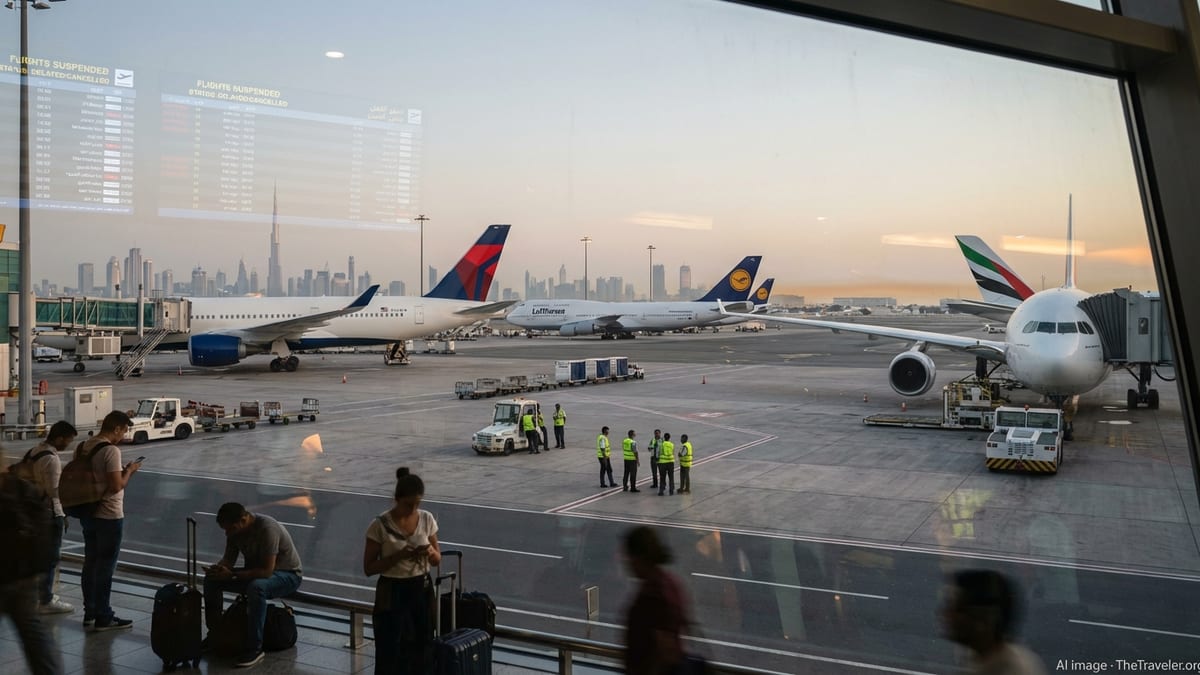
Images and accounts circulating via social media and referenced in travel news coverage depict crowded terminals, long lines at check in and customer service counters, and passengers camped out in seating areas waiting for new departure times. With more than 3,000 delayed flights cited in recent summaries, airport infrastructure and airline support channels have struggled to keep up with demand.
For many travelers, the primary challenges have been uncertainty and information gaps rather than outright cancellations. Rolling departure times, shifting gate assignments and tight connection windows have made it difficult to plan onward travel, especially for those with rail or ferry links, hotel check ins or time sensitive commitments at their destination.
Consumer advocates and passenger rights specialists have reiterated that many travelers on affected routes fall under the scope of European passenger protection rules, including the EU regulation establishing common rules on compensation and assistance in the event of denied boarding, cancellation or long delay. Under those rules, airlines operating from EU airports, as well as EU based carriers flying into the bloc, may be required to provide care and, in some circumstances, financial compensation depending on the cause and length of the disruption.
However, the question of eligibility can be complex when severe weather and wider air traffic control constraints are involved. Public guidance notes that while airlines must generally offer rebooking or refunds for canceled services, compensation for delays may not apply in cases deemed to be outside the carrier’s control, creating frustration for passengers trying to understand their entitlements.
Outlook: Continued Knock On Effects Likely
Operational data and forecasts suggest that while the most intense weather systems are beginning to move eastward, knock on effects are likely to persist for at least another cycle of departures and arrivals. Aircraft and crews remain out of position on several busy intra European routes, and some hubs are still working through backlogs from earlier in the disruption.
Airline schedule updates show targeted cancellations on select routes as carriers attempt to create buffer in their operations and avoid further last minute disruptions. In parallel, many flights are departing with moderate delays as airports manage residual congestion in airspace and on the ground.
Travel advisories compiled by industry media encourage passengers with upcoming departures through Istanbul, London, Cologne, Prague, Munich and other affected airports to monitor their flight status closely on official airline channels, arrive at the airport earlier than usual and build additional time into any planned connections. Those already stranded are being urged by consumer groups to explore digital rebooking tools and to keep records of expenses that might later be claimed under applicable passenger rights rules.
While the current wave of disruptions does not approach the scale of past continent wide shutdowns, such as those linked to volcanic ash or prolonged air traffic control strikes, recent events highlight how vulnerable Europe’s dense aviation network remains when severe weather and geopolitical uncertainty intersect at already busy hubs.