

More news on this day
Travellers at Washington Dulles International Airport faced long waits and uncertainty on Thursday as 59 delayed departures and eight cancellations involving United Airlines, Delta Air Lines, British Airways and Lufthansa disrupted links to New York, Chicago, London, Boston and other major US destinations.
Get the latest news straight to your inbox!
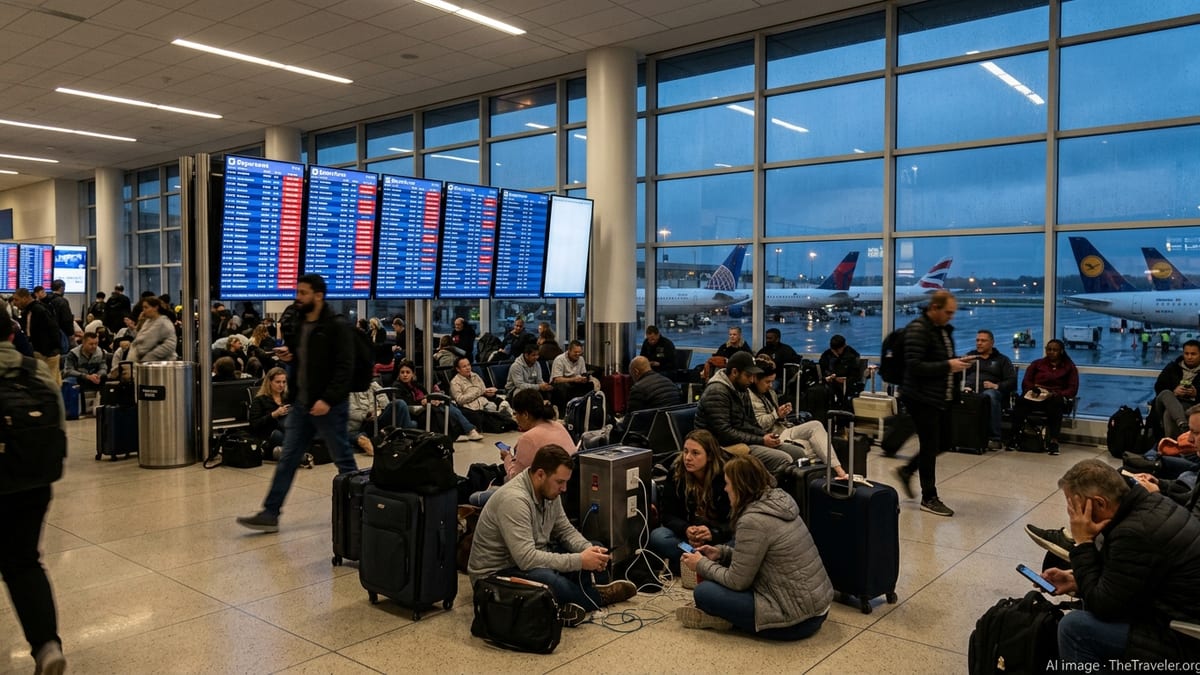
Wave of Delays Ripples Across Key Domestic and Transatlantic Routes
Publicly available flight tracking boards for Washington Dulles on Thursday showed a concentrated wave of schedule disruptions, with dozens of departures pushed back by one to three hours across the afternoon and evening peak. Many of the affected flights were bound for major hubs such as New York, Chicago and Boston, while others connected Dulles to London and additional transatlantic gateways.
United Airlines, the dominant carrier at Dulles, accounted for a large share of the delayed departures as its hub operations absorbed rolling hold times and aircraft rotations. Delta Air Lines also reported late-running services on competitive routes into New York and Boston, while British Airways and Lufthansa registered delays on long haul departures to London and onward European connections.
Operational data indicates that several of the delayed flights had already experienced upstream disruption earlier in the day, compounding congestion at Dulles during the evening push. Passengers on some routes reported schedule changes appearing repeatedly in airline apps and airport displays, with departure estimates shifting in 30 to 60 minute increments.
The pattern left Dulles departure banks looking uneven, with some gates turning flights quickly while neighbouring stands showed aircraft remaining parked for extended periods. The uneven flow added to a sense of uncertainty for passengers waiting to board already crowded services to major US hubs.
Cancellations Add Pressure as Rebooking Options Tighten
Alongside the 59 posted delays, eight flight cancellations across United, Delta, British Airways and Lufthansa further strained the network. While a relatively small number in absolute terms, the cancellations removed hundreds of seats from already busy routes into New York, Chicago and other key cities, making same-day rebooking more difficult.
According to airline schedule information, some of the cancellations were tied to aircraft and crew positioning challenges, where prolonged delays up-line left carriers without the necessary resources at Dulles to operate later flights. In other cases, lower frequency international services were consolidated, with passengers shifted onto alternative departures from Dulles or rerouted through other East Coast hubs.
Rebooking pressure was especially visible on transatlantic services, where British Airways and Lufthansa typically operate a limited number of daily departures from the Washington region. With London and other European hubs already running near capacity in late March, securing comparable itineraries often required accepting overnight stays or connections through secondary airports.
In the domestic market, some travellers reported being redirected to flights from nearby airports, including Baltimore/Washington and Reagan National, as remaining Dulles services filled. However, the short-notice nature of the cancellations left others queuing at service desks seeking hotel and meal support while waiting for seats on the next available departure.
Weather, Airspace Constraints and Knock-On Effects Blamed
Broadly across the US network, late March has been marked by unsettled conditions and intermittent air traffic control programs that limit takeoffs and landings at busy hubs. Recent storms affecting the East Coast and Midwest, as well as regional ground stops in the Washington area linked to equipment issues, have contributed to systemwide congestion in recent days.
Aviation analysts note that when storms or airspace restrictions reduce capacity at one or more hubs, the effects often cascade through interconnected schedules. Aircraft and crews that arrive late at one airport frequently depart late on subsequent legs, producing lines of delayed flights that may extend for days before fully clearing.
For a hub like Dulles, where United operates a dense banked schedule and international alliances connect onward to Europe and beyond, such disruptions can be particularly visible. Late arrivals from cities such as Chicago, Boston and New York can quickly ripple outward, delaying onward flights to London and other long haul destinations and reducing the buffer time built into schedules.
Industry research into delay propagation in the post pandemic era indicates that security checks, weather volatility and the high utilisation of fleets have all increased the likelihood that a single disruption will spread across multiple airports. With airlines running lean schedules approaching the busy spring period, there is often limited spare capacity to absorb sudden spikes in delay minutes.
Passengers Face Long Queues, Tight Connections and Limited Amenities
For travellers caught in Thursday’s disruption at Dulles, the operational challenges translated into packed gate areas, crowded restaurants and long lines at customer service counters. As departure times slid into the evening, passengers bound for New York, Chicago and Boston watched connection windows in those cities narrow, raising concerns about missed onward flights.
Some travellers reported using airline apps to attempt same day changes and standby lists in an effort to secure earlier departures or reroutes through alternative hubs. Others opted to remain with their original flights, even after multiple delay notifications, calculating that gate agents would prioritise through passengers in the event of tight connections.
Airport facilities at Dulles remained open and functioning, but periods of congestion left power outlets, seating and food concessions in high demand. With delays spanning several hours in some cases, passengers travelling with children or tight business schedules described the experience as particularly taxing, especially when updates on gate screens remained generic or changed frequently.
The impact extended beyond Dulles itself, as late arriving flights into New York, Chicago and Boston forced many connecting passengers to overnight in those cities. Hotel availability near major hubs was already constrained by spring events and conventions, adding a further logistical hurdle to disrupted journeys.
Airlines Adjust Schedules and Urge Travellers to Monitor Status
By late afternoon, publicly accessible schedules for United, Delta, British Airways and Lufthansa showed a mix of rolling delays and a handful of proactive adjustments, including swapped aircraft types and retimed departures. These moves are commonly used to stabilise operations, prioritising long haul departures and flights carrying large numbers of connecting passengers.
Airlines have encouraged customers in recent weeks to build additional time into itineraries involving East Coast and Midwest hubs, particularly when connecting to international flights. Industry guidance typically recommends allowing several hours between domestic and transatlantic sectors in order to absorb potential delays at security, immigration or in the airspace system.
For passengers planning to travel through Dulles in the coming days, publicly available information suggests monitoring flight status closely through airline websites and mobile apps, and checking for any travel waivers that may permit voluntary changes without additional fees. With schedules still recovering from recent weather and airspace disruptions, flexibility around departure times, routings and even departure airports can significantly improve the chances of a smoother journey.
As the evening wore on at Dulles, departure boards gradually began to show more flights pushing back from gates, but residual delays remained visible across multiple banks. For many travellers heading to New York, Chicago, London, Boston and other key destinations, the day served as another reminder of how quickly modern air travel plans can be upended by overlapping strains on the aviation system.