

More news on this day
Hundreds of passengers across Australia and New Zealand have been caught up in widespread disruption as at least 704 flights were delayed and 22 services cancelled across major hubs including Melbourne, Sydney, Auckland and Wellington, affecting operations by Jetstar, British Airways, Qantas, Air New Zealand and several other carriers on busy regional and trans-Tasman routes.
Get the latest news straight to your inbox!
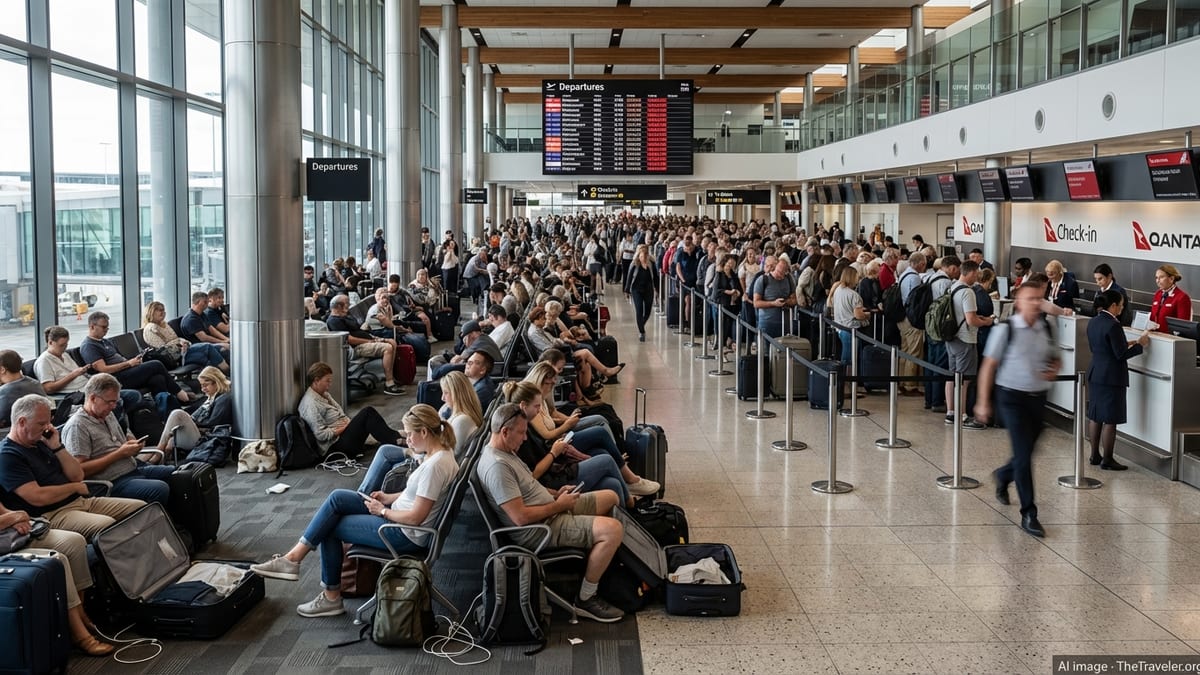
Major Hubs Struggle With Cascading Operational Disruption
Publicly available flight-tracking data and airport information indicate that disruption has spread across multiple airports on both sides of the Tasman, with Melbourne and Sydney in Australia and Auckland and Wellington in New Zealand seeing the heaviest impact. The pattern of delays points to congested peak periods where minor timetable slippages at one airport quickly cascade into knock-on effects across interconnected networks.
Trans-Tasman routes linking Sydney and Melbourne with Auckland, Wellington and Christchurch appear to be among the most affected, compounding the pressure on airlines that rely on tight turnarounds for short- to medium-haul services. Reports show Jetstar, Qantas, Air New Zealand and British Airways all experiencing delayed departures and arrivals within the same operational windows, leaving aircraft and crew out of position for subsequent flights.
Operational data published by aviation performance monitors in recent months already highlighted the sensitivity of these corridors, with several routes between Melbourne, Wellington, Sydney and Auckland recording lower on-time performance and sporadic cancellations. The latest disruption is consistent with that pattern, but the scale of 704 delays and 22 cancellations in a short period has placed additional stress on ground operations, customer service desks and airport infrastructure.
Airports have been advising travellers through public channels to check the status of their flights before heading to the terminal and to allow extra time for check-in and security. Crowded departure lounges, lengthening queues at airline counters and rebooking lines have been reported across multiple terminals, particularly during morning and late afternoon banked departures.
Weather, Congested Airspace and Staffing Combine to Slow Traffic
Industry reporting and recent operational updates suggest that the latest wave of disruptions cannot be attributed to a single cause. Seasonal weather patterns in southeastern Australia and across New Zealand, including low cloud, fog and strong crosswinds, have periodically reduced runway capacity at major hubs, forcing air traffic control to widen separation between arriving and departing aircraft.
In addition to weather-related constraints, Australian and New Zealand aviation forums and transport data have recently drawn attention to staffing pressures in air traffic control and ground handling. When controller numbers fall below required levels, airspace capacity is reduced and arrival and departure rates are scaled back, which can rapidly translate into delays across dozens of services, particularly on tightly scheduled domestic and regional runs.
The interaction between these factors is particularly visible in Sydney and Melbourne, where curfews and runway use restrictions limit an airline’s ability to recover lost time later in the day. Once early morning departures slip, recovery windows narrow and aircraft that were scheduled to continue on to Auckland, Wellington, Queenstown or other regional destinations depart late or are forced into rolling delays.
For passengers, the distinction between primary causes matters less than the cumulative effect. Travellers departing Auckland or Wellington may experience lengthy waits even when local conditions appear calm, as delays upstream in Sydney or Melbourne ripple through shared aircraft and crew schedules. The result is often a mismatch between advertised departure times and real-world operations across several carriers at once.
Jetstar, Qantas, Air New Zealand and British Airways Under Scrutiny
The concentration of delays among well-known brands such as Jetstar, Qantas, Air New Zealand and British Airways has drawn renewed scrutiny of airline reliability on regional and long-haul routes. On-time performance statistics released over the past year already show variable punctuality across these airlines on trans-Tasman sectors, with some routes between Melbourne, Sydney, Auckland and Wellington regularly recording below-average on-time arrivals.
Low-cost carrier Jetstar and full-service operators Qantas and Air New Zealand each rely on high daily utilisation of single-aisle aircraft shuttling between domestic and international sectors. When an early inbound from a New Zealand city arrives late into Melbourne or Sydney, the same aircraft may be scheduled to turn rapidly to another domestic route, amplifying the impact across the network. British Airways, operating long-haul services that connect into these hubs via codeshare and alliance partners, can also face downstream disruption when local feeder flights do not operate as planned.
Aviation analysts have previously noted that while cancellation rates on many of these routes remain relatively low, the frequency and length of delays are increasingly visible to passengers using real-time tracking tools and airport apps. For travellers facing missed connections, additional accommodation costs and disrupted itineraries, the distinction between a technical delay and a formal cancellation can feel academic.
Consumer advocacy organisations in both countries have pointed to recent cases in which passengers on delayed or cancelled flights sought compensation or rebooking assistance, particularly when disruptions affected onward international journeys. The current cluster of delays and cancellations is likely to fuel renewed discussion of how airlines communicate options and obligations when schedules unravel.
Knock-on Effects for Regional Tourism and Business Travel
The timing and location of the latest disruptions are significant for tourism-dependent regions and for corporate travel planners. Routes linking Melbourne and Sydney with New Zealand’s main gateways underpin visitor flows to destinations such as Queenstown, Rotorua and the wider South Island, as well as business travel between financial and political centres including Auckland, Wellington and Australia’s eastern seaboard.
Tourism operators have previously highlighted how even short periods of irregular operations can upset carefully timed itineraries that combine flights with cruise departures, coach tours and high-demand accommodation. When a trans-Tasman flight arrives several hours late or is cancelled outright, downstream segments may become impossible to rebook at short notice, particularly during school holidays, major events or ski and summer peak seasons.
Corporate travellers are also exposed to the ripple effects when early morning departures between cities such as Wellington, Auckland, Sydney and Melbourne are disrupted. Missed meetings, delayed contract signings and additional overnight stays can increase travel budgets and reduce confidence in just-in-time planning. Some companies have responded by recommending earlier departures, longer buffers between connecting flights and more flexible booking policies.
Industry observers note that if sustained, patterns of irregular operations could influence airline choice and booking behaviour, with some passengers opting for carriers or departure times perceived as more resilient, even at a higher fare. The current spate of delays across multiple brands, however, underlines how interconnected the regional aviation ecosystem has become and how difficult it is for any single airline or airport to insulate itself completely from wider network shocks.
Travellers Urged to Monitor Flights and Build in Extra Time
In the face of widespread disruption, aviation and travel advisories consistently emphasise preparation and flexibility. Passengers scheduled to fly into or out of Melbourne, Sydney, Auckland, Wellington and other affected airports are being urged by publicly available guidance to monitor flight status through airline apps, airport departure boards and third-party tracking services right up to the time of travel.
Travel planners recommend building additional time into itineraries, particularly when connecting between domestic and international segments or linking flights with cruise departures, rail journeys or major events. Where possible, travellers are encouraged to register contact details with airlines so they can receive notifications of gate changes, delays or rebooking options.
For those already affected by delays and cancellations, consumer information services advise retaining receipts for meals, accommodation and alternative transport, and reviewing the conditions of carriage, travel insurance policies and local consumer protections to understand potential avenues for reimbursement. Experiences shared in recent months by disrupted passengers in Australia and New Zealand suggest that persistence and detailed documentation can improve outcomes when seeking compensation or alternative arrangements.
While airline and airport operations across the Tasman are continuing, the scale of the latest disruptions underlines how quickly irregular operations can spread through an interconnected network. With 704 recorded delays and 22 cancellations concentrated across some of the busiest corridors in the region, both industry participants and travellers are being reminded of the fragility of tightly timed schedules in a system exposed to weather, staffing and capacity constraints.