

More news on this day
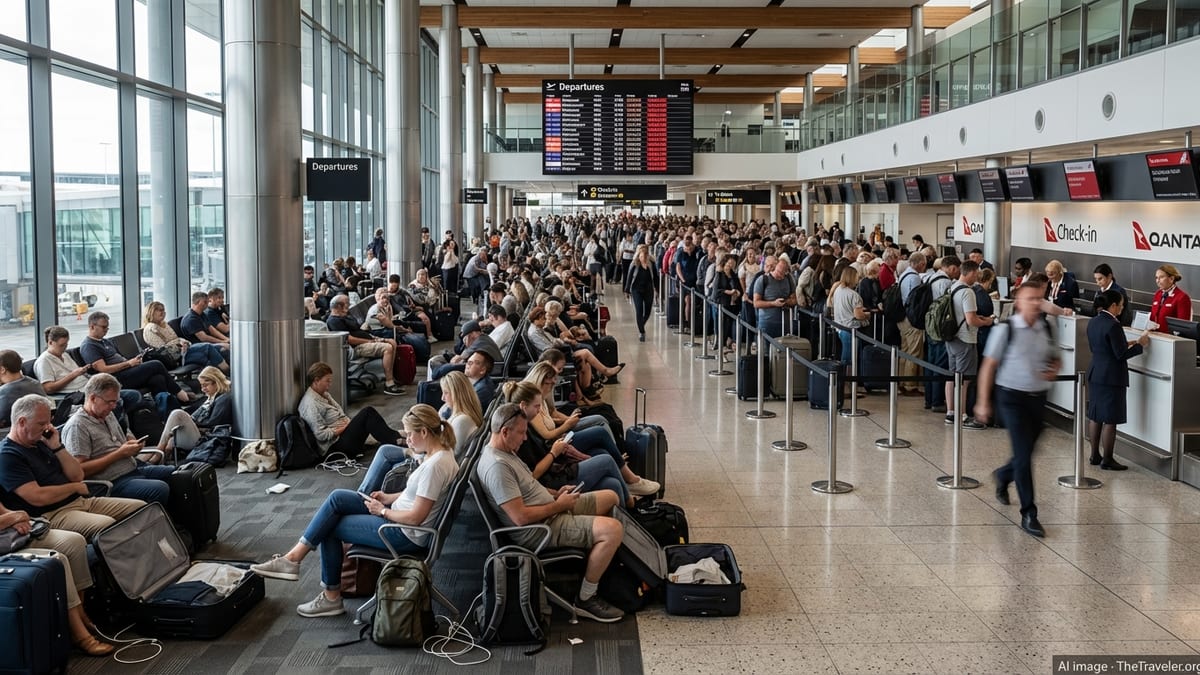
Hundreds of passengers across Australia and New Zealand are facing significant disruption after at least 704 flights were delayed and 22 services cancelled across major hubs including Melbourne, Sydney, Auckland and Wellington, affecting operations by Jetstar, Qantas, Air New Zealand, British Airways and several other carriers.
Get the latest news straight to your inbox!
Wide-Ranging Disruption Across Trans Tasman Network
Publicly available flight-tracking data and airport operational summaries indicate an unusually high number of schedule disruptions across the Australia and New Zealand corridor, with knock-on effects from early morning departures continuing into evening bank departures. The pattern of irregular operations spans both domestic and international services, impacting some of the busiest city pairs in the region.
The bulk of the delays are concentrated at Melbourne and Sydney in Australia and at Auckland and Wellington in New Zealand, where dense schedules and shared airspace amplify the effect of any operational bottleneck. Travelers reported lengthening queues at check in and security, as well as aircraft holding at gates while departure slots were reassigned.
The elevated level of disruption is affecting a mix of short haul and long haul flights. Trans Tasman services that link Australia’s east coast with Auckland and Wellington appear particularly exposed, as late arriving aircraft from earlier domestic sectors have cascaded into missed departure windows and reduced on time performance throughout the day.
While delays dominate the statistics, a smaller but still significant number of outright cancellations has forced passengers to rebook on later flights or rerouted itineraries. This has added pressure to already busy weekend and school holiday schedules, narrowing options for same day recovery for many travelers.
Major Carriers Hit, From Budget to Full Service
Among the airlines most visibly affected are Jetstar, Qantas, Air New Zealand and British Airways, alongside a range of international and regional operators that share codes or feed into their networks. Flight status boards at Melbourne and Sydney show clusters of delayed departures for Jetstar and Qantas on popular domestic routes that connect into trans Tasman and long haul services.
In New Zealand, Air New Zealand’s domestic and international services have experienced rolling delays, particularly on trunk routes linking Auckland, Wellington and Christchurch that serve as feeders for flights to Australia. Delays on these routes can quickly ripple into international departures, creating missed connections and extended wait times in transit lounges.
British Airways, which operates long haul services into Sydney often in cooperation with Qantas under alliance agreements, has also been drawn into the disruption pattern when late inbound arrivals or congested ground operations limit the ability to turn aircraft on schedule. Passengers connecting between Europe, Asia and the South Pacific are exposed when just one sector in a multi leg itinerary falls significantly behind schedule.
Reports from airport observers suggest that a mix of legacy full service carriers and low cost operators are affected, indicating systemic pressure across shared infrastructure rather than isolated issues at a single airline. That has complicated efforts by travelers to switch carriers at short notice, as alternative flights on competing airlines may be operating with limited spare capacity.
Airports Struggle With Capacity, Weather and Operational Strain
Operational data and local media coverage point to a blend of contributing factors, including weather related constraints, air traffic control staffing challenges and high terminal loads during peak travel periods. In Sydney and Melbourne, low cloud and gusty conditions at times have required increased separation between aircraft, which reduces the number of takeoffs and landings that can be safely accommodated each hour.
Air traffic management constraints, particularly at Sydney, have been highlighted in previous episodes where staff shortages led to reduced runway movements and a wave of cancellations and delays across the domestic network. Similar limitations, even for a few hours, can lead to sustained knock on effects as aircraft and crew fall out of position for subsequent services.
In Auckland and Wellington, local operational conditions can amplify disruption. Auckland’s role as New Zealand’s main international gateway means that any disruption there quickly affects domestic feeder flights, while Wellington’s weather sensitive approaches and shorter runway can leave airlines with fewer options during periods of low visibility or high winds. Past episodes of fog and heavy rain at Auckland have demonstrated how quickly schedules can unravel when visibility drops.
Airport infrastructure projects and ongoing terminal works have also added complexity. Redevelopment at major terminals in both countries has sometimes tightened gate availability or altered passenger flows, which can slow boarding and turnarounds when combined with high passenger loads, security screening peaks and baggage handling bottlenecks.
Passengers Confront Missed Connections and Overnight Stays
The broad geographic spread of delays and cancellations has left many passengers facing missed onward connections, rebooked itineraries and, in some cases, unexpected overnight stays. Travelers connecting via Melbourne, Sydney or Auckland to destinations in Asia, Europe and North America are particularly vulnerable when domestic or regional segments depart late.
Accounts shared on social platforms and in local travel forums describe families and business travelers waiting hours beyond scheduled departure times, sometimes with limited real time information about revised boarding or arrival times. Others report being moved to flights departing the following day when same day alternatives were fully booked or operating with minimal spare seats.
The uneven impact across flights has led to frustration among some travelers whose services operated on time while friends or colleagues on similar routes encountered heavy disruption. Observers note that aircraft rotation patterns and crew duty limits can cause specific flights to bear the brunt of irregular operations, even when conditions appear normal at the airport at a given moment.
Given the concentration of disruption on high demand corridors, some passengers have also reported increased fares for last minute one way tickets as they sought to salvage important events or connections. Those costs add to out of pocket expenses for meals, accommodation and ground transport when extended delays or cancellations require overnight stays away from home.
What Travelers Can Do Amid Ongoing Irregular Operations
Travel industry guidance suggests that passengers flying within or between Australia and New Zealand during periods of elevated disruption should build additional buffer time into itineraries, especially when connecting to long haul services. Longer layovers at major hubs can reduce the risk that a delay on a short sector causes a missed onward flight that may not operate again for 24 hours or more.
Publicly available airline and airport resources encourage travelers to monitor flight status frequently on the day of travel, as departure times can change multiple times in response to evolving weather, air traffic control restrictions and aircraft availability. Checking in online, arriving early at the airport and keeping contact details updated with airlines can help ensure passengers receive any schedule notifications promptly.
Consumer advocates also advise reviewing fare conditions and travel insurance policies before departure, as coverage for delays, cancellations and missed connections varies widely by ticket type and insurer. Understanding entitlements around meal vouchers, hotel accommodation and rebooking options may help travelers make quicker decisions if their flight is significantly disrupted.
With operational pressures likely to persist during peak travel periods, observers expect airlines and airports in Australia and New Zealand to continue refining contingency plans, from additional staffing at critical times to more flexible aircraft and crew allocations. For now, passengers planning to transit Melbourne, Sydney, Auckland, Wellington and other busy gateways are being urged by publicly available guidance to remain prepared for potential changes to their travel plans on short notice.