

More news on this day
Thousands of passengers across Australia have been stranded or forced into lengthy detours after a fresh wave of disruption hit the country’s aviation network, with published data indicating at least 88 flight cancellations and more than 1,200 delays impacting services through Sydney, Melbourne, Brisbane, Perth and several regional and international hubs.
Get the latest news straight to your inbox!
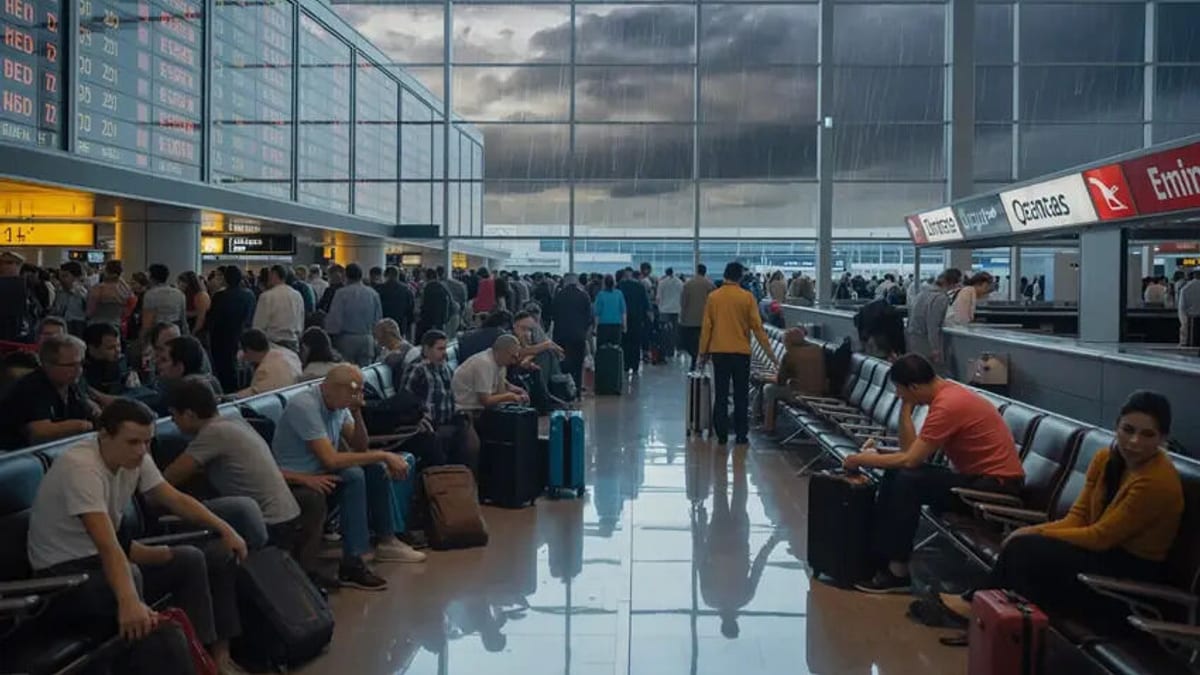
Image by Global Travel Alerts, Advisories, International Travel Alerts
Wide-Ranging Disruptions Across Major Australian Hubs
Publicly available aviation tracking data and local media reports indicate that Australia’s busiest gateways have borne the brunt of the latest operational turbulence, with Sydney, Melbourne, Brisbane and Perth all experiencing significant schedule disruption. The pattern of cancellations and delays has rippled out across domestic trunk routes and connecting regional services, compounding the impact for travelers trying to reach smaller cities and onward international flights.
Flight statistics referenced in recent coverage suggest that at least 88 flights have been cancelled across the network, alongside approximately 1,230 delayed services. These figures span a mix of domestic and international operations, including peak-time departures and arrivals. The disruption has been particularly visible in congested periods around the morning and evening banks, when a single delayed aircraft can quickly cascade into missed connections and rolling schedule changes.
Airports in Canberra and Newcastle’s Williamtown, which rely heavily on connections through the larger capitals, have also seen their schedules affected. Travelers flying between these secondary hubs and major cities such as Sydney and Brisbane have reported missed connections onto long-haul services, turning what would normally be a straightforward same-day journey into an unplanned overnight stay or a complete itinerary rework.
Operational stress has been exacerbated by existing congestion at several airports and ongoing capacity constraints. Recent commentary on flight performance in Australia has already highlighted elevated cancellation and delay rates on some key routes, leaving airlines with limited flexibility when fresh disruptions arise.
Qantas, Air New Zealand, Emirates and Others Caught in the Snarl
The latest wave of irregular operations has affected a broad mix of carriers, from Australia’s flag carrier Qantas and its regional affiliates through to major international airlines including Air New Zealand and Emirates. Publicly accessible schedule and tracking information shows disruptions radiating along trans-Tasman and long-haul corridors, not only within Australia but also at overseas points such as Abu Dhabi and other Middle Eastern and Asian hubs.
For Qantas, interruptions on core domestic sectors such as Sydney to Brisbane and Melbourne to Perth have had knock-on effects for passengers connecting to international departures. Travelers booked through to North America, Europe and Asia via east-coast gateways have faced last-minute reroutings, extended layovers or rebookings on alternative services as airlines work within constrained fleets and tightly planned rosters.
Air New Zealand operations between Australia and New Zealand have also been caught in the disruption cycle. When flights out of Australian cities depart late or are cancelled, there is limited slack to reposition aircraft and crews on trans-Tasman rotations, which can in turn affect services onward from Auckland and other New Zealand hubs.
Emirates and other long-haul carriers operating between Australia, the Middle East and Europe are likewise exposed to delays and cancellations on feeder services. Passengers travelling from cities such as Canberra or Newcastle via Sydney, or from regional centres feeding into Melbourne and Brisbane, are especially vulnerable when the first domestic sector of a multi-leg journey is delayed, as missed minimum connection times can mean rebooking across multiple airlines and alliances.
Weather, Operational Pressures and International Turbulence
Recent publicly available commentary on Australian aviation performance points to a familiar mix of causes behind the latest figures. Adverse weather around Sydney and other coastal airports, including strong winds and low visibility, has frequently triggered ground delay programs and single-runway operations, sharply reducing capacity at peak times and forcing airlines to trim schedules or accept substantial delays.
Operational strains within airline networks are another key factor. Tight aircraft utilization, crew rostering limits and ongoing fleet transitions leave limited resilience when something goes wrong. When a long-haul aircraft arrives late or is reassigned due to maintenance or international disruption, knock-on effects can cascade through domestic schedules, resulting in clusters of cancellations and rolling delays that may linger for several days.
The global context is also amplifying local problems. Recent instability across parts of the Middle East has prompted periodic airspace restrictions, diversions and schedule changes on routes linking Australia with Gulf hubs and beyond. Long-haul carriers must sometimes reroute or reschedule flights to avoid affected areas, adding flight time, fuel burn and operational complexity, all of which can reverberate through tightly timed global networks.
As these factors intersect, passengers travelling through cities such as Abu Dhabi and other regional hubs are experiencing the downstream effects of delays that originated in Australian airports, even when their immediate flights appear to be operating normally. Missed inbound connections, crew rest requirements and aircraft rotation issues are contributing to a patchwork of last-minute gate changes, rebookings and extended ground time.
Impact on Passengers and Travel Planning
For travelers, the statistical picture of 88 cancellations and more than 1,200 delays translates into missed holidays, disrupted business trips and unexpected expenses. Reports from affected passengers describe long lines at service desks, limited same-day rebooking options and challenges securing accommodation in cities where multiple flights have been cancelled simultaneously.
Travel industry guidance increasingly emphasizes the importance of building additional margin into itineraries that involve international connections, particularly when transiting through busy hubs in Sydney, Melbourne, Brisbane or Perth. Allowing longer layovers can reduce the risk of misconnecting, especially on itineraries that involve separate tickets or different airlines which may not automatically protect onward segments.
Consumer-focused commentary also highlights the value of understanding airline policies on compensation, meal vouchers and accommodation during significant disruptions. While rules vary by carrier and jurisdiction, keeping documentation of delays and cancellations, along with receipts for essential expenses, can assist travelers who later seek refunds or goodwill gestures.
Many passengers are also being encouraged to actively monitor their flights via airline apps and third-party tracking tools, rather than relying solely on airport departure boards. In some cases, information about rolling delays, gate changes or aircraft swaps is appearing online before it is reflected on terminal displays, giving travelers a small but sometimes critical head start in rebooking or adjusting their plans.
What the Disruptions Signal for Australia’s Aviation Network
The current wave of cancellations and delays underscores ongoing fragility in Australia’s aviation system as it continues to rebuild and recalibrate in the wake of recent global and regional shocks. While overall capacity has recovered on many routes, the combination of weather vulnerability, stretched fleets and external geopolitical pressures is leaving airlines with limited room to absorb sudden operational shocks.
Industry analysts have pointed to elevated cancellation and delay rates on several key domestic routes over the past two years, suggesting that structural issues, rather than isolated events, are driving much of the recent turbulence. High utilization of aircraft, persistent workforce challenges and infrastructure constraints at major airports all contribute to a situation where even modest disruptions can quickly ripple nationwide.
The impact is particularly acute for regional centres such as Canberra and Newcastle’s Williamtown, which depend heavily on reliable feed from larger hubs. When Sydney or Melbourne experiences a period of disruption, regional passengers can find themselves disproportionately affected, as airlines prioritize limited capacity on major trunk routes and long-haul services.
For now, the combination of 88 cancellations and over 1,200 delays serves as a stark reminder that passengers traveling to, from or within Australia remain exposed to sudden changes in their plans. As airlines adjust schedules and refine contingency planning, travelers are likely to continue building greater flexibility into their itineraries, treating extra time in transit as a necessary buffer rather than a luxury.