

More news on this day
Thousands of air travelers across Australia are facing widespread disruption as a wave of cancellations and delays ripples through major hubs including Sydney, Melbourne, Brisbane, Perth and regional centers, with reports indicating at least 88 flights cancelled and more than 1,200 delayed, snarling domestic and international networks operated by Qantas, Air New Zealand, Emirates and other carriers.
Get the latest news straight to your inbox!
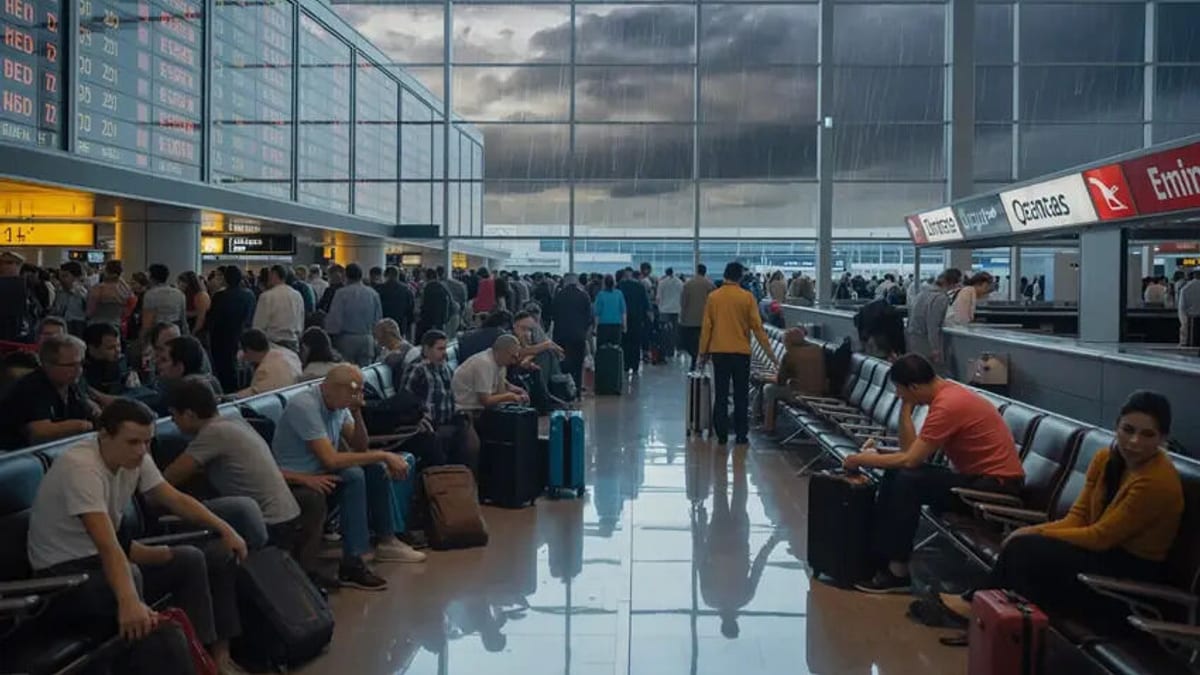
Image by Latest International / Global Travel News, Breaking World Travel News
Weather Turmoil and Network Strain Hit Major Hubs
Publicly available flight-tracking data and airport operations updates indicate that a combination of adverse weather and knock-on operational pressures has severely affected schedules at Australia’s busiest gateways. Sydney, Melbourne, Brisbane and Perth have all reported periods of ground delay programs or capacity constraints in recent days, with ripple effects spreading well beyond the initial storm cells or low-visibility events.
In Sydney, recent storms and reduced runway capacity have led to extended ground holds for arriving and departing services, contributing to a surge in late departures and missed connections on key domestic routes such as Sydney to Brisbane and Sydney to Melbourne. Similar pressure has been reported in Melbourne, where tight aircraft and crew rotations mean that even short suspensions of operations can quickly cascade into multi-hour delays across the network.
These disruptions are not limited to Australia’s four primary gateways. Reports from Canberra and regional centers such as Newcastle’s Williamtown Airport suggest that secondary airports are also experiencing schedule changes as airlines reassign aircraft, consolidate services and attempt to recover time on trunk routes. The result is a patchwork of cancellations and rolling delays that have left travelers facing uncertain departure times and complex rebooking scenarios.
Operational data published by regulators and industry bodies in recent years has highlighted the vulnerability of Australia’s domestic system to weather and resource shocks, with on-time performance metrics regularly dipping during peak holiday periods or severe weather events. The current pattern of disruption appears consistent with these broader structural pressures, with relatively small disruptions at key hubs triggering widespread knock-on effects.
Qantas, Emirates, Air New Zealand and Others Forced to Retime
The latest wave of irregular operations has affected a wide range of airlines, but Australia’s flag carrier Qantas and its regional and low-cost partners are particularly exposed due to their extensive domestic coverage and reliance on busy east-coast hubs. Publicly accessible schedules show a concentration of cancellations and sizeable delays on services linking Sydney, Melbourne, Brisbane and Perth, as well as routes into Canberra and regional ports such as Williamtown.
Internationally, long-haul networks have also come under strain. Services operated by carriers such as Emirates and Air New Zealand, which rely on Australian gateways as key spokes for connections to the Middle East, North America and the Pacific, have seen timing changes, extended ground times and, in some cases, outright cancellations. When a long-haul departure from Sydney or Melbourne is delayed or cancelled, passengers bound for onward connections in Dubai, Abu Dhabi or Auckland can face significant disruption to multi-leg itineraries.
Re-accommodating travelers on these routes is complicated by high load factors and limited spare capacity at short notice, especially during busy travel periods. Publicly available information from airline booking systems suggests that many alternative departures in the next few days are already heavily booked, forcing some passengers to accept reroutings via secondary hubs or overnight stays at transit points.
Airlines have pointed in recent months to broader industry challenges, including aircraft availability, tight engineering windows and crew scheduling constraints, as factors that limit their ability to respond quickly when severe weather or airspace restrictions reduce capacity. The current pattern of cancellations and delays appears to reflect that constrained flexibility, with carriers prioritizing certain trunk routes and higher-yield services when deciding which flights to operate, retime or consolidate.
Knock-On Impacts in Canberra, Williamtown and Beyond
While the most visible disruptions are playing out at the major capital-city airports, secondary gateways and regional centers are also feeling the impact. Canberra, a key spoke in the domestic grid, has seen a series of schedule adjustments in recent years whenever Sydney experiences operational constraints, and current disruption patterns suggest a similar dynamic as airlines shuffle aircraft to protect core east-coast services.
In New South Wales, Newcastle’s Williamtown Airport, which handles a mix of domestic services and limited international or charter flights, has reported altered departure and arrival times as carriers adjust rotations. Travelers departing from or arriving into these smaller airports can be particularly vulnerable when flights are cancelled or heavily delayed, as there are often fewer alternative services and limited ground transport options to nearby hubs.
The disruption is also being felt along key international corridors linked to Australia. Passengers connecting via Abu Dhabi, Dubai and other Middle Eastern hubs, or transiting through New Zealand on routes operated by Air New Zealand, can be affected when their Australian feeder flights depart late or are cancelled. This can lead to missed onward connections, extended layovers and, in some cases, re-routing via entirely different continents if more direct paths are constrained.
Industry observers note that this interconnectedness means irregular operations in Australia can quickly assume a global dimension. A single cancelled departure from Sydney or Melbourne may require re-scheduling for travelers booked onward to Europe, North America or Asia, straining call centers, digital self-service platforms and airport customer service teams as they work within the options presented by tightly booked networks.
Travelers Face Long Queues, Rebookings and Uncertain Timelines
For passengers, the immediate reality of this disruption is long queues at check-in counters and service desks, crowded departure halls and frequent changes to departure boards. Publicly shared accounts from affected travelers describe extended tarmac waits, repeated retimings and short-notice cancellations that can upend carefully planned itineraries for holidays, business trips and family visits.
Travel advice published by consumer groups and aviation specialists in Australia has long emphasized the importance of monitoring flight status closely on days when storms or severe weather are forecast around major hubs such as Sydney and Melbourne. The current events underscore that guidance, with numerous services leaving significantly later than scheduled or being pulled from the timetable shortly before boarding times.
Flexible ticket conditions and travel insurance can play an important role in such situations, particularly for passengers on complex multi-leg journeys involving international connections. Publicly available policy summaries indicate that many airlines offer fee-free rebooking or credits when flights are cancelled, though entitlements for accommodation, meals or alternative transport vary widely by fare type and destination.
Passengers are also being reminded by travel advocates to keep documentation of expenses incurred during extended delays, such as accommodation and meals, in case they are eligible for partial reimbursement under airline policies or insurance coverage. In a system where statutory compensation rules are limited compared with some overseas jurisdictions, understanding the specific conditions attached to each booking is a critical part of planning.
What This Wave of Disruptions Reveals About Australian Aviation
The scale and geographic spread of the latest disruptions provide a snapshot of how finely balanced Australia’s aviation system remains in 2026. After a period of recovery and network rebuilding, airlines are operating intense schedules with limited slack in aircraft and crew resources, leaving them vulnerable when adverse weather, technical issues or airspace restrictions intersect at multiple hubs.
Recent reports from competition and consumer regulators have highlighted elevated cancellation rates and punctuality challenges across the domestic market, with particular pressures identified on routes feeding Sydney and Melbourne. The current pattern of 88 known cancellations and more than 1,200 delays across multiple days is broadly consistent with those findings, demonstrating that structural issues can quickly become visible to the traveling public during periods of stress.
For international partners such as Emirates and Air New Zealand, these events underscore the importance of resilience at their Australian gateways, where local conditions can have outsized effects on global schedules. When key departures from Sydney, Melbourne, Brisbane or Perth are disrupted, complex connection banks in cities such as Dubai, Abu Dhabi and Auckland must absorb the shock, potentially affecting travelers far from Australian soil.
Industry analysts suggest that ongoing investments in air traffic management, airport infrastructure and airline operational resilience will be central to mitigating future episodes of large-scale disruption. In the meantime, travelers are likely to continue facing occasional days when weather and operational realities align to ground aircraft, stretch resources and turn routine journeys into extended ordeals.