

More news on this day
Hundreds of travelers were left stranded on Wednesday as a wave of disruptions hit Tokyo’s Haneda and Narita airports, as well as Fukuoka, Kansai and Osaka International, with 333 flights delayed and 14 cancelled, snarling operations for All Nippon Airways, Japan Airlines, Peach Aviation and several regional carriers and rippling across routes to Osaka, Kyoto, Seoul and Hong Kong.
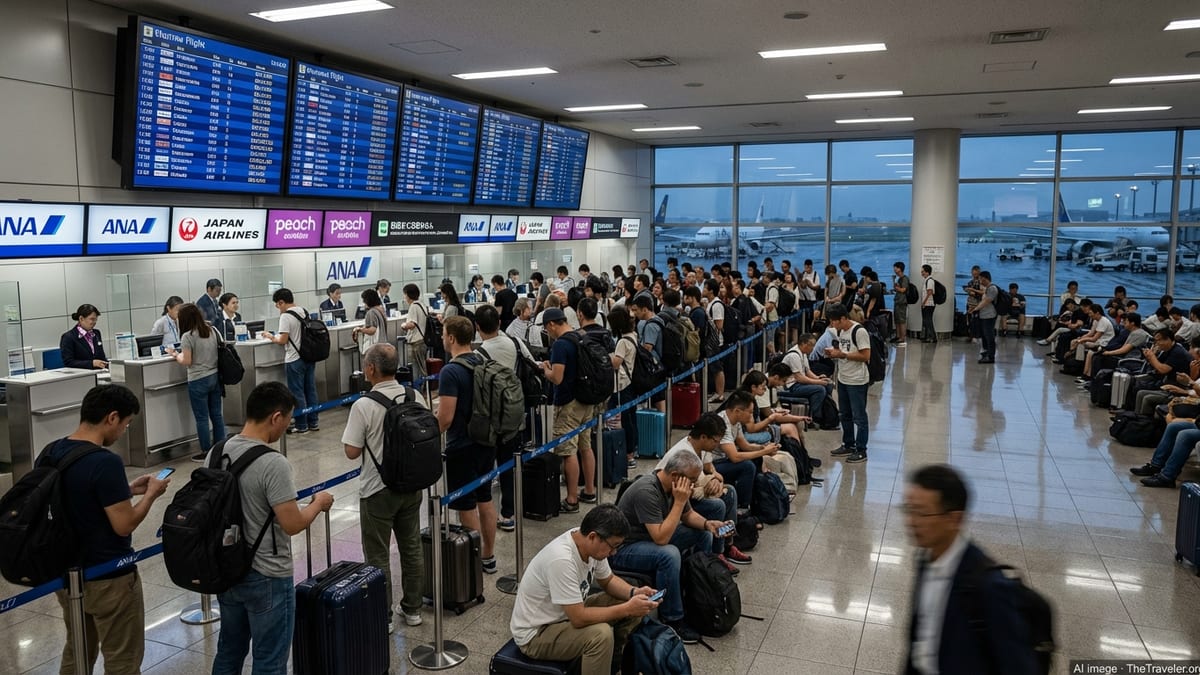
Major Japanese Hubs Buckle Under Widespread Disruptions
The disruption began in the early morning peak, when departures from Tokyo and Fukuoka started stacking up on departure boards, quickly spreading to Kansai International and Osaka International. By mid-morning, delay estimates of 30 to 60 minutes for select routes had ballooned into multi-hour waits, forcing airlines to reshuffle aircraft and crew across Japan’s busiest domestic and short-haul international corridors.
Haneda and Narita, which together handle the bulk of metropolitan Tokyo’s domestic and regional traffic, were among the hardest hit. Travelers bound for Osaka and Kyoto via Kansai, as well as onward connections to Seoul and Hong Kong, found themselves waiting in long lines at check-in counters and transfer desks as carriers attempted to rebook affected passengers onto later services.
At Kansai International, a key hub for low-cost and regional operations, passengers reported congested security checkpoints and packed gate areas as multiple delayed services were boarded almost simultaneously. Airport staff deployed additional personnel to manage queues and provide updates at the gates, but many travelers described information as sporadic and subject to rapid change.
Osaka International Airport, which handles mostly domestic traffic, also saw schedules slip throughout the day. Delays there compounded problems for passengers attempting to make tight connections in Tokyo or Fukuoka, highlighting the fragility of tightly timed itineraries across Japan’s usually punctual aviation network.
ANA, Japan Airlines and Peach Scramble to Rebook Passengers
All Nippon Airways and Japan Airlines, Japan’s two largest full-service carriers, bore much of the operational strain as they worked to recover tightly choreographed schedules. With aircraft and crews out of position, both airlines focused on preserving key trunk routes while consolidating lighter services and shifting passengers onto alternative flights where possible.
Customer-service counters for both carriers remained busy throughout the day as travelers sought new itineraries, meal vouchers and, in some cases, overnight accommodation. Staff members were seen manually reissuing boarding passes for passengers who had missed onward connections to Seoul and Hong Kong after originating flights from Osaka, Fukuoka or Tokyo departed late or were cancelled outright.
Peach Aviation, the Osaka-based low-cost carrier known for dense schedules linking Kansai with key East Asian cities, also faced mounting delays. Budget carriers typically operate with less spare capacity than full-service airlines, limiting options to swap in backup aircraft or add extra frequencies. That left some Peach passengers facing longer waits in terminal areas, particularly on popular leisure routes that were already operating close to capacity.
Several smaller regional and codeshare operators were also affected, as disruptions at the major hubs slowed aircraft rotations and narrowed connection windows. Passengers on multi-leg journeys involving mixed tickets across different airlines reported additional complications in securing through rebookings and checked-baggage transfers.
Ripple Effects Across Osaka, Kyoto, Seoul and Hong Kong
The flight disruptions quickly spilled beyond the airports themselves, affecting rail links and hotel bookings in some of East Asia’s most visited cities. In Osaka and Kyoto, inbound travelers arriving several hours late raced to catch the last shinkansen services or regional trains, while others were forced to adjust tightly planned itineraries that included temple visits, business meetings and onward domestic flights.
In Seoul and Hong Kong, where short-haul links to Japan are a staple of both business and leisure travel, airport operators reported clusters of delayed arrivals from Tokyo and Kansai. Some connecting passengers missed onward flights deeper into East and Southeast Asia, creating knock-on demand for next-day departures and raising the prospect of overbooked services on already busy routes.
Travel agencies in both cities indicated an uptick in calls from clients seeking alternative routings or last-minute hotel rooms. For passengers on package tours that combine multiple Japanese cities with side trips to Seoul or Hong Kong, tour operators raced to rearrange sightseeing schedules and ground transport in order to salvage as much of the original program as possible.
Local businesses, particularly those in central Osaka and downtown Kyoto that rely on steady flows of overseas visitors, braced for a lopsided day of demand as some group arrivals were delayed while others were cancelled entirely. Hoteliers near major stations reported that late-arriving guests were checking in close to midnight, compressing already-short stays.
Airlines Offer Waivers as Passengers Navigate Uncertainty
As the scale of disruption became clear, major carriers began offering a range of relief measures. ANA and Japan Airlines encouraged passengers booked on affected flights to check flight-status tools and mobile apps and, where eligible, to change their tickets to later dates without additional fees. Some customers were offered re-routes via alternative Japanese hubs or, in the case of regional flights, on partner airlines operating similar city pairs.
Budget operators such as Peach Aviation, which have stricter fare rules, also moved to provide a degree of flexibility for disrupted travelers. Passengers on cancelled services were generally entitled to rebooking on the next available flight or refunds, while those facing significant delays were advised to contact call centers or use self-service options for flight changes.
Within terminal buildings, airport authorities coordinated announcements in multiple languages and pushed updates to display screens as schedules were adjusted. Staff urged travelers scheduled to depart later in the day to arrive early and allow extra time for check-in and security, anticipating that the backlog of delayed flights would continue to ripple through evening operations.
Travelers with imminent departures from Tokyo, Fukuoka or Kansai were advised to monitor official airline channels closely and to keep boarding passes and receipts on hand, in case documentation is needed later for compensation claims or travel insurance purposes.
Travelers Urged to Build More Flexibility Into Japan Trips
The day’s cascading delays served as a reminder that even in a country renowned for aviation punctuality, large-scale disruptions can and do occur. Travel specialists noted that as demand for flights across East Asia continues to recover and expand, airline schedules are running tighter, with less slack built in to absorb unexpected interruptions.
Advisers recommended that international visitors to Japan, particularly those connecting through Tokyo or Kansai on the way to regional hubs like Fukuoka and Osaka, consider leaving wider buffers between flights and critical engagements. Building an extra night at the arrival city before major events, cruises or long-haul connections was cited as one practical way to reduce the risk of cascading travel problems.
For journeys linking Japanese cities with Seoul or Hong Kong, experts said it can be safer to avoid extremely tight layovers when using separate tickets or mixing low-cost and full-service carriers. While such combinations can be cheaper, they often lack the built-in protections of through tickets, leaving travelers to shoulder the cost of missed onward flights if initial segments are delayed.
With the full impact of the 333 delays and 14 cancellations still being felt across Japan’s aviation network by evening, airlines and airports continued recovery operations. Passengers, however, were already recalibrating their expectations for tightly scripted itineraries across one of the world’s most interconnected air travel regions.