

More news on this day
Hundreds of holidaymakers were left stranded at Punta Cana International Airport in the Dominican Republic as 101 flights were delayed and four were canceled, disrupting busy routes connecting the Caribbean resort hub with major cities including New York, Miami, Fort Lauderdale, Atlanta, Toronto, Montreal, Madrid, and London.
Get the latest news straight to your inbox!
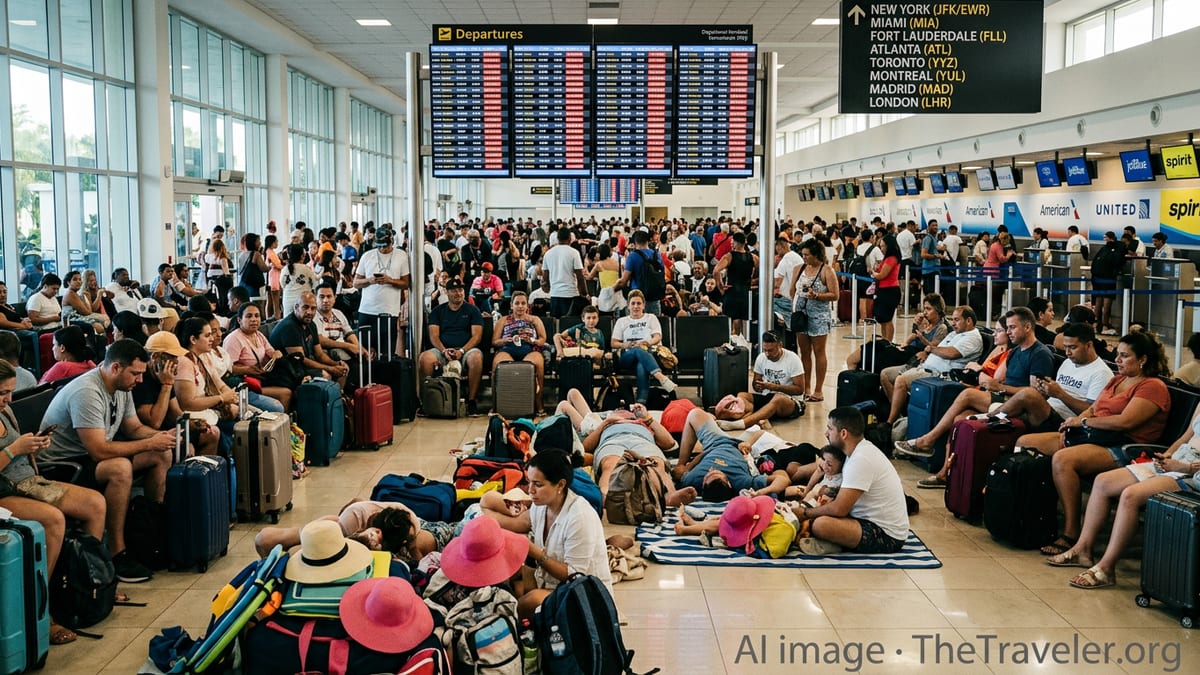
Wide-Ranging Disruptions Hit Major North American and European Hubs
The disruption at Punta Cana International Airport affected a dense web of flights linking the Dominican Republic with some of its most important source markets in the United States, Canada, and Europe. Publicly available flight status data showed delays cascading across routes to and from New York, Miami, Fort Lauderdale, Atlanta, Toronto, Montreal, Madrid, and London, magnifying the impact beyond the island’s shores.
American Airlines, Delta Air Lines, United Airlines, JetBlue, and Spirit Airlines were among the major carriers with schedules disrupted. These airlines collectively operate a significant share of Punta Cana’s traffic to North American hubs, meaning that even a relatively small number of cancellations can trigger missed connections and overnight stays for passengers further along the network.
According to published airport and airline data, Punta Cana is one of the busiest airports in the Caribbean, handling millions of passengers each year, particularly during peak holiday periods. When irregular operations coincide with high seasonal demand, rebooking options quickly become limited, leaving airports crowded and accommodation near popular resort areas in short supply.
Travel-tracking platforms and airline status boards indicated that many delayed flights faced rolling departure times throughout the day, complicating efforts by travelers to plan onward journeys and ground transport to and from resort zones along the eastern coast of the Dominican Republic.
Holiday Travelers Face Long Queues and Uncertain Timelines
The timing of the disruption has been particularly challenging for leisure travelers, many of whom had scheduled tightly packed holiday itineraries. Reports from passengers and local media coverage described scenes of crowded departure halls, long check-in and security lines, and groups of families camping out near gates while awaiting updated departure times.
With four flights canceled outright and more than one hundred delayed, travelers faced a range of outcomes, from relatively short waits to full-day disruptions. Publicly available information shows that when flights from Punta Cana to major hubs such as New York, Miami, or Atlanta are canceled, passengers often must wait for the next available service, which may already be heavily booked during peak seasons.
Families traveling with children, large tour groups, and cruise passengers with fixed embarkation times are especially vulnerable to such disruptions. Missed connections can mean forfeited hotel nights, lost excursion bookings, or the need to purchase last-minute replacement tickets at higher prices when package protections do not apply.
Social media posts and local press reports indicated that many travelers tried to rearrange plans on their mobile devices from the terminal, placing additional strain on airline call centers and chat services already dealing with elevated volumes due to the operational disruption.
Operational Strain on Major Carriers Serving Punta Cana
American Airlines, Delta Air Lines, United Airlines, JetBlue, and Spirit Airlines all rely on Punta Cana as a key leisure destination feeding their networks from the United States and Canada. Published route maps and scheduling data show that these carriers link the airport to major hubs such as New York, Miami, Fort Lauderdale, and Atlanta, as well as important Canadian gateways including Toronto and Montreal.
In normal conditions, coordination between airlines and ground handlers keeps a steady flow of arrivals and departures moving through Punta Cana’s terminals. However, when multiple flights are delayed at once, crews and aircraft can quickly become out of position. Publicly available operational analyses following previous large-scale disruptions highlight how aircraft displacement and crew duty limits often lead to extended delays or follow-on cancellations even after an initial issue has passed.
While the specific trigger behind the latest disruption at Punta Cana has not been fully detailed in public reporting, similar events in recent years across the airline industry have frequently been linked to a combination of weather impacts at origin or destination airports, congestion at busy hubs, downstream crew scheduling challenges, and high demand levels that leave little slack in the system.
Airlines typically respond by prioritizing flights with the highest passenger loads or key connection banks, which can mean that secondary routes or less frequent services experience longer delays. For a resort-focused airport like Punta Cana, where many flights operate only once daily, that can translate into a full-day or overnight wait for some travelers.
Ripple Effects on Hotels, Transfers, and Local Tourism Economy
The disruption at Punta Cana International Airport extends beyond the terminal itself, touching nearly every segment of the local tourism economy. Resort hotels, airport transfer companies, and tour operators are often called upon at short notice to adjust check-in times, rearrange transport schedules, or accommodate guests who find themselves unexpectedly stranded for an additional night.
According to tourism and aviation statistics for the Dominican Republic, Punta Cana is a cornerstone of the country’s visitor economy, welcoming millions of international tourists each year. When flight operations are significantly disrupted, hotels face late arrivals and no-shows, while ground transport providers must juggle overlapping pickups and drop-offs as flight times shift throughout the day.
Travel insurance providers and credit card travel protection programs may see a spike in claims as delayed or canceled flights trigger eligibility for compensation related to meals, accommodation, or replacement transportation. However, coverage terms vary widely, and many travelers remain uncertain about what costs can be recovered when plans change suddenly.
Local businesses inside the airport, from food outlets to retail shops, typically experience a surge in demand during extended delays as passengers remain airside longer than planned. While that can bring a short-term boost in sales, it also strains staffing and supply, particularly when delays affect multiple planeloads of travelers at once.
What Affected Travelers Can Do Next
For travelers caught in the disruption at Punta Cana, publicly available consumer guidance consistently emphasizes the importance of checking flight status frequently through official airline channels and airport boards. Mobile applications from major carriers such as American Airlines, Delta, United, JetBlue, and Spirit generally provide the most up-to-date departure times, gate changes, and rebooking options.
Airline policies published online indicate that when flights are significantly delayed or canceled, passengers may be eligible for rebooking at no additional fare, travel credits, or, in some circumstances, refunds, particularly if the disruption is within the airline’s control. Travelers are often advised to retain receipts for meals, hotels, and ground transport in case they are later able to submit claims under airline policies, travel insurance, or credit card protections.
Travel experts frequently recommend that passengers maintain flexibility in their plans during peak travel seasons, building in additional time for critical connections and avoiding tight same-day links to cruises or important events when possible. While such precautions cannot eliminate the risk of disruption, they can reduce the likelihood that a single delayed flight leads to a cascade of missed arrangements.
As operations at Punta Cana gradually normalize, the experience serves as a reminder of how central the airport has become to regional tourism and how quickly a localized disruption can reverberate across multiple countries, carriers, and travel plans during the busy holiday period.