

More news on this day
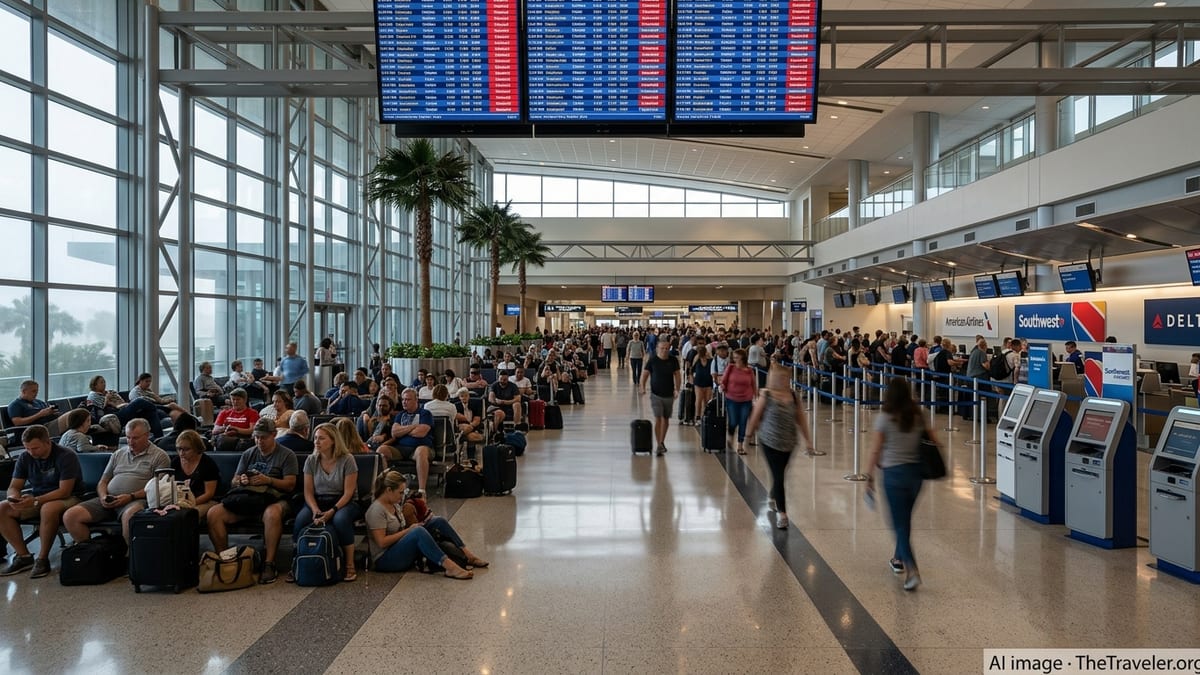
Hundreds of travelers were left stranded at Tampa International Airport as nearly 200 flights were delayed and more than 30 cancelled, triggering a ripple effect across major Florida hubs from Orlando to Miami and disrupting operations for American Airlines, Southwest Airlines, Delta Air Lines, and other carriers.
Get the latest news straight to your inbox!
Severe Disruptions Hit One of Florida’s Busiest Gateways
The latest wave of disruption struck Tampa International Airport at a time when Florida’s major hubs were already operating near peak capacity. Publicly available tracking data showed 198 flights delayed and 32 cancelled in and out of Tampa, affecting both domestic and connecting services across the statewide network of Tampa, Orlando, and Miami.
Airlines including American, Southwest, and Delta, along with several low-cost and regional operators, saw schedules compressed into narrower operating windows. The high density of short-haul routes linking Tampa to other Florida and Southeast destinations meant that delays on a single rotation quickly cascaded into missed connections and further knock-on disruptions.
Aviation data for recent seasons already indicated that Florida airports experience some of the highest delay rates in the United States, with Orlando and Miami frequently cited among the most affected. Tampa, while often considered one of the more efficient gateways in the state, is closely interconnected with these larger hubs, which increases its exposure when operational stress builds up across the regional system.
The situation at Tampa also highlighted the limitations of nearby diversion options. Although Orlando International and Miami International offer extensive networks, both operate with heavy daily schedules, particularly during holiday and peak travel periods, reducing the ability to absorb stranded passengers at short notice.
Passengers Face Long Waits, Missed Connections, and Limited Alternatives
For travelers inside the terminal, the disruption translated into hours of uncertainty. Departure boards at Tampa filled with rolling delay notices, while check-in counters and customer service desks saw growing queues as passengers attempted to rebook or seek information on alternative options.
Reports from travelers at Tampa and other Florida airports described long waits, crowded gate areas, and difficulty securing last-minute seats on remaining flights. With multiple carriers affected at the same time, competing demand for limited inventory pushed many passengers onto later departures, overnight stays, or lengthy ground journeys between Florida cities.
Downline hubs also came under pressure. Delayed flights outbound from Tampa meant missed connections at major nodes such as Atlanta, Charlotte, Dallas Fort Worth, and Miami, where replacement seats were already in short supply. Travelers heading to smaller regional markets were particularly vulnerable, as many of those destinations are served by only one or two daily frequencies.
For some travelers, the only viable alternatives involved renting cars, sharing rides, or booking intercity buses between Tampa, Orlando, and South Florida. Prior disruptions in the U.S. aviation system have shown similar patterns, with rental car counters and roadside transport providers quickly facing spikes in demand when airline cancellations mount.
Major Airlines Struggle to Rebalance Crews and Aircraft
The knock-on effect on airline operations was significant. For American, Southwest, and Delta, the challenge extended beyond the immediate cancellations to the task of repositioning aircraft and crews already out of sequence. When multiple rotations are delayed out of a busy station such as Tampa, crew duty-time limits and aircraft maintenance windows can rapidly constrain recovery options.
Industry analyses of recent large-scale disruptions in the United States have underlined how quickly modern airline networks can become imbalanced. When aircraft end up in the wrong place at the wrong time and reserve crews are already committed elsewhere, even modest weather or airspace issues can cascade into widespread schedule changes, especially at high-volume leisure destinations like those in Florida.
Publicly available operational data shows that low-cost and legacy carriers alike have been operating with tighter schedules and higher aircraft utilization in recent years. While this improves efficiency under normal conditions, it also reduces the buffer available when irregular operations develop, leaving airports such as Tampa more exposed to protracted disruption when severe delays build up.
As airlines worked through the backlog, recovery efforts focused on consolidating lightly booked flights, upgauging aircraft where possible, and prioritizing routes with the highest concentrations of stranded passengers. However, with Orlando and Miami also affected by delays, the usual strategy of rerouting Tampa passengers through nearby hubs offered limited relief.
Wider Impact Across Orlando, Miami, and Florida’s Tourism Corridor
The disruption reached far beyond Tampa’s terminals. Because many of the affected flights linked Tampa with Orlando, Miami, and other Florida gateways, the schedule shocks reverberated along one of the country’s most important tourism corridors. Travelers heading to cruise departures, theme parks, and beach destinations faced changing itineraries, shortened vacations, or missed departures.
According to published coverage and traffic reports, Orlando International and Miami International have both experienced elevated levels of delays and cancellations during recent peak travel periods. When combined with the sudden spike in disruptions at Tampa, that pattern left limited spare capacity elsewhere in the state to absorb diverted travelers or add extra sections on short notice.
The concentration of tourism-dependent traffic in Florida also magnifies the economic footprint of such disruptions. Missed hotel check-ins, rescheduled tours, and delays reaching cruise ports can translate into lost revenue for local businesses and additional out-of-pocket costs for visitors. Many travelers rely on tightly timed connections from their arrival flights to ground transfers and prebooked activities, leaving little margin when flights do not operate as planned.
Travel advisers frequently recommend adding buffer days ahead of cruises and major events in Florida to reduce the risk posed by airline disruptions. The latest wave of delays and cancellations at Tampa and its connected hubs is likely to reinforce that guidance for visitors planning trips during busy seasons.
What Stranded Travelers Are Being Advised to Do
Publicly available guidance from consumer advocates and aviation regulators typically urges stranded passengers to monitor airline apps and airport displays frequently, as flight statuses can change multiple times in a short window. When cancellations occur, travelers are generally encouraged to act quickly to secure rebooking options or refunds before remaining seats fill up.
Reports indicate that passengers affected by cancellations on American, Southwest, Delta, and other carriers from Tampa have been exploring a mix of strategies, including same-day standby on alternative flights, rerouting through less congested hubs, or shifting to earlier departures the following day. Some travelers have also opted to move their journeys to Orlando or Miami by road in order to tap into a broader range of flight options.
Passenger rights under U.S. regulations vary depending on whether a disruption is categorized as within the airline’s control or the result of external factors such as severe weather or air traffic restrictions. However, published federal guidance emphasizes that travelers are generally entitled to refunds when a flight is cancelled and they choose not to travel, a principle that has taken on renewed importance during recent large-scale disruptions.
With Florida’s major airports heading into another busy travel period, the latest difficulties at Tampa International Airport serve as a reminder of how quickly conditions can change. Travelers planning trips through Tampa, Orlando, or Miami in the coming days are being encouraged by travel specialists and online advisories to build flexibility into their itineraries, allow extra connection time, and keep backup plans in mind should schedules shift again.