

More news on this day
Flight operations at Hartsfield-Jackson Atlanta International Airport faced significant disruption in early April, as a combination of severe weather, heavy passenger volumes and ongoing staffing strains triggered hundreds of delays and a wave of missed connections across the country’s busiest hub.
Get the latest news straight to your inbox!
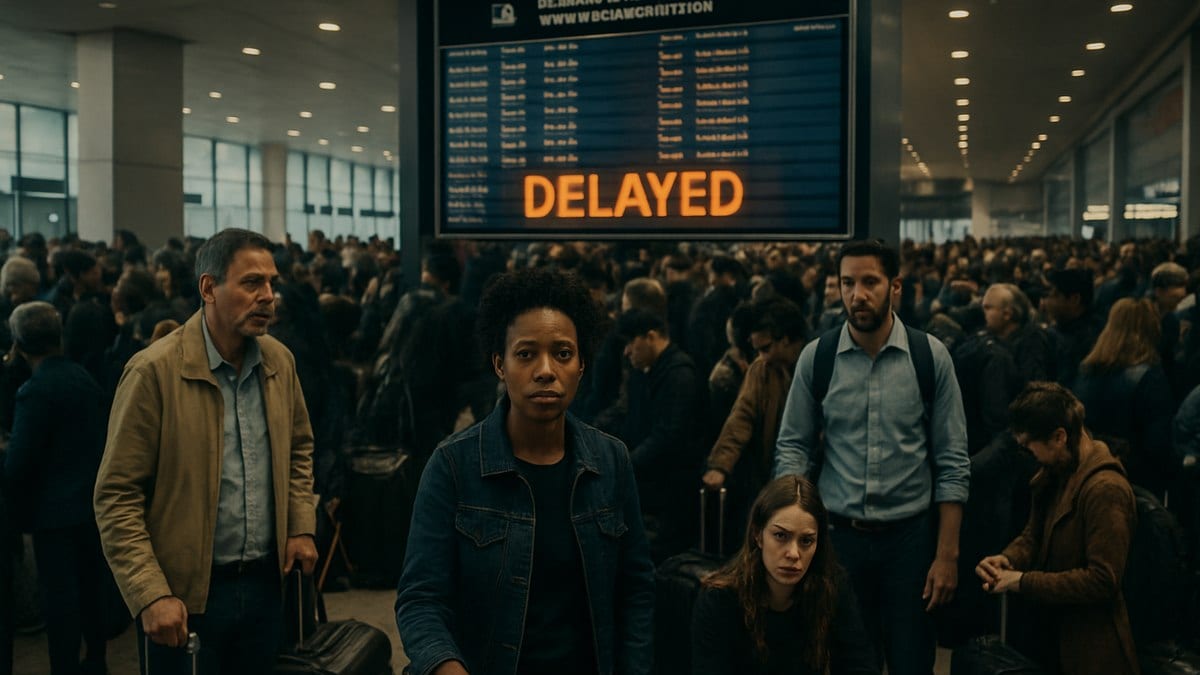
Spring Storms and Systemwide Strain Hit Atlanta Operations
Recent flight-tracking data for the first days of April show thousands of delays across the United States, with disruptions clustering at major hubs such as Atlanta, Chicago and Dallas. Published coverage indicates that storms across parts of the eastern and central United States, along with airspace congestion, played a central role in slowing departures and arrivals.
Travel industry reporting describes more than 4,400 delays and over 250 cancellations nationwide on April 1, with Hartsfield-Jackson Atlanta International Airport among the hubs experiencing notable operational stress. More recent tallies for April 5 point to additional disruption, with Atlanta again appearing in national statistics for both delayed and cancelled services.
Airline advisories cite active weather systems affecting routes into and out of the Southeast, alongside knock-on effects from earlier storms that left aircraft and crews out of position. For a hub the size of Atlanta, even a modest uptick in delays can reverberate across the network, as missed inbound connections cascade into late departures on subsequent legs.
Published information from one major carrier highlights continuing weather-related risks in the eastern United States, including for flights to and from Atlanta, and encourages travelers to monitor flight status closely and make use of rebooking tools when itineraries become unworkable.
Delays and Cancellations Build on an Already Fragile Month
The early-April disruptions arrive on the heels of an unusually difficult March for passengers using Hartsfield-Jackson. Reporting from aviation and local news outlets throughout the month documented rolling operational pressures, including severe weather in other parts of the country, runway and airspace congestion, and extended security screening times.
On April 1, travel trade coverage focused specifically on Atlanta described 194 delayed flights and seven cancellations in a single day, affecting services to key domestic destinations including New York, Chicago and Los Angeles. Although those numbers represent a fraction of the airport’s daily schedule, the concentration of delays at a central hub translated into missed connections and extended terminal waits for many travelers.
Additional national data compiled by industry publications show Atlanta continuing to appear in daily disruption tallies into the first weekend of April, alongside other large airports such as Dallas-Fort Worth, Los Angeles and Houston. While cancellations at Hartsfield-Jackson remained comparatively limited on some of those days, the volume of delayed flights contributed to crowded gate areas and stressed ground operations.
Travel analysts note that early April coincides with a busy period for leisure travel, as spring break trips overlap with business demand. Passenger volumes at large U.S. hubs, including Atlanta, have been at or above pre-pandemic levels, leaving little slack in the system when weather or staffing challenges arise.
Security Bottlenecks Add to Passenger Frustration
Alongside flight disruptions, travelers at Hartsfield-Jackson have been confronting unusually long security lines in recent weeks, a dynamic that intensified the sense of breakdown when delays spiked. Local coverage and traveler reports describe wait times that, at their worst in late March, stretched to two hours or longer during peak morning periods.
The strain on security checkpoints has been linked in part to a partial federal government shutdown that affected Transportation Security Administration staffing and pay. Publicly available information shows that on some days in March, callouts at Hartsfield-Jackson significantly reduced the number of open lanes, producing serpentine queues that extended deep into the terminal.
In response, airlines that rely heavily on Atlanta have introduced temporary customer accommodations. Reporting from travel and local outlets indicates that one major carrier offered fee waivers for certain passengers booked to or from Atlanta who were willing to shift travel dates, an attempt to ease crowding during the most difficult periods.
Local media organizations have also stepped in to document conditions in real time, with one Atlanta newspaper launching an online tool that collects wait-time submissions from passengers and uses the data to support continuing coverage of the evolving security situation.
City Leaders and Airport Planners Confront Longer-Term Questions
The latest wave of massive disruptions has renewed debate in Atlanta over how to make the world’s busiest airport more resilient to spikes in demand and external shocks. City council discussions reported in recent days include a proposal to study whether some or all security operations at Hartsfield-Jackson could be shifted to a private contractor model in a bid to avoid shutdown-related delays in the future.
The proposal follows weeks of intense traveler frustration. Public meeting materials and local reporting outline a range of ideas under consideration, from alternative screening arrangements to expanded communication tools designed to give passengers more accurate expectations before they reach the terminal.
Airport planning documents already emphasize irregular operations management, including detailed contingency plans for tarmac delays and large-scale disruptions. Transportation specialists note, however, that the combination of volatile weather, tight airline schedules and complex federal staffing structures leaves limited room for quick fixes at a hub of Atlanta’s size.
Any structural changes to security or terminal operations would require coordination among the city, federal agencies, airlines and concessionaires, suggesting that the current debate is likely to extend well beyond the immediate disruption cycle of early April.
What Travelers Can Expect in the Days Ahead
For passengers booked through Atlanta in the coming days, publicly available forecasts and airline advisories suggest a mixed picture. While the most intense storms affecting eastern routes have begun to move on, lingering weather systems and the backlog of aircraft and crew rotations may continue to produce delays, particularly during morning and evening peaks.
Carriers are urging customers, through posted advisories and booking tools, to check flight status repeatedly before heading to the airport and to consider adjusting itineraries if flexible travel waivers apply. Same-day changes, mobile rebooking and automated alerts have become important tools for navigating unpredictable departure boards at large hubs like Atlanta.
Travel experts recommend that passengers passing through Hartsfield-Jackson in the near term allow extra time both for security and for potential gate changes, especially during busy spring break periods. Guidance circulating in consumer coverage suggests arriving earlier than usual for morning departures, even when flying from terminals that historically have been less crowded.
While conditions are expected to stabilize as spring weather patterns shift and government funding questions ease, the recent episode at Hartsfield-Jackson illustrates how swiftly operations at a mega-hub can be disrupted and how delays in Atlanta can propagate across domestic and international networks within hours.