

More news on this day
Alberta’s intensifying measles activity has prompted new exposure warnings tied to Calgary International Airport and other busy travel hubs, raising fresh concerns for spring travelers moving through the province.
Get the latest news straight to your inbox!
New Airport Exposure Alerts in an Ongoing Provincial Outbreak
Publicly available advisories indicate that Alberta continues to report elevated measles activity in 2026, with cases spanning several health zones and multiple public settings. The latest alerts highlight potential exposure periods at Calgary International Airport, underlining how quickly the virus can intersect with domestic and international travel.
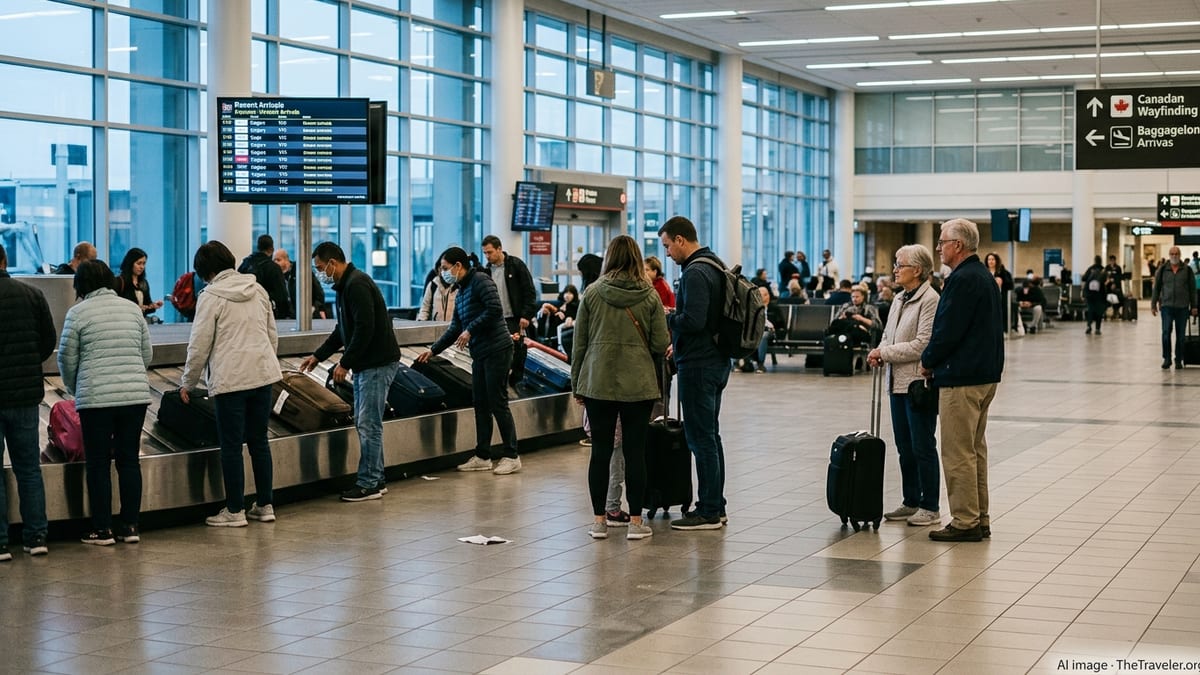
Recent community posts summarizing health alerts describe potential measles exposure at Calgary International Airport baggage claim and overnight at an airport-area accommodation on March 10 and 11, 2026. These time-stamped windows are important because measles can remain in the air or on surfaces for several hours after an infectious person has left, meaning travelers passing through the same spaces during the advisory period may be at risk.
These airport-linked warnings build on a pattern that has emerged over the last two years. Earlier exposure notices in 2025 referenced infectious individuals moving through Calgary International Airport’s U.S. departures area and specific gates, as well as connections between Alberta airports and destinations such as Salt Lake City and Vancouver. Together, these events illustrate how measles can follow air routes and transform travel hubs into amplifiers of regional outbreaks.
While Alberta’s official measles dashboard and advisories emphasize that overall case numbers fluctuate week by week, recent summaries show that confirmed infections in 2026 have already reached into the triple digits province-wide. This context gives added weight to each new airport exposure window, particularly for travelers who may have uncertain vaccination histories.
Travel Hubs Across Alberta Flagged as Risk Locations
Calgary International Airport is not the only travel node implicated in Alberta’s current measles picture. Published information from the province and local coverage shows repeated alerts involving airport hotels, highway communities, and regional health facilities that function as gateways for both residents and visitors.
Past advisories linked measles exposure to an airport-area hotel near Calgary, major shopping destinations convenient to travelers, and multiple hospitals and health centres across the South and North zones. Exposure dates in 2025 included overnight stays at an airport hotel, visits to large retail complexes just outside Calgary, and arrivals into the province from Toronto and other Canadian cities, all during periods when infected individuals were considered contagious.
Other notices have named the Edmonton International Airport, along with nearby commercial centres, as potential exposure locations. Reports indicate that individuals passing through an airport perimeter road site and mall complexes adjacent to key travel corridors were advised to review their immunization status and monitor for symptoms in the weeks following exposure dates.
Taken together, these alerts suggest that Alberta’s measles activity is no longer confined to isolated communities. Instead, transportation corridors, airports, and roadside hubs appear repeatedly in exposure lists, underscoring how quickly a highly contagious virus can move with people who are traveling for work, tourism, or family visits.
Rising Case Counts and Wider Regional Context
Recent epidemiological updates from Canadian and international public health sources place Alberta’s outbreak within a broader resurgence of measles in North America and beyond. Data covering early 2026 attribute several dozen confirmed cases to Alberta alone, following hundreds of provincial cases in 2025 as measles returned to communities with lagging vaccination coverage.
Regional breakdowns show that Alberta’s South, North, and other zones have experienced periods of especially intense transmission. Standing exposure advisories have been maintained for some areas where measles has spread widely in the community, replacing earlier site-specific notices that could no longer capture the full scale of risk. This shift indicates that in certain regions, infection is considered possible in a broad range of public locations, not just one or two named venues.
International situation reports describe Canada as one of several countries contributing to a rising caseload across the Americas, alongside outbreaks in the United States and Latin America. Cross-border health alerts, including those circulated by U.S. state agencies, have specifically cited measles activity in Alberta communities near the Montana border and advised clinicians to monitor travelers from affected areas.
For air passengers and overland travelers, these trends mean that an exposure in an airport terminal or roadside facility in Alberta is part of a wider web of transmission that can extend across provinces and national borders. Even short stopovers, such as changing planes in Calgary or pausing overnight near an airport, can be significant in the context of measles’ efficiency at spreading in shared airspace.
What Travelers Should Know Before Passing Through Alberta
Publicly available guidance from Alberta health authorities and national health agencies consistently highlights vaccination as the most important protection for anyone traveling to, from, or through the province. Measles-containing vaccines are reported to be highly effective when individuals have received the recommended two documented doses, typically administered in childhood or as catch-up immunization.
Travelers with uncertain vaccination records, especially those born after 1970, are encouraged in multiple public advisories to verify whether they have received two lifetime doses of a measles-containing vaccine. Those who are unvaccinated, under-vaccinated, or traveling with infants too young for full vaccination are urged to consult a healthcare provider or public health clinic before departure to discuss accelerated schedules or other preventive options.
Because measles symptoms can appear 7 to 21 days after exposure, travelers who recently passed through Calgary International Airport or other listed locations during an advisory window are advised by public information sources to watch closely for fever, cough, runny nose, red eyes, and the characteristic rash. Guidance commonly recommends that anyone who develops symptoms stay home, avoid public spaces, and contact health services by phone before visiting a clinic or emergency department in person.
For trip planners, the evolving outbreak does not automatically mean canceling all travel through Alberta, but it does raise the stakes for reviewing immunization status and checking current provincial measles advisories shortly before departure. With exposure events now documented at major airports, nearby hotels, shopping centres, and hospitals, understanding the timing and location of recent alerts can help travelers make informed choices about routes, layovers, and protective steps.
Implications for Tourism and the Spring Travel Season
The timing of Alberta’s latest measles alerts coincides with a period when many travelers are preparing for spring and early summer trips, including visits to Calgary, the Canadian Rockies, and destinations across Western Canada. While there is no indication that borders or airports are closing, the association of measles exposure windows with major travel hubs may affect how visitors perceive risk and plan itineraries.
Tourism operators and airports are likely to watch developments closely, as health-related headlines can influence confidence in air travel and urban stopovers, even when the underlying risk remains concentrated among unvaccinated individuals. Transparent public reporting of exposure locations and case counts, along with clear explanations of how vaccination reduces risk, may play a key role in shaping traveler decisions in the months ahead.
For now, Alberta’s experience serves as a reminder that diseases once considered rare in high-income countries can rapidly reappear where immunity gaps exist. As exposure advisories continue to name Calgary International Airport and other transportation hubs, travelers who make sure their vaccinations are current and remain alert to official measles notices will be better positioned to move through the province with greater confidence.