

More news on this day
Health authorities in Los Angeles and Singapore are urging travelers on the United States–Singapore–Cambodia corridor to review their measles vaccination status after a passenger on Singapore Airlines flight SQ38 from Cambodia via Singapore tested positive for the highly contagious virus upon arrival in Los Angeles.
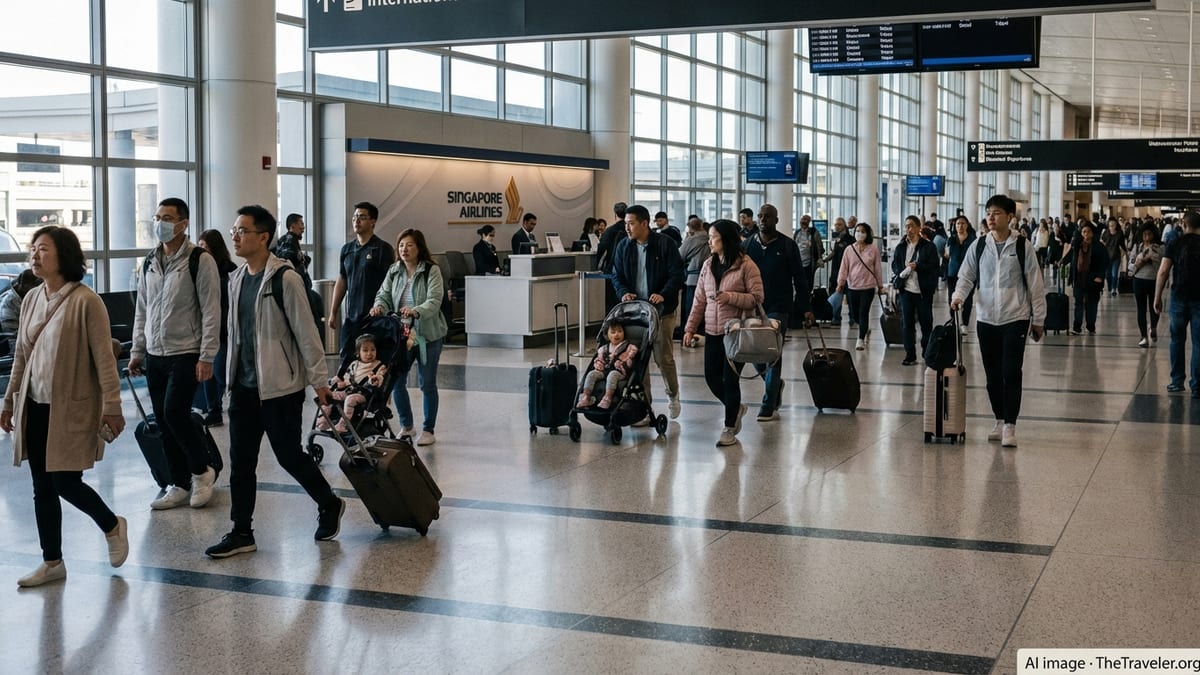
Confirmed Case on Singapore Airlines SQ38 Into Los Angeles
The Los Angeles County Department of Public Health has confirmed that a resident who arrived at Los Angeles International Airport on Singapore Airlines flight SQ38 on February 9 is the county’s fourth measles case of 2026. Officials say the traveler had recently been abroad and landed at the Tom Bradley International Terminal in the early evening before moving through several public areas while potentially infectious.
According to the department, anyone who was in Terminal B at Los Angeles International Airport on February 9 between approximately 7.30 p.m. and 9.40 p.m. may have been exposed. Public health teams, working with federal partners, are now in the process of notifying passengers who were seated near the infected traveler on board flight SQ38, following standard international disease investigation protocols.
In the days after arrival, the individual visited multiple locations in Los Angeles County while still considered contagious. Local authorities have released detailed exposure windows and are urging anyone who may have been present at those sites and who lacks documented immunity to monitor for symptoms such as fever, cough, runny nose, red eyes and rash.
Officials emphasize that measles remains rare in Los Angeles County but warn that even a single imported case can trigger wider spread in communities where vaccination coverage has declined.
Transit Through Singapore Not Linked to Local Infections
Singapore’s Communicable Diseases Agency has confirmed that the infected passenger flew from Cambodia into Singapore on February 9 before transiting through Changi Airport for about two and a half hours and boarding Singapore Airlines SQ38 to Los Angeles. Based on the onset of symptoms, health officials in Singapore determined that the traveler was infected before entering the city state.
The agency stated that the traveler remained within the airport’s transit area for the entire layover and has not been linked to any other known measles cases in Singapore. Authorities said they were formally notified of the case on February 20 and immediately conducted a risk assessment focused on potential exposure to airport workers and other passengers in transit.
Singapore Airlines has said it is cooperating with both Singaporean and United States health agencies, while declining to release passenger details due to confidentiality rules. The airline continues to operate SQ38 between Singapore and Los Angeles, a key long haul service for business and leisure travelers between Southeast Asia and the United States West Coast.
Singaporean officials stress that, at this stage, there is no evidence of onward transmission from the SQ38 passenger within Singapore. However, the case has emerged against a backdrop of rising measles numbers in the city state, keeping public health authorities on heightened alert.
Rising Measles Activity in Singapore and Regional Concerns
The incident comes as Singapore reports an uptick in measles cases in early 2026, including several infections in infants too young to be vaccinated under the national schedule. The Communicable Diseases Agency recently confirmed that total cases this year have already surpassed the figure recorded in 2024, with infants under 12 months representing a growing proportion of infections.
On February 24, authorities announced a confirmed measles case in an 11 month old girl attending preschool, the fifth infection involving an infant under one year of age so far this year. The child had no recent travel history and is recovering, but public health teams have traced and advised close contacts at the preschool, issuing quarantine orders in a small number of cases and reinforcing vaccination checks for others.
Health officials in Singapore point out that the majority of recent local cases have occurred in people who were not fully vaccinated with the measles, mumps and rubella vaccine, even though the shot has been compulsory for children for decades. The rise in cases, combined with the imported infection associated with flight SQ38, highlights how quickly the virus can move along busy air routes connecting Southeast Asia and the United States.
Regional health commentators note that Cambodia and neighboring countries have also faced challenges maintaining high measles coverage, particularly in rural areas and among mobile populations. This creates conditions in which travelers may unknowingly carry the virus across borders before symptoms appear, complicating efforts to contain outbreaks.
What US and Singapore Travelers Need to Know Now
For travelers, the latest case serves as a reminder that measles remains a risk in international travel corridors, even where the disease has been largely eliminated in the past. United States health authorities advise that anyone planning trips involving Los Angeles, Singapore or Southeast Asian destinations such as Cambodia should ensure they are fully vaccinated with two documented doses of a measles containing vaccine.
Those who were at Los Angeles International Airport’s Tom Bradley International Terminal on the evening of February 9 or who recently traveled on Singapore Airlines SQ38 around that date are being urged to review their immunity status. Individuals born after 1957 who cannot confirm vaccination or prior measles infection are considered potentially susceptible and should consult a health provider, especially if they develop symptoms within 21 days of possible exposure.
Singapore continues to recommend that residents and long term visitors keep their measles vaccinations up to date, with the first dose of the measles, mumps and rubella vaccine routinely given at 12 months of age and a second at 15 months. While proof of measles vaccination is not currently required for visitors entering Singapore, officials warn that unvaccinated travelers risk both contracting and spreading the virus.
Public health experts on both sides of the Pacific stress that high vaccination coverage remains the single most effective tool against measles. They add that as long as the virus is circulating globally, imported infections linked to international flights such as SQ38 will continue to test the resilience of health systems and the vigilance of travelers.
Implications for Air Travel Between the United States and Southeast Asia
Airlines and airports are closely following guidance from health authorities but have not introduced new screening or documentation requirements specific to measles on the United States–Singapore route. Instead, carriers are reinforcing standard protocols, including advising unwell passengers not to fly and encouraging travelers to seek medical attention before departure if they experience fever and rash.
For now, Singapore Airlines' operations on SQ38 between Changi Airport and Los Angeles International Airport continue as scheduled, underscoring the industry’s reliance on public health surveillance rather than route specific restrictions. The Los Angeles case illustrates how quickly a single infectious traveler can generate extensive contact tracing efforts that span countries and involve multiple agencies.
Travel analysts note that while measles does not generally lead to border closures, clusters of imported cases can influence traveler behavior, particularly among families with young children and immunocompromised passengers. Many are now factoring vaccination checks into their pre trip planning alongside more familiar health considerations.
As the northern spring travel season approaches, health officials urge passengers moving between the United States, Singapore and Cambodia to consider measles protection part of basic travel readiness, on par with checking passports and flight times. The confirmed case on Singapore Airlines flight SQ38 serves as a timely warning that in an era of dense global air connectivity, vaccine preventable diseases can be just one long haul journey away.