

More news on this day
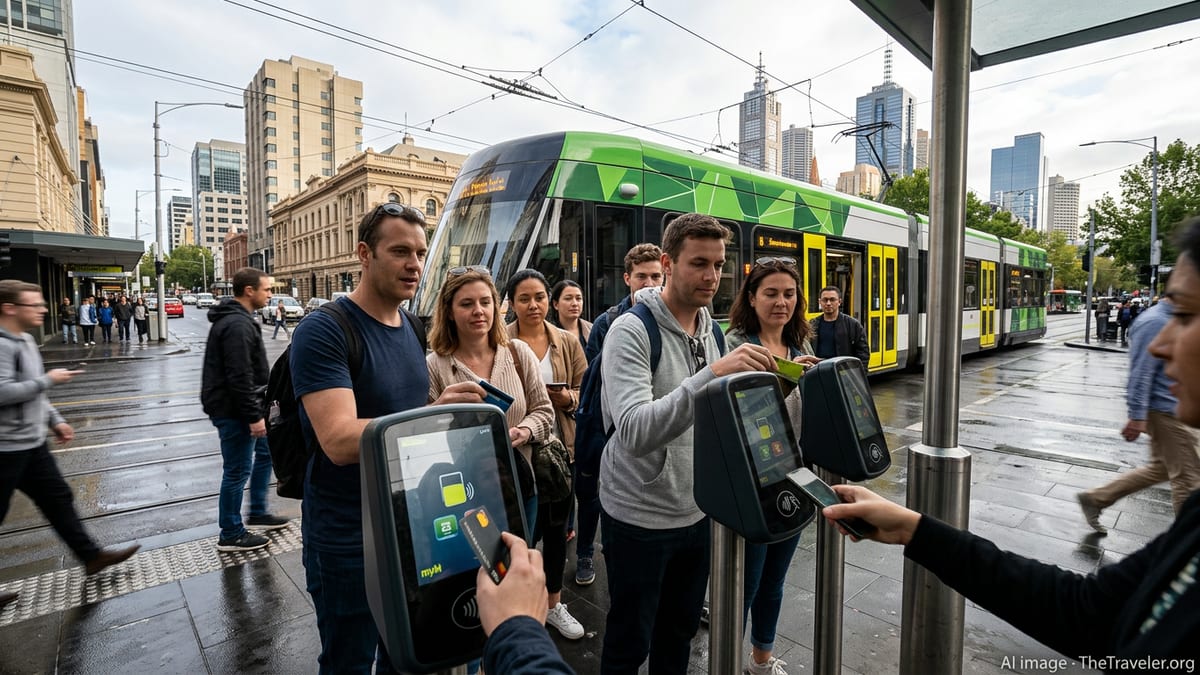
Melbourne is moving rapidly toward a new era of tap-and-go public transport, testing a contactless payment system designed to let visitors ride trams, trains and buses with the same ease as buying a coffee, positioning the city as one of the most tourist-friendly transit hubs in the region.
Get the latest news straight to your inbox!
A Long-Awaited Shift From Plastic Cards to Open Payments
For years, Melbourne’s myki smartcard has been both a gateway and a headache for visitors. Tourists arriving for a long weekend or major event were required to buy a dedicated card, pay an upfront fee and work out topping up before they could board a tram. While locals grew used to the ritual, travel planners and visitor advocates argued the system was increasingly out of step with global expectations.
That is now changing. The Victorian government has confirmed that contactless bank cards, smartphones and smartwatches are in the final stages of testing across parts of the metropolitan rail network. Extensive closed-group trials with staff and selected users began over summer, focusing on how the new readers handle different card types and real-world travel patterns.
Once switched on network-wide, the upgrade will allow passengers to tap on and off using standard credit and debit cards from major providers, or their digital equivalents stored in mobile wallets. Importantly for international visitors, foreign-issued contactless cards are expected to be accepted in the same way, subject to each bank’s fees, reducing the friction and confusion that often greeted tourists at airport ticket machines.
The transition is being delivered under a long-term contract with technology provider Conduent, which is replacing around 20,000 readers across trains, trams and buses in Melbourne and regional centres. Authorities say the scale of the rollout, spanning the entire state, is one reason behind the staged timetable and extended testing period.
Why Tourists Stand to Benefit the Most
For occasional travellers, the promise of tap-and-go is simple but transformative. Instead of lining up to purchase a card, understanding fare zones and preloading value, a visitor will be able to walk off the plane, head to the station and use the same card or phone they relied on in the airport café. Payment will be processed in the background, with fares calculated automatically according to existing rules.
Tourism operators have long argued that Melbourne’s user experience lagged behind cities such as London, Singapore and Vancouver, where contactless bank cards have become the default for short-stay visitors. The current myki system not only adds an upfront cost for the card itself, it also leaves many tourists departing with unused balances they are unlikely to reclaim, effectively turning necessary wayfinding into a poor-value souvenir.
The new model aims to reverse that perception. By removing the need for a proprietary card for most adult visitors, Melbourne is betting that stress-free public transport will become part of its competitive edge. Large events, from international sports fixtures to festivals, routinely draw spikes of first-time users onto the network. Planners say those crowds should move more smoothly when tapping on feels as familiar as entering a hotel room with a key card.
Families and younger travellers are also set to gain from complementary policy changes. From 1 January 2026, public transport across Victoria became free for passengers under 18, provided they carry a dedicated youth myki and continue to tap on and off. That creates a clear, simple message for international families: adults pay with their usual cards, while children travel free, provided everyone taps each time.
How Melbourne Compares With Other Smart Cities
Melbourne’s upgrade comes as other Australian capitals and major global cities refine their own payment systems. Sydney’s Opal network has allowed bank card tapping for several years, but is now preparing its own significant technology refresh. Queensland has introduced account-based ticketing across much of its network, and smaller systems such as Adelaide’s are rolling out tap-and-pay in stages.
What distinguishes Victoria’s approach is its scope and timing. The new readers have been installed across heavy rail first, closely linked to the recent opening of the Metro Tunnel, which reconfigured key inner-city travel patterns. Trams and buses are scheduled to follow, leading ultimately to a state-wide account-based system that recognises individual cards and devices rather than isolated plastic tokens.
Transit specialists point out that the complexity of Melbourne’s combined metropolitan and regional network makes the rollout more challenging than in cities with single-mode systems. Integrating long-distance V/Line services, metro lines and the world’s largest tram network into one tap-and-go platform requires careful calibration of back-end fare engines and robust safeguards to prevent double-charging when passengers transfer.
Despite these hurdles, the direction is clear. Lawmakers have described the legacy myki technology as functionally obsolete compared with international benchmarks, and recent parliamentary debates have framed the contactless upgrade as a catch-up move that will finally align Melbourne with leading global transport cities. For tourists used to tapping through gates from London to Hong Kong, the change may feel less like innovation than long-overdue normality.
From Testing Phase to Everyday Habit
In practical terms, tourists arriving in 2026 will encounter a system in transition. New readers are already visible across many stations, and public information campaigns are beginning to flag the coming tap-and-go option. However, authorities are urging passengers to follow instructions on signage and continue using myki where contactless payment is not yet activated or while public trials are confined to selected locations.
During the testing phase, engineers are monitoring how the system copes with high volumes, mixed card types and common user mistakes, such as presenting multiple cards at once. Lessons from overseas have shown that clear messaging about using a single card or device consistently for each journey is crucial to avoiding accidental duplicate fares.
Once full activation begins, the government expects behaviour to shift quickly, especially among occasional riders. The experience from other cities suggests that once commuters and visitors realise they can rely on their existing cards, uptake becomes rapid, with proprietary transport cards gradually reserved for concession products and specialist use cases.
Officials stress that myki will not vanish overnight. Concession products, including the new youth card for free travel, will remain anchored to the existing platform for the foreseeable future, and regular commuters may choose to keep using stored-value or pass options. For overseas visitors, though, the message is simple: if you can tap to pay for coffee, you will be able to tap to ride.
A Gateway to Melbourne’s Cultural and Event Scene
The timing of the tap-and-go upgrade coincides with a broader push to showcase Melbourne’s cultural life and new infrastructure investments. The Metro Tunnel has added high-capacity links to inner-city precincts, while festival calendars and sporting seasons continue to draw international crowds to the city’s stadiums, galleries and music venues.
Tourism bodies say reducing friction on public transport is essential to sustaining that growth. Easy, intuitive ticketing lowers the barrier for visitors to explore beyond the central grid, from neighbourhood dining strips to coastal day trips on the suburban rail lines. It also helps spread economic benefits more evenly, as first-time guests are more likely to venture further when transit feels seamless and familiar.
Industry observers argue that, once embedded, the contactless system could support more dynamic pricing or bundled travel products tailored to visitors, such as time-based passes linked directly to bank cards. For now, the focus is on delivering a stable, reliable tap-and-go experience across the core network, but the underlying technology is designed to support future innovation without requiring another physical overhaul.
If the rollout stays on track, Melbourne’s public transport could soon match the simplicity of its best-known peers while retaining the character of its tram-lined streets and laneway culture. For tourists stepping off long-haul flights, the sign of progress may be understated: a familiar beep at the gate and the confidence that getting around this city is as easy as tapping to pay anywhere else in the world.