

Mexico attracts a growing number of foreign residents, but relocation feasibility depends heavily on how complex the country is to navigate administratively. A relocation complexity score evaluates how burdensome it is for an expat to complete essential official procedures after arrival. This briefing explains the underlying components that would typically inform a Mexico Relocation Complexity Score and outlines the practical consequences for internationally mobile professionals and their employers.
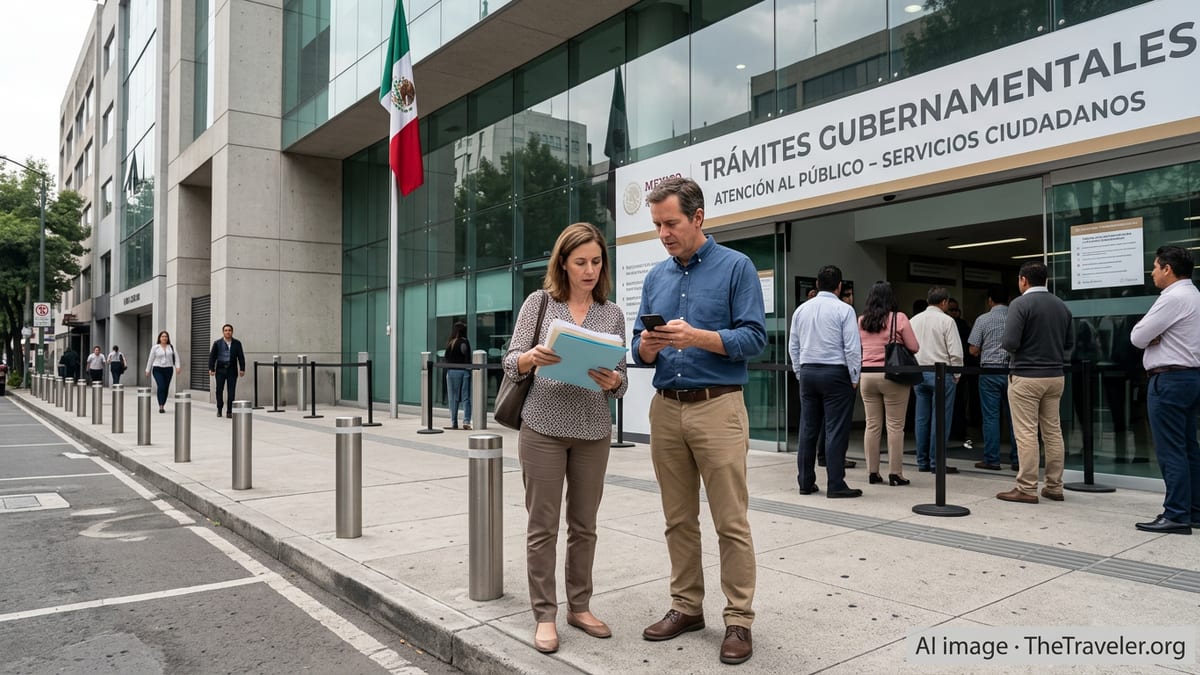
What a Mexico Relocation Complexity Score Measures
A Mexico Relocation Complexity Score is an index-style assessment that aggregates the practical difficulty of interacting with Mexican authorities and essential service providers during relocation. Rather than focusing on lifestyle or cost, the score concentrates on the friction involved in completing formalities such as obtaining residence documents, registering with authorities, opening local accounts, and complying with mandatory registrations. It reflects how much time, documentation, follow up, and local knowledge are required.
Key dimensions considered for Mexico include administrative burden, degree of digitalization, consistency of rules across states, transparency and predictability of decision making, and exposure to corruption and informal payments. Each element influences how much support a relocating individual or corporate program will need to ensure compliant and timely settlement. Mexico’s score is not static and is currently in transition as the federal government pursues administrative simplification and digital transformation while legacy processes remain in place.
For expats, the value of such a score lies in setting realistic expectations and informing the level of professional assistance that may be advisable. A higher complexity score suggests more intensive planning, buffer time, and budget for local support, while a lower score indicates that well prepared individuals may be able to self manage procedures with limited difficulty.
The Mexico Relocation Complexity Score therefore functions as a decision grade indicator of process friction rather than an evaluation of Mexico’s overall attractiveness. A country can be highly appealing in economic or lifestyle terms yet still carry a high complexity score if public administration is fragmented or opaque.
Administrative Burden and Bureaucratic Density
Administrative burden is the primary driver of Mexico’s relocation complexity. Studies of business regulation and public administration in Mexico highlight a historically high volume of procedures and touchpoints between users and government entities. Official data referenced in international analyses indicate tens of millions of administrative procedures annually and regulatory compliance costs measured at several percentage points of national GDP, illustrating the structural weight of bureaucracy in the Mexican context.
For expats, this macro level burden translates into multiple in person appointments, repetitive form filling, and frequent requests for supporting documentation, often with strict formal requirements such as apostilles, certified translations, or notarization. Many procedures must still be initiated or validated face to face, and it is common for individual offices to request additional documents beyond the published minimum list. These factors lengthen timelines and increase the probability of repeated visits.
At the same time, some segments of the administration have introduced simplification measures. Technical work on administrative simplification within social security and other agencies has demonstrated that online procedures can reduce user burden by an order of magnitude compared with in person processes, especially in terms of time and incidental costs such as travel or printing. Where digital channels exist and function reliably, they significantly improve the practical complexity profile for newcomers.
Overall, Mexico’s administrative burden remains above the level seen in many OECD peers, but the direction of change is toward incremental simplification. For relocation planning, this means that procedures in certain areas may already be streamlined, while others still reflect legacy bureaucratic density that pushes the complexity score upward.
Digitalization and the National Law for Elimination of Bureaucratic Procedures
Digital government maturity is a central factor in Mexico’s relocation complexity. Historically, Mexico’s position in global e government rankings has been mid tier, with partial digitalization and uneven adoption across agencies. Many expats have therefore faced a mix of online pre registration and offline completion, generating uncertainty about which steps can truly be completed remotely and which still require physical presence.
In July 2025 Mexico enacted the National Law for the Elimination of Bureaucratic Procedures, a framework designed to digitize, simplify, and centralize administrative processes at federal, state, and municipal levels. The law mandates a single national portal for public procedures, establishes a national digital identity (Llave MX), and grants full legal validity to digital documents, with limited exceptions. It also embraces once only principles that prohibit authorities from demanding information already held by another agency, at least in non fiscal and non sensitive contexts.
This reform, if fully implemented, has the potential to reduce relocation complexity significantly over the medium term. Government plans foresee that all procedures required to establish a company should be available online by mid 2025, which would indirectly benefit accompanying expats by simplifying employer registrations and related processes. The law also creates an enforcement and oversight mechanism within a new Digital Transformation and Telecommunications Agency, intended to harmonize digitalization efforts across the federal government.
In practical terms, expats arriving in the near term should expect a hybrid environment. Some procedures may already be fully online or supported by digital identity tools, while others remain local and paper based. The transition phase increases uncertainty because information about which offices have adopted new standards can lag behind implementation, so the Mexico Relocation Complexity Score at present reflects both the continued existence of analog bottlenecks and the trajectory toward lower friction.
Regional Fragmentation and Local Office Discretion
Mexico’s federal structure and strong state and municipal competencies introduce significant regional variation into relocation complexity. While migration status and many key rules are federal, the interpretation and implementation of procedures often occur at local offices, and ancillary registrations can be state or municipality specific. This creates an uneven landscape where the same formal procedure can differ in documentation requirements, timelines, and user experience across cities and states.
Expat reports and professional practice guides consistently note that immigration and registration procedures can be considerably faster and more predictable in some cities than in others. In certain locations it may be possible to complete key steps in a matter of days, sometimes even same day, whereas higher demand offices or those with staffing constraints can take several weeks and may have appointment backlogs. This variability means that relocation complexity is partly a function of destination choice within Mexico.
Local discretion also extends to the level of scrutiny applied to documentation, the willingness to accept minor inconsistencies, and the propensity to request additional evidence beyond the official checklist. For expats, this raises the importance of local intelligence and up to date guidance about specific offices rather than relying solely on national level descriptions of procedures. Corporations relocating multiple employees typically build internal city specific playbooks for Mexico to manage this regional fragmentation.
From a scoring perspective, the combination of federal rules with heterogeneous local enforcement results in a wider band of possible user experiences. Even if the median complexity might be moderate, the risk of encountering high friction outliers pushes the overall Mexico Relocation Complexity Score upward, especially for assignees without access to local facilitators or legal support.
Transparency, Predictability, and Processing Times
Transparency and predictability of administrative outcomes are critical to relocation planning. In Mexico, formal legal frameworks for residency and other registrations are reasonably clear, but the operational predictability of processing times has historically been mixed. Periodic policy shifts, increased scrutiny of documentation, and backlog accumulation at key offices have led to extended wait times for some categories of applications.
Specialist immigration firms and advisory notes in 2025 highlight episodes of significant delays in residence card issuance and related processes, with some applicants experiencing processing times notably longer than the nominal service standards. In addition, stricter review of files can result in requests for additional documents or clarifications, further lengthening timelines. While modernization initiatives are intended to streamline procedures, temporary disruptions often occur during system upgrades or organizational changes.
On the positive side, there is evidence of ongoing modernization within immigration offices, including the introduction of electronic queues, elimination of certain paper requirements such as physical photographs, and internal process reengineering intended to reduce time spent at offices. In some locations these changes have already produced tangible reductions in appointment duration and follow up visits, even when overall calendar time still depends on background checks and central approvals.
Given this mixed picture, the Mexico Relocation Complexity Score must account for volatility in processing times. Expats and employers are advised to build buffer periods into assignment start dates and travel planning. Where immigration status or other registrations are critical path items, conservative assumptions about timing are warranted, reflecting a moderate to high complexity level in the dimension of predictability.
Corruption Exposure and Informal Practices
Perceptions of corruption are a structural component of Mexico’s administrative environment and affect relocation complexity. Recent international governance assessments show Mexico scoring in the lower tier globally on corruption perception indexes and performing last among OECD members. Mexico’s national analyses also report that only a small share of documented administrative corruption cases result in sanctions, indicating gaps in enforcement and deterrence.
For expats, these macro indicators translate into an elevated risk of encountering requests for unofficial payments, preferential treatment offers, or informal intermediaries around certain procedures, particularly where queues are long and rules are opaque. While many expats complete their formalities without engaging in such practices, the perceived need to rely on fixers or facilitators in some locations is itself a complexity factor and can increase costs and compliance risk.
It is important to distinguish between legitimate professional assistance and informal shortcuts. Licensed immigration lawyers and authorized service providers are common and can legitimately navigate local practices without resorting to irregular payments. However, in environments with weak accountability, the line between expedited service and improper influence can blur, and expats may feel pressured to participate in practices they do not fully understand.
The Mexico Relocation Complexity Score therefore incorporates corruption exposure as a distinct dimension, recognizing that it increases uncertainty and can undermine confidence in timelines and outcomes. For risk sensitive organizations, this may necessitate stricter vendor due diligence, internal controls, and independent oversight for third party assistance used in Mexico.
Reforms, Trend Direction, and Future Trajectory
Mexico is currently in a reform phase that may gradually reduce relocation complexity, though results will materialize unevenly. The National Law for the Elimination of Bureaucratic Procedures aims to standardize and digitize processes across all levels of government, with clear targets for online availability of key procedures. The creation of a dedicated digital transformation agency consolidates responsibility for e government, suggesting sustained political commitment to modernization.
International policy assessments of Mexico also highlight ongoing work on regulatory improvement and better regulation, including ex ante impact assessment of new rules, regulatory simplification programs, and efforts to reduce administrative burdens on businesses. These initiatives support a broader shift toward more user friendly public services, which will indirectly benefit foreign residents navigating similar systems.
However, structural challenges such as limited public investment, uneven administrative capacity across regions, and persistent corruption concerns slow the pace at which reforms translate into on the ground improvements. Digital solutions require reliable connectivity, training, and cultural change within agencies, all of which take time. During this transition, dual systems often coexist, preserving many of the legacy complexity drivers even as new ones are introduced.
From a forward looking perspective, Mexico’s relocation complexity profile can be described as high but declining in the medium term, with substantial regional differences. Early adopters of digital tools and simplification programs will likely offer a noticeably smoother experience, while lagging regions may maintain high friction. Expats evaluating relocation over a multiyear horizon should therefore view the score as dynamic rather than fixed.
The Takeaway
When quantified into a Relocation Complexity Score, Mexico typically ranks as a moderate to high complexity destination among large middle income economies and within the OECD. The principal drivers are historically dense bureaucracy, heterogeneous implementation across states and offices, variable processing times, and elevated exposure to informal practices. At the same time, the direction of policy travel is toward simplification and digitalization, especially following the 2025 law targeting bureaucratic procedures.
For expats and corporate mobility programs, the practical implication is that relocation to Mexico is feasible and increasingly supported by modernization, but still requires careful planning, realistic timing assumptions, and often professional assistance. Destination specific intelligence is critical because local conditions significantly influence the user experience. Organizations should not assume that published national procedures alone capture the full burden.
Decision makers weighing Mexico against other potential destinations should recognize that complexity is concentrated in the administrative interface rather than in a lack of legal pathways or structural openness to foreign residents. With appropriate support and anticipation of friction points, the practical obstacles can be managed, although they may remain higher than in more administratively streamlined jurisdictions. The Relocation Complexity Score is therefore best used as a risk and resource planning tool rather than as a binary indicator of whether relocation should proceed.
FAQ
Q1. Is Mexico considered a high complexity destination for expat relocation?
Mexico is generally assessed as a moderate to high complexity destination due to dense bureaucracy, regional variation in procedures, and mixed predictability of processing times, even though modernization efforts are under way.
Q2. How much does regional variation within Mexico affect relocation complexity?
Regional variation is significant. The same procedure can differ in documentation requirements, appointment availability, and processing speed between cities, so destination specific conditions can materially raise or lower the complexity experienced by an expat.
Q3. Are Mexican administrative procedures becoming easier for newcomers?
Yes, in trend terms. Policy reforms, increased digitalization, and administrative simplification programs are gradually reducing friction, but implementation is uneven and many legacy processes still require substantial time and in person interaction.
Q4. How important is digitalization for reducing Mexico’s relocation complexity score?
Digitalization is central. Where procedures move to unified online portals backed by digital identity and data sharing, the time, cost, and uncertainty for expats decline sharply, which can materially lower the complexity score over time.
Q5. Does corruption significantly impact the relocation process for expats in Mexico?
Corruption risks are higher than in many OECD peers and can manifest as perceived or actual pressure to use informal intermediaries. While many expats avoid this, the potential for irregular practices adds uncertainty and therefore increases the complexity rating.
Q6. Can a well prepared expat manage Mexican procedures without professional help?
Some expats can self manage, particularly in cities with more efficient offices and where they speak Spanish. However, given bureaucracy and local variation, many find that using reputable professional support reduces risk and time, especially for time bound corporate assignments.
Q7. How predictable are processing times for key relocation procedures in Mexico?
Processing times are improving but remain variable. Certain offices can complete steps within days, while others may take weeks due to demand, staffing, or additional scrutiny, so planners should assume conservative timelines.
Q8. Will the National Law for the Elimination of Bureaucratic Procedures immediately lower complexity for expats?
Not immediately. The law sets a framework and targets, but implementation across federal, state, and municipal levels will be progressive. In the short term, expats should expect a hybrid environment with both modernized and legacy processes.
Q9. How does Mexico compare to other large economies in terms of administrative burden?
Relative to many high income OECD members, Mexico’s administrative burden remains higher, as reflected in regulatory cost estimates and corruption perception metrics, although its reform agenda aligns with international best practice.
Q10. What practical steps reduce the impact of Mexico’s relocation complexity on assignees?
Practical mitigants include starting procedures early, selecting destination cities with better performing offices where possible, engaging vetted professional support, ensuring documentation is meticulously prepared, and building schedule buffers into relocation and assignment start dates.