

More news on this day
The killing of Nemesio “El Mencho” Oseguera Cervantes in a Jalisco military operation has unleashed a fresh wave of cartel violence across Mexico, triggering a cascade of government travel alerts for major beach destinations including Puerto Vallarta and Cancun just as the spring tourism season approaches.
Travel Warnings Tighten for Mexico’s Top Beach Hubs
In the days since Mexican authorities confirmed the death of El Mencho on February 22 in the mountains of Jalisco, foreign ministries have moved quickly to update their guidance for travelers heading to Mexico’s Pacific and Caribbean coasts. While most advisories stop short of an outright ban, several now urge heightened caution in Puerto Vallarta and Cancun, two of the country’s busiest resort gateways.
The U.S. State Department’s existing directives for Jalisco and Quintana Roo, which already warned of organized crime and sporadic violence away from resort zones, have been supplemented by messages urging U.S. citizens to shelter in place in parts of Jalisco and monitor local media if they are in or traveling through Puerto Vallarta. Similar alerts from Canada and European governments emphasize that although resort corridors remain heavily policed, fast-moving security incidents can disrupt transport and strand visitors.
The United Kingdom’s Foreign, Commonwealth and Development Office has advised travelers that unrest linked to cartel reprisals has been reported in tourist areas, including along the Riviera Maya. Officials there caution visitors “wherever you are in Mexico” to stay alert, follow local security advice and be prepared for sudden changes to plans, especially on busy intercity roads and routes linking airports to coastal resorts.
Mexican federal officials maintain that tourist infrastructure in the key resort cities remains operational and that security forces have been deployed to shield visitors from the worst of the clashes. Still, the tone of international advisories has shifted noticeably, with language now reflecting the risk of spillover violence after the fall of one of Mexico’s most powerful cartel leaders.
Puerto Vallarta Faces Flight Cancellations and Shelter Orders
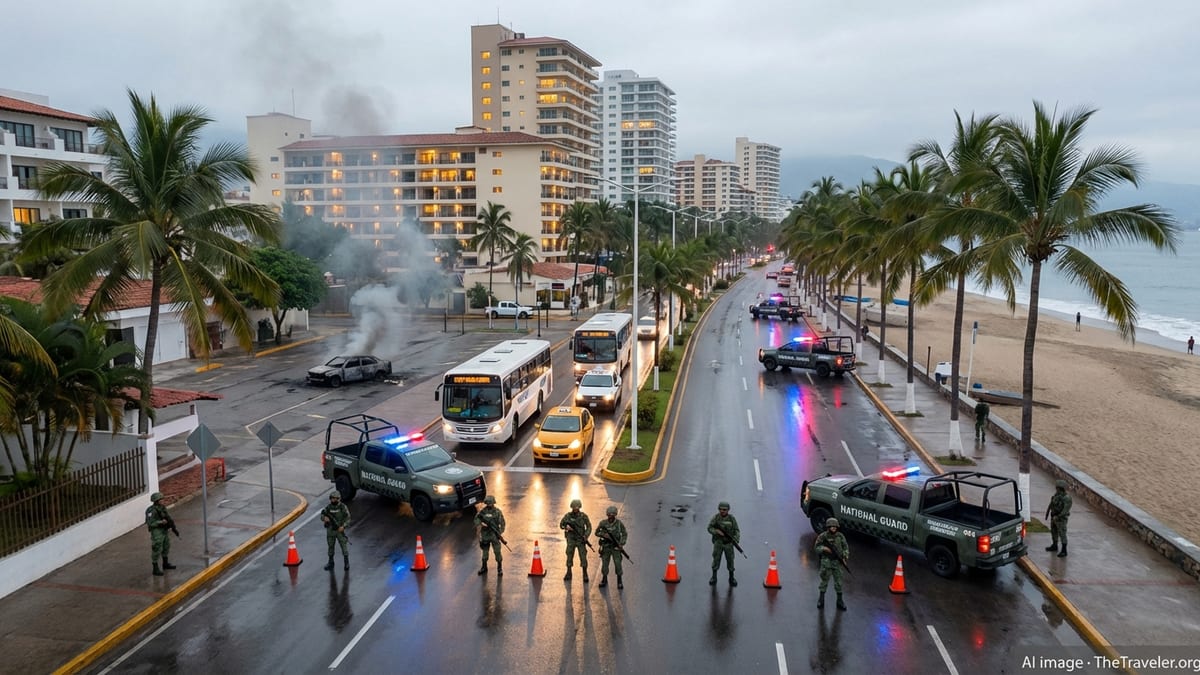
Puerto Vallarta, a long-standing favorite for North American sun seekers, has been among the destinations most directly affected by the immediate aftermath of the Jalisco operation. In the hours after the raid, cartel gunmen reportedly blocked highways, torched vehicles and clashed with security forces in several parts of the state, including roads leading toward the coast. Local authorities briefly issued shelter-in-place instructions in parts of Puerto Vallarta as smoke from burning vehicles rose near key junctions.
Though Licenciado Gustavo Díaz Ordaz International Airport remained technically open, major North American airlines sharply cut or temporarily halted service to the city, citing crew safety and uncertain ground access to and from the terminal. Industry trackers reported that well over half of scheduled departures were canceled on February 23 and 24, leaving hundreds of travelers scrambling for hotel rooms and rebookings during what is normally one of the busiest weeks of the winter high season.
Carriers including United Airlines, American Airlines, Delta Air Lines, Air Canada and WestJet have issued flexible travel waivers for customers with tickets to Puerto Vallarta, allowing changes or refunds in light of the unrest. Some airlines have indicated that they plan to reassess schedules on a day-by-day basis, depending on how quickly highways can be secured and whether local authorities lift or extend security alerts in the coastal region.
On the ground, hotel associations in Puerto Vallarta report that resorts and beach zones remain calm, with heightened police and National Guard patrols visible along the malecón and hotel corridors. However, tour operators acknowledge that excursions into the interior of Jalisco and neighboring states have been curtailed or canceled, with many visitors opting to stay within resort areas until the security picture becomes clearer.
Cancun and Riviera Maya Braced for Possible Spillover
On Mexico’s opposite coast, Cancun and the wider Riviera Maya have not seen the same level of direct disruption, but authorities and foreign embassies are treating the situation cautiously. While the cartel strongholds related to El Mencho’s Jalisco New Generation Cartel are concentrated in western and central Mexico, security analysts warn that a leadership vacuum at the top of such a powerful organization can unsettle trafficking routes that crisscross the entire country, including the Caribbean corridor.
State and federal forces in Quintana Roo have visibly increased their presence around Cancun International Airport and along the highway linking Cancun to Playa del Carmen and Tulum. Travelers arriving in recent days have reported more frequent military checkpoints on main access roads and stepped-up patrols inside hotel zones, particularly after dark. Local officials stress that these measures are preventive and aimed at reassuring visitors rather than responding to specific threats.
Travel advisories issued in North America and Europe now highlight the possibility of sudden security operations or road closures in and around Cancun, even if day-to-day life on the beaches appears largely normal. Tourism boards are urging visitors to stick to official transportation, avoid detours onto secondary roads at night and keep in close contact with hotels and tour providers in case itineraries need to be adjusted on short notice.
For now, air service to Cancun remains robust, with most international flights operating close to schedule. Travel agents, however, say that nervous clients are increasingly asking whether they should postpone trips or switch to alternative Caribbean destinations, underscoring the reputational risk for Mexico’s most globally recognized resort strip if violence elsewhere in the country continues to dominate headlines.
Governments Urge Caution as Cartel Landscape Shifts
The operation that killed El Mencho has been described by Mexican and U.S. officials as one of the most significant blows to organized crime in Mexico in more than a decade. The veteran cartel boss had eluded capture for years and turned the Jalisco New Generation Cartel into a sprawling criminal enterprise that battled rivals and security forces from the Pacific coast to the U.S. border. His death, however, does not automatically translate into greater stability for travelers.
Security experts interviewed by outlets such as Al Jazeera and regional newspapers caution that power struggles within the cartel, or attempts by rival groups to seize territory, could trigger fresh waves of violence in strategic states. That risk is driving the more cautious tone in recent travel advisories, which now emphasize that conditions can change rapidly, sometimes with limited warning even in areas long marketed as detached from Mexico’s security challenges.
Officials in the United States and Canada are advising their citizens in affected regions to register with consular services, keep mobile phones charged and maintain copies of travel documents in case they must move quickly. Tourists are being encouraged to follow local instructions, avoid large gatherings and refrain from posting detailed real-time location updates on social media, which can inadvertently advertise their movements.
Mexican tourism authorities, meanwhile, are working to balance reassurance with realism. They highlight the importance of tourism to local economies in Jalisco and Quintana Roo and insist that authorities are committed to protecting visitors. At the same time, they acknowledge that the dismantling of a cartel of this scale is a long-term process, and that momentary spikes in violence may accompany efforts to reassert state control over contested territories.
What Travelers Should Watch in the Days Ahead
For travelers with imminent plans to visit Puerto Vallarta, Cancun or other Mexican resort cities, the next week will be critical in determining whether the current alerts tighten or begin to ease. Much will depend on whether retaliatory attacks subside, how quickly burned vehicles and roadblocks are cleared from key transport arteries, and whether authorities can prevent violence from reaching tourist-facing areas.
Industry observers expect airlines to continue adjusting capacity to Puerto Vallarta at short notice, with some flights consolidated or rerouted to alternative Mexican gateways. Hotel operators say they are prepared to offer flexible change policies where possible, although specific terms vary by property and booking channel. Travel insurance providers report increasing interest in plans that cover security-related trip interruptions, a niche that has grown in recent years as travelers weigh the benefits of visiting destinations with complex risk profiles.
For now, officials stress that those already in Mexico’s major resort zones should not panic but should stay informed, verify transportation plans regularly and heed instructions from local authorities and their home-country embassies. The hope among tourism stakeholders is that the current surge in violence proves sharp but short-lived, allowing Puerto Vallarta and Cancun to stabilize in time for the crucial late-winter and spring holiday periods.