

More news on this day
Miami International Airport is poised for a sweeping makeover as American Airlines and Miami-Dade County move forward with a $1 billion expansion of Concourse D, a marquee project that will add 17 new gates, overhaul one of the hub’s most constrained areas and set the stage for a dramatically different travel experience by 2030.
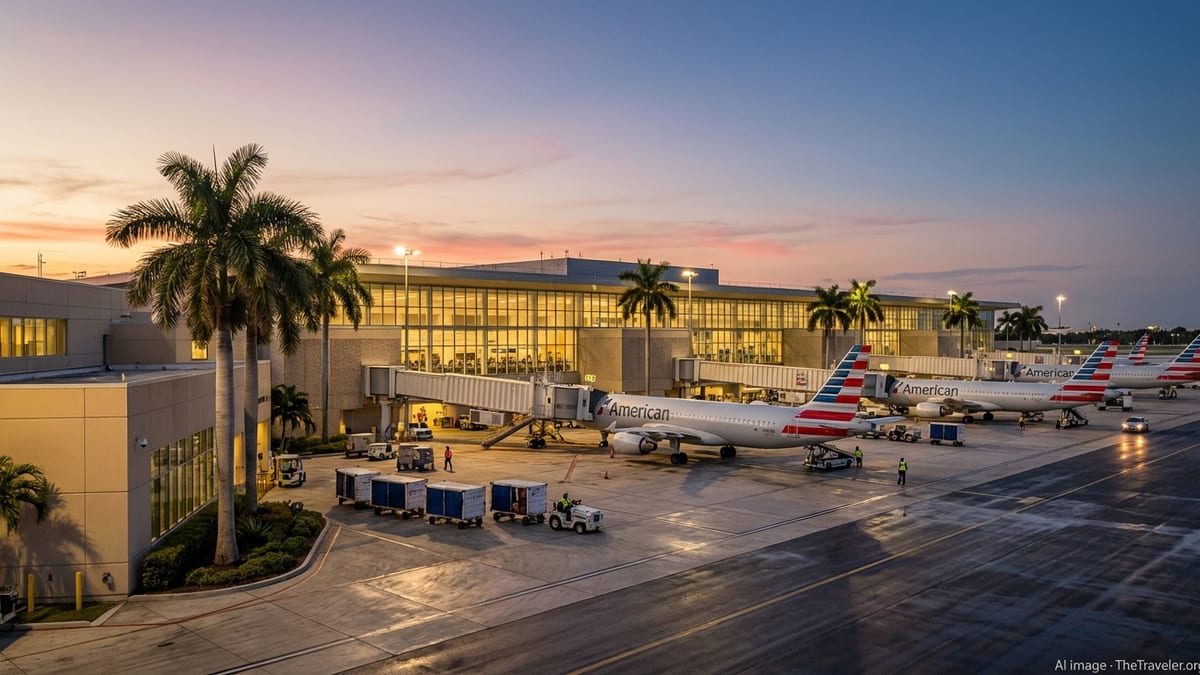
Major Investment Anchors American’s Miami Hub Strategy
The new project centers on a three-level expansion of the existing Gate D60 area in Concourse D, transforming what is now a crowded ground-boarding operation for smaller regional jets into 17 full contact gates designed to handle larger regional and narrow-body aircraft. The redesign will eliminate outdoor boarding in this section of the North Terminal, replacing bus transfers and ramp walks with jet bridges and dedicated hold rooms at every gate.
Set to break ground in 2027 and targeted for completion in 2030, the expansion underscores Miami’s role as a cornerstone of American’s global network. The carrier already operates roughly 400 daily departures at Miami International Airport during peak periods and serves more than 150 destinations across over 40 countries from the South Florida gateway. Airport officials say the added gate capacity will be critical to sustaining growth in both domestic and international markets.
For American, which accounts for more than half of all passenger traffic at Miami International Airport, the project is also a statement of long-term commitment. Executives describe the Concourse D overhaul as a transformational upgrade that will support the airline’s ambitions in Latin America, the Caribbean and an expanding slate of transatlantic routes, while easing some of the pressure on gate and ramp operations that has built up over the past decade of rapid growth.
Local leaders frame the investment as a shared bet on Miami’s future as a premier global hub. Miami-Dade County officials note that the Concourse D project is one of the most visible elements of a wider modernization push intended to keep pace with demand and maintain the airport’s competitive edge as rival hubs in the Southeast and Caribbean expand.
What Travelers Can Expect From the New Concourse D
For passengers, the most immediate difference will be felt at the gate. Today, the D60 area operates with a single, common boarding space feeding multiple ground-level positions, often requiring travelers to line up in tight quarters before boarding buses or walking out to their aircraft. Under the new design, each of the 17 gates will have its own spacious boarding area, offering more seating, clearer signage and improved passenger flow.
The expansion will also integrate direct access on the third level to the U.S. Customs and Border Protection facility serving Concourse D. That connection is designed to make international arrivals more seamless, particularly for travelers connecting from overseas flights to domestic or regional services on American and its partners. Officials say the layout will reduce bottlenecks and cut transfer times for international passengers who currently navigate a more fragmented path through the terminal.
Inside the new concourse, renderings show bright, high-ceilinged spaces accented with indoor palm trees, floor-to-ceiling glass and upgraded wayfinding. Travelers can expect an expanded lineup of restaurants, bars and retail outlets, with an emphasis on South Florida flavors and brands, as Miami International Airport continues to weave local culture into its commercial mix.
Behind the scenes, a modernized baggage handling system will support the new gates, part of a broader effort to streamline checked baggage flows across the North Terminal. Airport officials say the infrastructure upgrade is essential to sustaining high-frequency operations as flight schedules grow and larger aircraft cycle through the concourse.
Part of a $9 Billion Airport-Wide Modernization Plan
The Concourse D expansion is a flagship component of the airport’s multiyear, $9 billion capital improvement plan, known internally as the M.I.A. Plan. That program encompasses more than 200 projects across terminals, airfield infrastructure, parking and support facilities, all aimed at keeping pace with surging passenger volumes and shifting airline needs.
Among the other major initiatives are a new Concourse K in the South Terminal, now moving toward construction and expected to open before the end of the decade, as well as the ongoing redevelopment of the Central Terminal, targeted to be fully modernized in the early 2030s. The airport has also opened new parking capacity, launched extensive upgrades to elevators, escalators and moving walkways, and started a comprehensive renovation of nearly 200 public restrooms across the terminal complex.
Miami-Dade County leaders emphasize that the projects are carefully sequenced to allow the airport to operate at full throttle while construction proceeds. The Concourse D work will be staged to keep existing gates in use as long as possible, although officials acknowledge that passengers can expect periodic detours, temporary boarding arrangements and active construction zones around the North Terminal in the late 2020s.
Financing for the $1 billion Concourse D project will be driven largely by airport revenue bonds, a common funding tool in the U.S. aviation sector. Those bonds are repaid through airline rents and fees, meaning carriers with a larger footprint at Miami International Airport, including American, will shoulder a greater share of the long-term cost in exchange for greater access to the new facilities.
Raising the Bar on Customer Experience and Sustainability
Miami-Dade County officials describe the Concourse D expansion as one of the most significant customer-service upgrades in the airport’s history. By moving regional operations indoors and replacing tight, utilitarian boarding areas with a more spacious, amenity-rich concourse, the project is intended to close the gap between Miami’s role as a global gateway and the on-the-ground experience in some of its older facilities.
The design targets high marks for sustainability as well as comfort. The new structure is being planned to achieve LEED Silver and Envision Verified certifications, benchmarks that reflect energy-efficient systems, sustainable building materials, water conservation and resilience features appropriate for a coastal airport in a region vulnerable to climate risks. The focus on environmental performance aligns with Miami-Dade County’s wider climate strategy and American’s own emissions-reduction goals.
Technology will play a central role in the upgraded concourse, complementing physical improvements. American has already rolled out new self-service check-in kiosks and digital tools at Miami International Airport to speed bag drop and gate changes, and the airline is working with federal partners on enhanced identity verification and passenger processing programs designed to shorten security and immigration queues.
Airport and airline leaders say the combination of modern infrastructure, expanded gate capacity and upgraded digital tools will help reduce delays, improve on-time performance and give travelers a more predictable experience, whether they are beginning their journey in Miami or connecting through the hub on longer itineraries.
Economic Catalyst for Miami-Dade and the Region
Beyond the terminal walls, the Concourse D expansion is expected to serve as a powerful economic engine for Miami-Dade County. Construction alone will support hundreds of skilled jobs over several years, while the long-term increase in gate capacity is projected to generate additional airline, tourism and trade activity across the region.
American Airlines is already the largest for-profit employer in the county, with thousands of employees based at Miami International Airport in roles ranging from pilots and flight attendants to mechanics, customer service agents and corporate staff. The new gates are expected to underpin further growth in that workforce as the airline adds frequencies, launches new routes and deepens its presence in key international markets.
Local business leaders also see the project as a boost to Miami’s broader ambitions as a headquarters city and convention destination. More flights and better passenger facilities, they argue, strengthen the airport’s position in competing for major events, multinational investments and high-value tourism, particularly from Latin America and Europe.
As work progresses toward the 2027 groundbreaking, Miami International Airport will continue to operate at record levels, even as construction cranes begin to reshape the skyline around Concourse D. By the time the expansion opens around 2030, officials hope passengers will experience an airport that looks and feels markedly different from the one they navigate today, reflecting Miami’s evolution into a modern, future-ready global gateway.