

More news on this day
A fresh wave of flight disruption at Miami International Airport has triggered what observers are describing as a spring travel meltdown, with 265 delayed flights in a single day rippling across major routes in the United States and the Caribbean.
Get the latest news straight to your inbox!
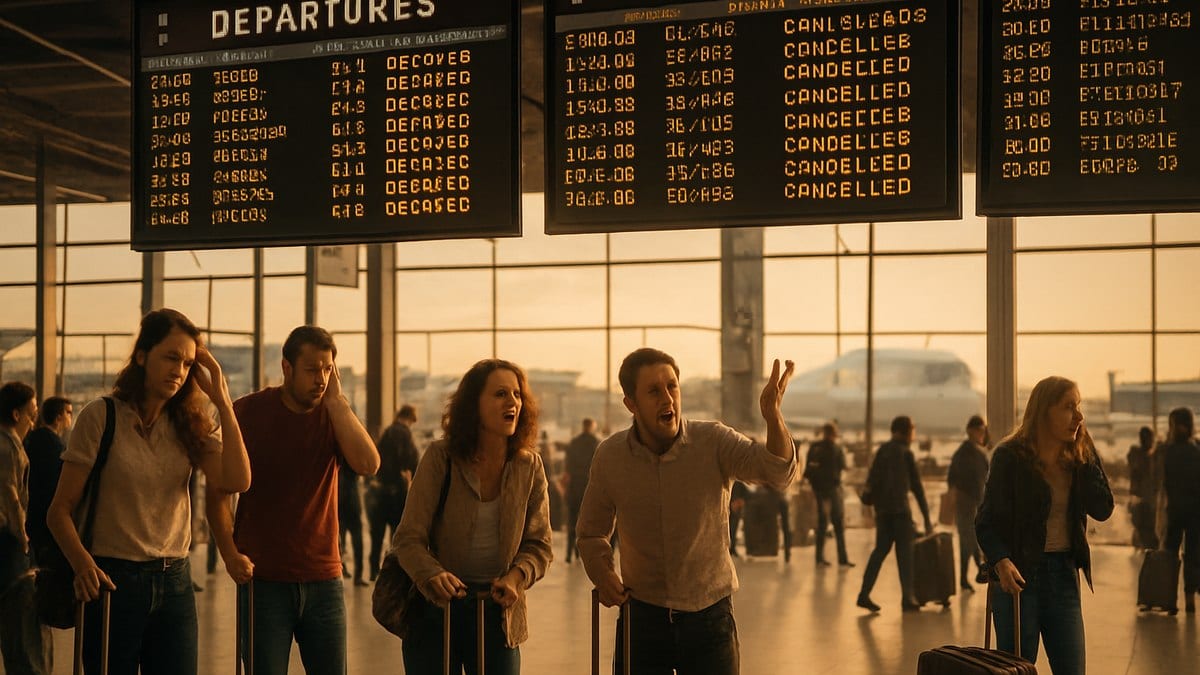
Stormy Skies and a Saturated Network
Publicly available tracking data for early April 2026 indicate that Miami International Airport recorded 265 delays and a handful of cancellations within a compressed 24-hour window, coinciding with the spring break and post-Easter travel peaks. The disruption followed days of unsettled weather across the Southeast, Texas and the broader East Coast, which had already stretched airline schedules and crew availability.
Reports indicate that strong thunderstorms and heavy rain near South Florida forced temporary controls on traffic into Miami, including a brief ground stop and ongoing departure metering. Federal aviation data on April 7 pointed to ground delay programs and average holds of around 40 minutes as storms passed through the region, compounding earlier knock-on delays from other hubs.
Although the number of outright cancellations at Miami remained relatively limited compared with the volume of delayed flights, the timing and intensity of the disruption came at one of the busiest moments of the spring travel calendar. With planes already operating near full capacity, there was little spare space to rebook affected passengers, quickly turning routine delays into missed connections and overnight stays.
Analysts tracking the episode note that this latest spike in delays is part of a broader pattern of strain in the U.S. aviation system during March and April 2026, as record spring demand intersects with volatile weather and stretched staffing at airlines and air traffic facilities.
Gateway Gridlock Hits U.S. and Caribbean Routes
Miami International functions as a primary gateway between North America and the Caribbean, as well as Central and South America, and the latest disruption underscored how quickly issues at a single hub can cascade outward. When inbound flights from major domestic cities arrived late, outbound departures to island destinations and secondary Latin American markets were pushed back, in some cases missing narrow operating windows at smaller airports.
Published coverage of the delay wave indicates that services linking Miami with New York, Chicago and Atlanta were among those experiencing schedule pressure, with airlines juggling late-arriving aircraft and crews already close to daily duty limits. On the international side, routes to popular Caribbean destinations such as the Bahamas, Jamaica, the Dominican Republic and Puerto Rico saw rolling knock-on delays, especially where only one or two daily flights are scheduled.
For travelers, the result was an uneven pattern of disruption that could be mild on one leg and severe on the next. Many domestic passengers encountered departure pushes of 30 to 90 minutes, while those on connecting itineraries found that a relatively modest delay out of Miami was enough to strand them overnight at outstations where onward services had already departed.
Tourism economies across the region are sensitive to such breakdowns. Recent analyses by travel-industry outlets point to tens of thousands of delayed and canceled flights across the Americas during March 2026, with Miami repeatedly identified as one of the most disruption-prone nodes due to its heavy mix of domestic, Caribbean and long-haul international traffic.
Spring Break Stress Test for Airlines
The meltdown at Miami arrived as airlines across the United States were navigating what industry forecasters had already flagged as an exceptionally intense spring season. Forecasts cited by national media suggest carriers are moving roughly 2.8 million passengers per day between early March and the end of April, a volume that leaves little margin when storms or technical issues hit a key hub.
Miami’s operating profile adds further complexity. The airport handles significant morning and late-evening departure waves, with dense banks of flights feeding cruise traffic, Caribbean getaways and connections to Latin America. When early departures slip behind schedule, aircraft and crews often remain out of position for the rest of the day, and any attempt to recover on-time performance is constrained by runway capacity and air traffic flow limits.
Publicly available information from aviation unions and airport authorities also highlights ongoing staffing and scheduling challenges in the region, particularly as carriers rebuild networks and add seasonal flying for spring and summer. When crew members time out after extended duty days created by earlier delays, flights can be held for replacements or canceled altogether, reinforcing the cycle of disruption.
Analysts describe this spring as an operational stress test that has exposed weak points in both airline and airport planning. The Miami episode has become a case study in how quickly weather, staffing and infrastructure pressures can converge to overwhelm tightly calibrated schedules.
Knock-On Impacts for Travelers and Tourism
The immediate effect of Miami’s 265-delay surge was felt by passengers facing hours on the ground, crowded gate areas and rebooked itineraries. Consumer-rights organizations report growing frustration as travelers absorb additional costs for meals, last-minute hotel stays and alternative ground transport when same-day flight options run out.
Travel compensation specialists note that many of the delays tied to storms and air-traffic management restrictions may fall outside strict cash-compensation rules in some jurisdictions, but emphasize that airlines are generally expected to provide basic care during long waits. That can include food vouchers, information on rebooking options and, in some cases, overnight accommodation when cancellations occur late in the day.
For tourism-dependent destinations in the Caribbean and across Florida, the disruption translates into lost hours at resorts, missed cruise departures and compressed holidays, particularly for travelers on short breaks. Travel trade publications have detailed how repeated delay spikes in March and early April have led to unused hotel nights, rearranged tours and shifting arrival patterns that complicate staffing and inventory management for local businesses.
Economists who track the sector suggest that while a single day of heavy delays at Miami may not significantly alter overall visitor numbers, the cumulative effect of multiple disruption episodes can erode traveler confidence and push some would-be visitors to choose alternative gateways or drive-to destinations.
What the Miami Turmoil Signals for Summer
As airlines and airports work through the current spring wave, the Miami meltdown is prompting renewed scrutiny of how the system will handle the even heavier travel expected in June, July and August. Industry planners are already signaling that summer schedules will feature dense leisure flying to beach destinations, national parks and overseas holiday markets, leaving little slack to absorb shock events.
Publicly available planning documents from Miami-Dade aviation authorities outline multibillion-dollar investments in terminal upgrades, airfield improvements and passenger facilities intended to support long-term growth and ease congestion. However, most of those projects are years from completion, meaning travelers this year remain dependent on existing infrastructure that is already stretched at peak times.
Travel analysts argue that incremental operational changes, such as building longer connection windows into itineraries through congested hubs and staggering departure banks more evenly across the day, may offer near-term relief. At the same time, they note that consumer behavior is shifting as seasoned travelers increasingly plan for disruption by booking earlier flights, avoiding tight connections and purchasing flexible tickets where possible.
For now, the events at Miami serve as a visible reminder that the U.S. air travel system, while busier than ever, remains highly sensitive to localized shocks. With spring break still tapering off and summer just ahead, both airlines and passengers appear to be bracing for more turbulence in the months to come.