

More news on this day
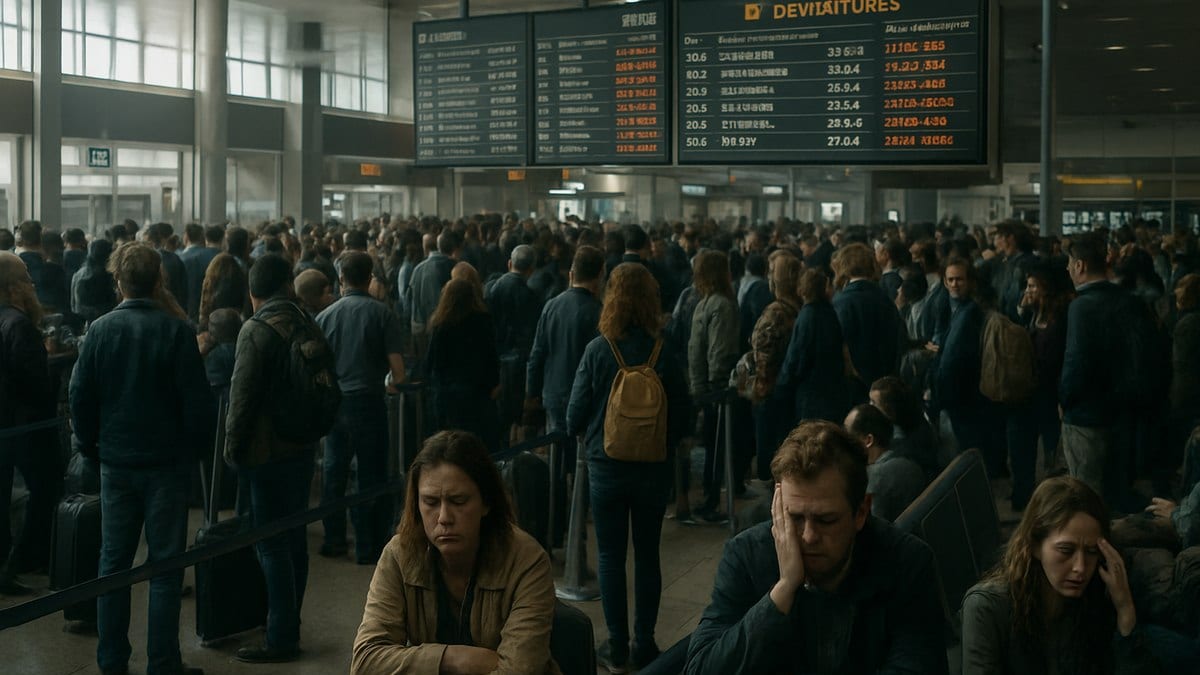
Thousands of travelers have been stranded at Miami International Airport in early April 2026 as severe storms and a stretched U.S. aviation system combined to trigger cascading delays, cancellations, and missed connections across one of the country’s busiest hubs.
Get the latest news straight to your inbox!
Storms, System Strain and a Perfect Spring Travel Crunch
Published coverage indicates that the meltdown at Miami International Airport unfolded over the first week of April, when powerful storm systems swept across large swaths of the United States and collided with record seasonal travel demand. Data cited by multiple outlets shows that the Easter and post‑holiday period brought several days with thousands of delays and hundreds of cancellations nationwide, with Miami repeatedly appearing among the hardest‑hit airports.
Reports from aviation trackers and travel industry analysts point to a familiar pattern. Thunderstorms and high winds around major hubs such as Atlanta, Chicago, Dallas and Houston forced reroutes, ground stops and congestion in already crowded airspace. As aircraft and crews fell out of position, disruption spread quickly to Florida, where Miami functions as a key gateway for Latin America, the Caribbean and transatlantic routes.
At Miami International, publicly available boards for April 2 and the surrounding days show hundreds of flights listed as delayed or canceled, affecting a mix of domestic and international services across several large U.S. and foreign carriers. Travel trade coverage describes long lines at security, check‑in and rebooking counters, as well as packed gate areas where travelers waited hours for updated departure times.
While weather was a visible trigger, analysts note that the broader aviation system entered the busy spring period with limited slack. Airlines were operating near capacity, leaving little room to absorb disruptions, and ongoing staffing and maintenance pressures meant that even relatively short‑lived storms could cascade into multi‑day problems for passengers.
Hundreds of Flights Disrupted and Connections Lost
Across the worst days of the meltdown, published flight statistics point to several hundred disruptions at Miami International alone, including both outright cancellations and extended delays. Travel industry reports describe days when more than 250 flights at Miami were delayed and additional departures were scrubbed entirely, sending ripple effects through schedules to cities such as New York, Chicago, Dallas, Los Angeles and London.
The timing magnified the impact. Early April is a peak period for leisure travel in South Florida, with vacationers heading to and from beach destinations, cruise departures at nearby PortMiami, and holidays across Latin America and the Caribbean. When flights into Miami arrived late or not at all, onward passengers lost connections, cruise passengers scrambled to reach ships on time, and return travelers found themselves unexpectedly stuck overnight.
Coverage from aviation and consumer travel outlets notes that disruption at Miami did not occur in isolation. On some days, national tallies exceeded 5,000 delays and several hundred cancellations, meaning that even travelers whose flights at Miami departed close to schedule often arrived at destinations where subsequent legs were disrupted. The result was a web of missed connections in both directions, with Miami acting as a key node in a much larger systemwide breakdown.
Experts quoted in recent analyses argue that these events illustrate how a localized weather issue or operational bottleneck can quickly spread across the interconnected route networks of major carriers. Once crews hit their duty limits and aircraft fall out of rotation, the recovery process can take days, not hours, particularly during peak travel windows.
Passenger Experience: Overnight Stays and Mounting Costs
Accounts compiled by newsrooms and travel platforms describe an airport under stress. Travelers reported queues snaking through ticketing halls as passengers tried to rebook, obtain meal vouchers or secure hotel rooms. Social media posts highlighted crowded concourses late into the night, with some passengers attempting to sleep in gate areas when accommodation near the airport became scarce or unaffordable.
For families and international travelers, the financial and logistical consequences were significant. Missed segments meant new one‑way fares that were often more expensive than the original round‑trip tickets, while last‑minute hotel and rideshare prices climbed as more travelers competed for limited rooms and vehicles. Cruise passengers and those connecting to separate, non‑protected tickets were especially vulnerable, faced with the prospect of forfeited deposits and pre‑paid excursions.
Consumer advocates cited in recent coverage stress that travelers caught in such meltdowns should document all expenses, retain boarding passes and receipts, and review both airline contracts of carriage and travel insurance policies. Even when weather is the initial cause, some secondary delays stem from operational or staffing issues that may entitle passengers to refunds or other assistance under carrier rules and evolving federal regulations.
Observers also point out that Miami’s status as a major international gateway complicates recovery. Rebooking long‑haul flights often requires available seats on only a handful of daily departures, so a single canceled rotation can leave passengers stranded for 24 hours or more, particularly on high‑demand routes to South America and Europe.
Miami’s Growing Reputation for Disruption
The April 2026 meltdown arrived as Miami International was already under scrutiny for its reliability record. Recent analyses by travel insurance and parking firms, summarizing federal on‑time performance data, have identified Miami as one of the more delay‑prone large airports in the United States, with elevated rates of both late arrivals and cancellations over the past several years.
Industry commentary suggests that Miami’s role as a high‑volume connecting hub, combined with its exposure to tropical weather and thunderstorms for much of the year, makes it particularly susceptible to knock‑on effects from national and regional disruptions. When storms, air traffic control constraints or equipment problems hit other hubs, Miami often experiences secondary waves of delays as aircraft and crews struggle to arrive in sequence.
At the same time, Miami‑Dade aviation planners have been pursuing a long‑term capital program intended to modernize terminals, expand capacity and ease some pressure points. Public documents describe a multibillion‑dollar plan through 2040, aimed at accommodating tens of millions more passengers and significant cargo growth. Yet analysts note that physical expansion alone cannot fully resolve operational vulnerabilities that are shared across the wider U.S. aviation system.
Commentators writing in regional business and lifestyle outlets have argued that Miami’s recent run of disruptions underscores the need for better communication tools, clearer passenger rights information and improved coordination between airlines and airport management during irregular operations. For travelers, the perception risk is that repeated meltdowns could lead some to route around Miami when alternatives exist.
What Travelers Can Learn for Upcoming Trips
The April 2026 events at Miami offer practical lessons for travelers heading into the busy summer and holiday seasons. Travel experts featured in recent explainers recommend building longer connection times when routing through congestion‑prone hubs such as Miami, especially when an onward segment is the only daily flight or links to cruises or tours that are difficult to rejoin once missed.
Advisers also emphasize the value of monitoring weather patterns and national delay data in the days before departure. Several outlets point travelers to real‑time maps and airline status dashboards that can reveal when certain hubs are accumulating ground stops or arrival restrictions, signaling a higher risk of missed connections. In those cases, same‑day rebooking to alternative routings, even with longer total travel times, may reduce the chance of becoming stranded.
Consumer rights guides circulated this spring highlight that passengers in the United States are generally entitled to a cash refund when a flight is canceled and they choose not to travel, even on non‑refundable tickets. In addition, some carriers voluntarily provide meal vouchers, hotel accommodations or ground transportation during controllable disruptions, though policies vary widely and often exclude weather‑related events.
For Miami‑bound travelers, the latest meltdown is a reminder that flexibility and preparation remain essential. Reserving earlier flights in the day, avoiding tight cruise or tour turnarounds when possible, and holding a contingency fund for unexpected overnight stays can help mitigate the impact of future disruptions at one of America’s busiest and most weather‑sensitive gateways.