

More news on this day
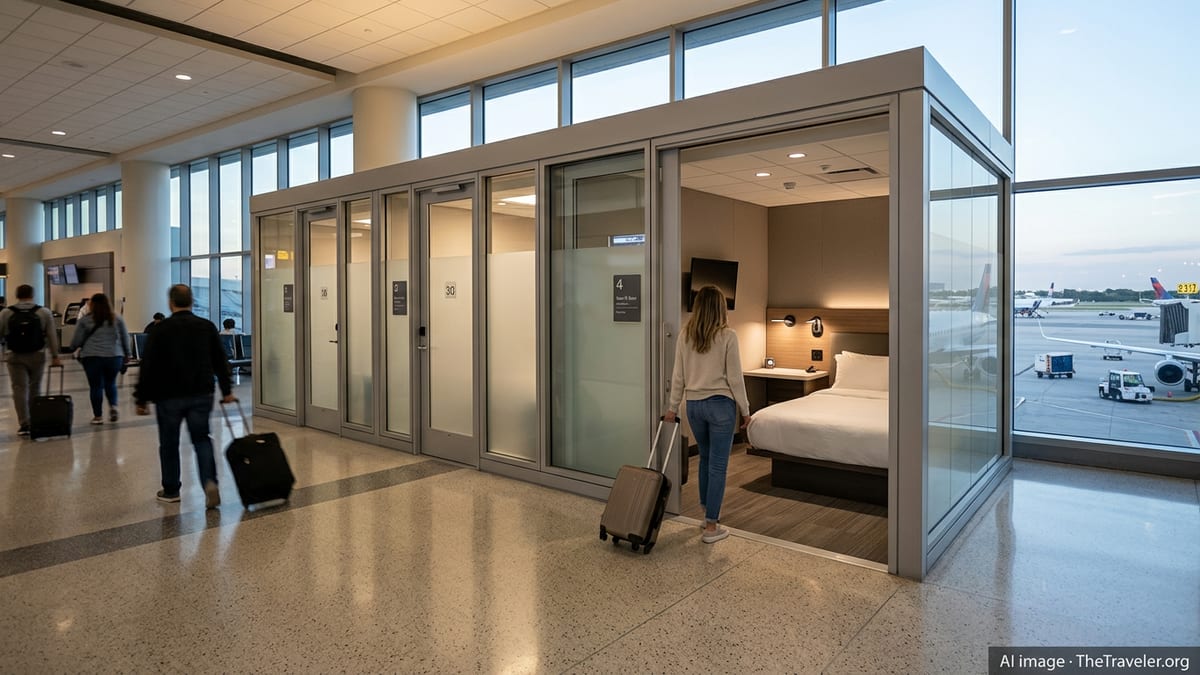
Miami International Airport has opened a new generation of sleep facilities for weary flyers in 2026, unveiling a Wait N’ Rest sleep center that replaces gate-area catnaps with private, sound-insulated rooms, showers and services designed to reset travelers before their next flight.
A Dedicated Space to Truly Sleep Between Flights
After years of complaints about having nowhere comfortable to rest, passengers at Miami International Airport now have access to purpose-built sleep rooms in the busy North Terminal. The new center, located in Concourse D near Gate D15, offers 15 private rooms that can be booked by the hour, transforming long layovers and disruptive delays into an opportunity to genuinely recharge.
The compact suites are designed to accommodate between one and four people, with a total of around 30 beds across the facility. Each room comes equipped with real beds rather than recliners, soft linens and adjustable lighting, giving travelers a space that feels closer to a micro-hotel than an airport waiting area. Airport officials say the center is open 24 hours a day, targeting both overnight disruptions and early-morning or late-night connections.
Use of the rooms is fee-based, with pricing structured by both duration and occupancy. Short naps for solo travelers start at roughly the cost of a mid-range airport lounge visit, while longer blocks of up to eight hours and larger family-sized rooms command higher rates. Officials emphasize that even a one or two hour booking is intended to deliver meaningful rest compared with trying to sleep on terminal seating.
The opening marks the first full-scale, branded Wait N’ Rest sleep center in North America, following the company’s initial debut at El Dorado International Airport in Bogotá. Miami’s hub now serves as a key showcase for the concept for U.S. airlines and airport operators watching how travelers respond.
Amenities Aimed at Comfort, Privacy and Productivity
Inside each suite, travelers find at least one bed and in some cases a bunk-style configuration that can sleep up to four people. Thick doors and sound-insulated walls are designed to mute terminal noise, while blackout window coverings help mitigate the bright lighting typical of concourses. Many rooms feature large floor-to-ceiling exterior windows that frame runway views when the shades are open, appealing to aviation fans who want to rest without feeling cut off from the travel experience.
Beyond sleep, the center is equipped for passengers who need to freshen up or work. Guests can access private shower facilities stocked with basic amenities, a convenience aimed particularly at long-haul and red-eye passengers who would otherwise need to leave the airport to access hotel day rooms. In-room flat-screen televisions, fast Wi-Fi and work surfaces are included so that travelers can catch up on emails or entertainment in privacy.
Interactive touchscreens within the suites connect directly to other concessions in the terminal, allowing guests to order food and drinks for delivery without reentering the public concourse. Airport leaders describe this integration as part of a broader effort to modernize the passenger experience, weaving together rest, dining and retail in a seamless way.
Security and cleanliness were also central to the design. Access is controlled, with each room turned over and sanitized between guests. The aim is to create a noticeably calmer environment than busy airline lounges, which often struggle with crowding during irregular operations and peak holiday periods.
Responding to Changing Travel Patterns and Expectations
The launch of the sleep center comes as Miami International Airport manages growing international traffic and increasingly complex travel itineraries. Long-haul passengers transiting between Latin America, Europe and the United States often face extended layovers, missed connections or overnight waits, making rest a more pressing need than in the era of predominantly short domestic hops.
Airport leadership has framed the center as part of a larger modernization strategy that also includes new concourse projects and a future private terminal offering. Collectively, these upgrades are intended to push Miami toward the top tier of global transfer hubs, where wellness-focused amenities such as spas, nap zones and yoga rooms are becoming standard rather than exceptional.
Travel behavior is changing as well. Many passengers now arrive at the airport earlier to navigate security and immigration requirements or to work from the terminal before departure. For these travelers, having a quiet, private room can double as a temporary office, a family refuge or a place to reset children before long flights. Officials say early interest suggests the rooms are drawing a mix of business travelers, tourists and local residents connecting through Miami on multi-leg trips.
The move also reflects broader post-pandemic expectations around personal space and hygiene. Where sprawling shared nap zones once seemed sufficient, airport operators are finding that travelers are more willing to pay for enclosed spaces that guarantee privacy and consistent cleaning standards.
How the Sleep Center Works for Passengers
Travelers can book rooms either in advance or on the spot, subject to availability. Walk-up customers will find the entrance clearly marked in Concourse D, and staff at a central desk manage check-ins and room assignments. Rates vary depending on the size of the room and the length of stay, with pricing tiers running from short 60-minute sessions to multi-hour blocks intended for overnight delays.
Once checked in, guests receive access to their assigned room for the reserved period, with the option to extend if subsequent time slots are still open. The facility operates independently of any specific airline, meaning passengers from any carrier can use the service as long as they are in the secure area of the terminal. Families traveling with young children are allowed to share a room up to the posted occupancy limits.
For fliers already familiar with pay-per-use airport lounges, the booking model will feel familiar, but with a more explicit focus on sleep rather than open seating and buffet service. Travelers who might otherwise purchase a day pass to a lounge strictly to find a recliner are now presented with a more private alternative that includes a bed, shower access and the option to dim the lights and fully disconnect.
Airport staff emphasize that the center is not positioned to replace traditional hotel stays, particularly for passengers who need to remain in Miami overnight with ample time to leave the airport. Instead, the offering targets those caught in the gray zone of multi-hour layovers and rolling delays, when leaving the terminal is impractical but rest is still essential.
Positioning Miami in the Global Airport Wellness Race
With the opening of the Wait N’ Rest center, Miami joins a growing roster of international airports investing heavily in sleep and wellness infrastructure. While other hubs have turned to capsule-style pods or expanded shower-equipped lounges, Miami’s move toward full rooms with beds is intended to give the airport a distinctive edge in the competitive market for long-haul and connecting passengers.
Local officials have touted the project as another sign of Miami’s emergence as a global gateway, not just for tourism but also for business and major events. As the region prepares for increases in visitor numbers related to new sports venues and large-scale conferences, the airport’s ability to comfortably absorb and refresh passengers between flights is seen as a strategic advantage.
Industry observers say the performance of the new center in 2026 will be closely watched by other U.S. airports that have yet to introduce dedicated sleep facilities. Strong demand could spur copycat projects at competing hubs, potentially reshaping what air travelers in North America expect from a modern terminal.
For now, Miami International Airport is betting that giving travelers a quiet, private place to lay down and close their eyes for a few hours is no longer a luxury, but a core part of what it means to travel well in an increasingly crowded global aviation system.