

More news on this day
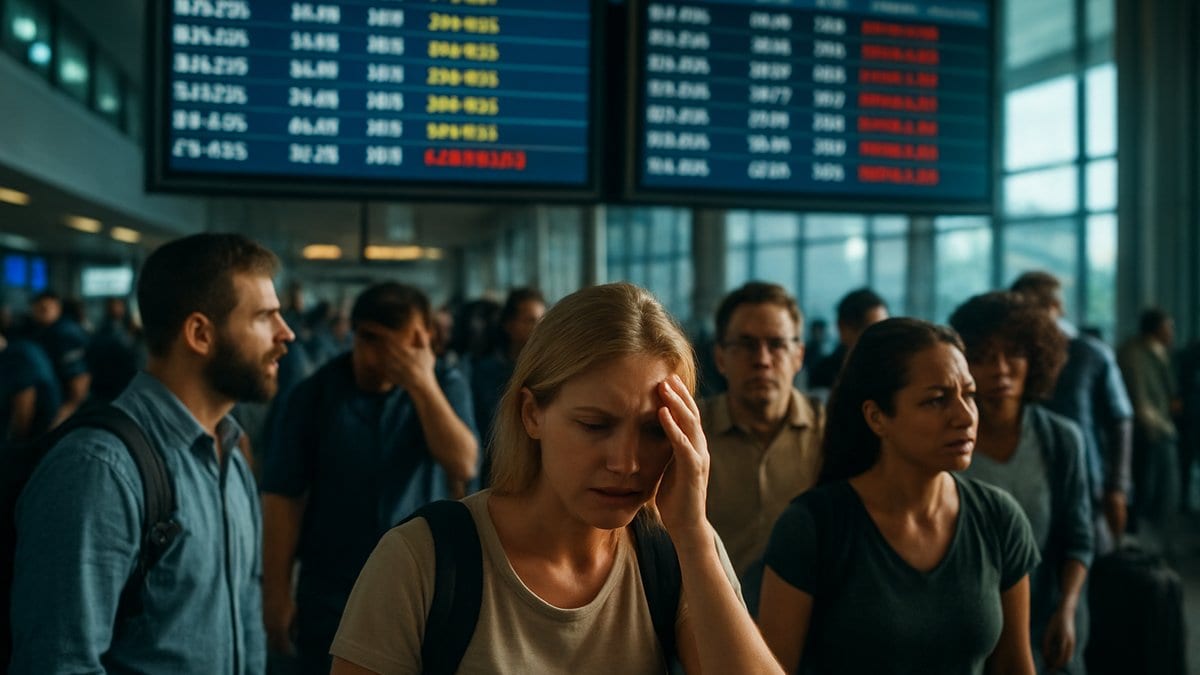
Travelers moving through Miami International Airport on April 6 faced extensive disruption as 265 flights were reported delayed and nine canceled, snarling major American Airlines, United and Frontier routes to New York, Chicago, London, Dallas and Los Angeles.
Get the latest news straight to your inbox!
Major South Florida Hub Buckles Under Operational Strain
Publicly available flight data and industry coverage indicate that Miami International Airport, one of the busiest hubs in the United States, experienced a sharp spike in delays and cancellations, with knock-on effects across domestic and transatlantic networks. The disruption affected departures and arrivals on some of the country’s most heavily traveled corridors, including links from Miami to New York, Chicago, Dallas and Los Angeles, as well as long haul traffic to London.
The 265 delayed flights and nine cancellations reported at Miami in a single operating period represent a significant share of the airport’s daily schedule, underscoring how quickly conditions can deteriorate at a major hub when aircraft and crews fall out of position. Published accounts describe crowded terminals, long lines at rebooking desks and extensive schedule changes as airlines attempted to recover.
Reports indicate that American Airlines, United Airlines and Frontier Airlines were among the carriers most exposed to the disruption, reflecting their sizable presence in Miami and on key routes into and out of the airport. With Miami acting as both an origin and a connection point for many passengers heading to other U.S. cities and overseas, delays in South Florida translated into missed connections and rolling schedule adjustments across multiple time zones.
The situation at Miami also unfolded against a broader backdrop of elevated disruption at large U.S. hubs this spring, with data and financial commentary pointing to waves of delays and cancellations at airports including Dallas Fort Worth, Chicago O’Hare and other large gateways. Those systemwide strains increased the challenge of rebooking passengers and repositioning aircraft once the Miami operation began to falter.
Key Routes to New York, Chicago, Dallas, Los Angeles and London Affected
According to route and schedule data, Miami serves as a critical connector between South Florida and major business and leisure markets such as New York, Chicago, Dallas and Los Angeles, as well as transatlantic destinations like London. When operations slowed on April 6, disruptions along these trunk routes quickly emerged in online trackers and media reports, with flights experiencing extended departure holds, rolling delays and, in some cases, outright cancellation.
Travel coverage notes that traffic between Miami and the New York area is particularly vulnerable when delays escalate, because many aircraft shuttle multiple times per day between South Florida and airports such as LaGuardia and John F. Kennedy. A late departure from Miami can cascade into schedule slippage on subsequent rotations, affecting travelers who may not even be aware that an earlier Miami delay lies behind their own late boarding time.
Similar dynamics apply to Chicago, Dallas and Los Angeles, which function as major connecting hubs for both American and United. When Miami services into these cities run behind schedule or are canceled, passengers bound for secondary markets across the United States, Europe and Latin America can lose their onward connections. Industry analyses emphasize that a disruption concentrated at a single airport like Miami can therefore ripple outward through multiple carriers’ networks, sometimes for days.
On the international side, long haul services between Miami and London draw a mix of business and leisure travelers, as well as cruise passengers connecting to and from South Florida sailings. While long haul flights are sometimes prioritized in recovery plans, even modest delays can create missed rail, hotel and tour connections at the far end, adding to the broader economic and logistical impact of a bad operational day at a major hub.
Multiple Airlines Grapple With Limited Recovery Options
American Airlines, which maintains a significant presence at Miami, along with United and ultra-low-cost carrier Frontier, all feature in coverage of the latest disruption. Publicly accessible statistics and prior performance data show that these airlines operate dense schedules across the affected city pairs, leaving limited slack when irregular operations develop.
Analysts note that when an airline’s network is tightly scheduled and aircraft utilization is high, a bout of delays can quickly exhaust spare aircraft and crew options. Once that buffer disappears, carriers are often forced to consolidate lightly booked flights, adjust departure times, or in more severe cases, cancel services outright. The nine cancellations reported at Miami on April 6 likely reflect a mix of operational necessity and attempts to create space in the schedule for the highest-demand routes.
United and Frontier, though smaller than American at Miami, also contribute to the web of connections linking the airport to Chicago, New York, Dallas, Los Angeles and other markets. Travel industry reporting suggests that disruptions affecting several large carriers at once make it harder for passengers to be reaccommodated on alternative airlines, especially at peak travel times when most seats are already sold.
Financial market commentary in recent days has highlighted how recurring disruption events across the U.S. aviation system are beginning to draw investor scrutiny, with questions raised about resilience, staffing levels and aircraft availability heading into the busy summer period. The Miami episode will likely feed into that narrative, offering another example of how a localized operational shock can have wider implications for carriers’ costs and reputations.
Passengers Confront Long Waits, Missed Connections and Limited Guidance
Travel and consumer reports describe passengers at Miami encountering extensive queues at check in, security and customer service points as delays mounted. Screens showing rolling departure time changes and aircraft waiting for gates or crew contributed to uncertainty, particularly for travelers with tight connections in New York, Chicago, Dallas and Los Angeles.
Some coverage of recent nationwide disruption patterns notes that passengers dealing with cascading delays frequently face difficult choices, such as whether to wait out a late evening departure or proactively seek rebooking for the following day. In Miami on April 6, those decisions were complicated by limited available seats on alternate flights, especially on popular evening services to major hubs.
Consumer advocates consistently point out that, while airlines are not required in the United States to compensate travelers for most weather related delays, carriers do publish policies on meal vouchers, hotel support and rebooking options in cases of significant disruption. Publicly available guidance from regulators and passenger rights resources encourages travelers to review these policies, keep documentation of delay times and maintain contact with airlines through official apps and customer service channels.
Observers also underscore the importance of monitoring flight status before heading to the airport, particularly during periods of heightened disruption. In an environment where airport-level problems, crew scheduling constraints and weather can converge quickly, early awareness of a delay or cancellation can give passengers a better chance to adjust plans, secure alternate itineraries or modify hotel and ground transport arrangements.
Broader Pattern of U.S. Flight Disruptions Raises Summer Travel Concerns
The Miami delays come amid a series of recent disruption events affecting major U.S. hubs, including Dallas Fort Worth and Chicago O’Hare, where widely cited statistics show hundreds of delays and cancellations on some peak days. Financial and travel industry reporting over the past week has drawn a connection between these events, pointing to persistent vulnerabilities across the national air traffic system.
Analysts referencing government and industry data note that weather, air traffic control staffing, runway work and tight airline schedules all play roles in these recurring episodes. When several of those factors align, as they have at various points this year, delays can accumulate rapidly and propagate through multiple hubs, affecting passengers far from the original trouble spot.
For Miami, the latest disruption highlights the particular exposure of airports that serve as both international gateways and domestic connectors. With significant volumes of traffic to Latin America and Europe layered on top of dense domestic schedules, recovery from even a single day of extensive delays can stretch well into subsequent travel days.
Looking ahead to the upcoming summer peak, travel experts quoted in recent coverage suggest that passengers may want to build extra connection time into itineraries that pass through pressure points such as Miami, New York, Chicago, Dallas and Los Angeles. While no airport can fully avoid disruption, the concentration of traffic and complex routing patterns at these hubs mean that when problems arise, their impact is often both swift and widespread.