

More news on this day
Nepal Airlines has canceled a series of Kathmandu–Doha flights in mid‑April as airspace closures across the Middle East continue to upend global aviation, creating fresh uncertainty for migrant workers and leisure travelers who rely on Qatar as a vital transit hub.
Get the latest news straight to your inbox!
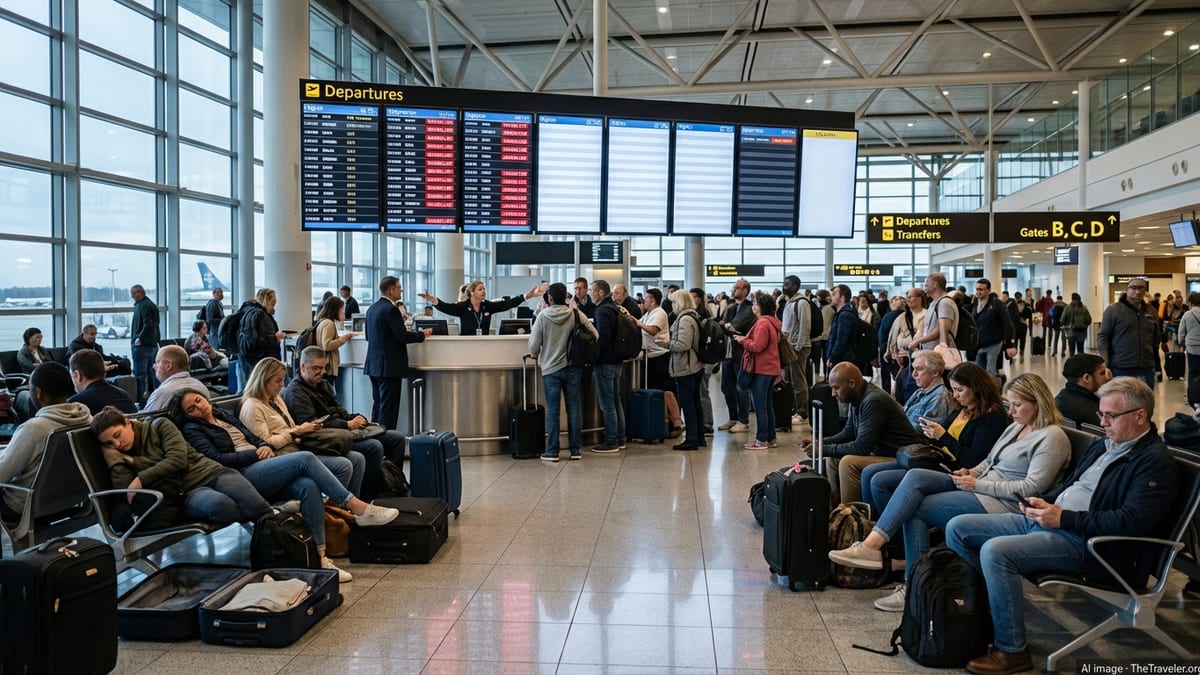
Targeted Cancellations Hit Busy Kathmandu–Doha Route
Publicly available notices from Nepal Airlines indicate that services on the carrier’s Kathmandu–Doha sector have been suspended on select dates in April, including flights scheduled around April 13 and 14, 2026. The airline’s online updates describe the decision as a response to the ongoing closure and restriction of airspace in parts of the Middle East, which has made normal operations to Doha impossible on those days.
The affected services cover both outbound flights from Kathmandu to Doha and corresponding return legs from Doha back to the Nepali capital. Industry reports describe the Kathmandu–Doha corridor as one of Nepal Airlines’ busiest international routes, used heavily by migrant laborers bound for the Gulf, as well as by connecting passengers heading onward to Europe and other destinations via Qatar’s main hub.
Travel-focused outlets report that cancellations on April 13 and 14, along with return flights on April 14 and 15, are expected to impact hundreds of passengers. Many travelers had booked these services months in advance, and some are now facing last‑minute changes with limited alternative options due to wider regional disruption.
The disruption on this single route illustrates how quickly a regional airspace decision can cascade across airline networks, especially when it affects a major transit point such as Doha. For a flag carrier with a relatively small long‑haul fleet, the loss of a core Middle Eastern destination, even temporarily, can be particularly destabilizing.
Wider Middle East Closures Ripple Through Aviation
The cancellations by Nepal Airlines are unfolding against the backdrop of one of the most extensive airspace shutdowns the region has seen in recent years. Aviation risk briefings and airspace safety platforms describe how, beginning on February 28, 2026, multiple Gulf and Middle Eastern states imposed restrictions or outright closures of their flight information regions in response to a sharp escalation in regional conflict.
Qatar’s airspace, including the Doha flight information region, has been among those heavily affected. With Doha’s role as a global transfer hub, the impact has quickly extended far beyond the Gulf. Analyses from aviation consultancies characterize the episode as a rare instance in which several of the world’s key connecting airports in the Middle East have simultaneously faced prolonged disruption, forcing airlines to suspend services or operate complex detours.
Travel disruption has not been limited to Nepal. Passenger rights organizations and regional media highlight large numbers of cancellations at major South Asian gateways such as Dhaka, where more than a thousand flights linked to Middle Eastern routes have been scrubbed since late February. Similar patterns are visible at other airports across Asia and Africa that rely on Gulf carriers and hubs for onward connectivity to Europe and North America.
In this context, Nepal Airlines’ decision to suspend certain Doha flights forms part of a broader operational recalibration. Carriers across the region are weighing safety assessments, airspace availability, crew‑duty limitations and fuel constraints, often on a rolling basis, leading to highly dynamic schedules and short‑notice changes.
Stranded Migrant Workers and Limited Alternatives
The immediate human impact of the Kathmandu–Doha suspensions is being felt most acutely by Nepali migrant workers, who make up a significant proportion of travelers on Gulf routes. Public reporting and labor migration studies consistently indicate that tens of thousands of Nepalis travel to Qatar and other Gulf states each year for employment in construction, hospitality, domestic work and services.
With direct flights to Doha canceled on key dates and connecting options via other Middle Eastern hubs also constrained, many workers face delays in reaching job sites or returning home at the end of contracts. Travel industry commentary suggests that some passengers have been advised to explore rerouting via alternative hubs in South Asia or Southeast Asia, though capacity on these detours can be limited and fares elevated due to heightened demand.
For those already in transit or holding imminent departure dates, options may include rebooking on later Nepal Airlines services if and when the Doha route resumes, transferring to other carriers that can route around closed airspace, or postponing travel altogether. Consumer‑facing guidance from travel agencies and airline help pages emphasizes the importance of checking booking status frequently and confirming any changes in writing.
Financial implications are also emerging. For low‑income migrant workers who often finance travel through loans or advances, additional costs for rerouting, extended accommodation, or lost working days can be significant. Advocacy groups monitoring labor migration have warned in past disruptions that such unexpected expenses can deepen the debt burden for already vulnerable households.
Guidance for Affected Passengers
Publicly available advisories from travel management companies and aviation risk firms recommend that passengers on routes touching the Gulf monitor their bookings closely and avoid heading to the airport without a confirmed, operating flight. Given that airspace restrictions can change with little notice, schedules may not stabilize until there is clearer regional de‑escalation.
Travel analysts note that airlines, including Nepal Airlines, typically offer a mix of options in such circumstances, which may include complimentary date changes, rebooking on alternative routings where feasible, or refunds according to the fare rules and any special disruption policies in place. Passengers are encouraged to review the latest conditions published by their carrier and to retain documentation showing that cancellations are linked to airspace or security restrictions.
Industry observers also caution that even where flights are still operating, extended routings to avoid closed airspace can lead to longer flight times, schedule knock‑on effects and potential missed connections. Travelers connecting through third‑country hubs may need to allow additional time between flights and stay alert for last‑minute gate or timing changes.
For travel planners and corporate travel managers, the Nepal Airlines Doha cancellations serve as a reminder to maintain contingency plans and diversify routings for essential trips. Some organizations are temporarily prioritizing itineraries that avoid the most heavily affected airspace corridors, even if this entails more indirect journeys.
Uncertain Outlook for Doha‑Linked Travel
Looking ahead, forecasting the precise timing of a return to normal operations on the Kathmandu–Doha route remains difficult. Regional risk assessments as of mid‑April 2026 describe a still‑fluid security environment, with airspace notices and military activity influencing decisions by civil aviation authorities and airlines on a near‑daily basis.
Specialist aviation briefings suggest that any reopening of key Middle Eastern flight information regions is likely to be gradual and subject to strict conditions, including route restrictions and altitude limits. Even once basic connectivity through Doha is restored, airlines may initially operate reduced schedules as they work through backlogs of disrupted passengers and reposition aircraft and crew.
For Nepal Airlines, the Doha suspension highlights the vulnerability of smaller national carriers to external shocks that are largely beyond their control. Analysts point out that while some large global airlines can redeploy wide‑body fleets to alternative markets, regional flag carriers with concentrated route maps have fewer options when a single strategic destination suddenly becomes inaccessible.
Until clearer signals emerge from regional authorities and aviation regulators, travelers with existing or planned itineraries involving Doha are likely to face a prolonged period of uncertainty. The experience of Nepal Airlines and its passengers underscores how geopolitical tensions in a single region can reverberate through distant markets, disrupting everyday mobility for workers and leisure travelers far beyond the immediate conflict zone.