


More news on this day
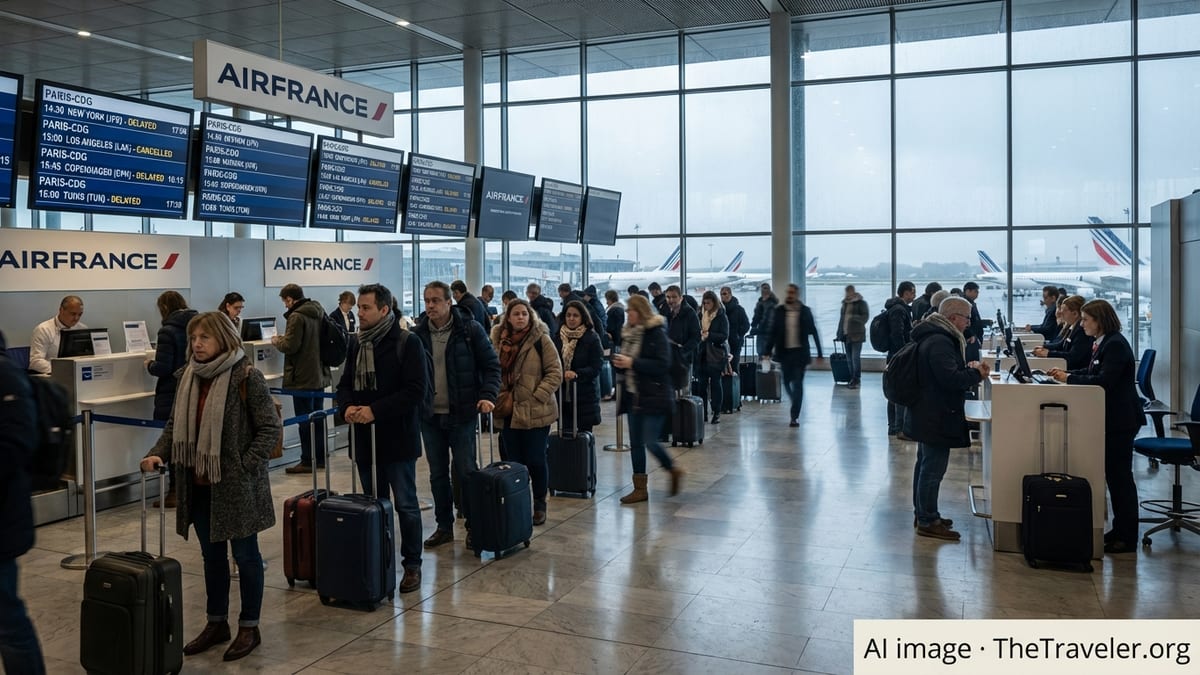
Europe’s largest airports are grappling with sharp traffic swings, mounting cancellations and complex rerouting as a fast-evolving Middle East airspace crisis reverberates across global aviation networks, pulling the UK into the turmoil alongside Germany, France, Spain, Italy, Greece, Turkey and others.
Get the latest news straight to your inbox!
Airspace Closures Create Historic Disruptions
The latest phase of the conflict in the Middle East, which intensified from late February 2026, has triggered what multiple aviation analyses describe as one of the most severe airspace disruptions in modern civil aviation. Large sections of airspace over Iran, Iraq and parts of the Gulf have been closed or heavily restricted, while neighbouring flight information regions have tightened routing options to mitigate safety and insurance risks.
European network assessments indicate that thousands of flights that would normally cross the region between Europe and Asia have either been cancelled outright or forced into lengthy detours. Eurocontrol trend papers and industry forecasting reports highlight an abrupt contraction in flows involving the Middle East, with some describing a more than halving of normal volumes on key overflight corridors compared with pre-crisis patterns.
The result is a structural shock rather than a short-lived operational glitch. Airlines face longer stage lengths, higher fuel burn and significant crew and fleet rescheduling challenges. At the same time, the squeeze on regional hubs in the Gulf and wider Middle East is pushing traffic into alternative routings through Europe, Central Asia and the Indian Ocean, reshaping global connectivity in real time.
Industry economic outlooks warn that even if hostilities were to ease in the coming months, the airspace picture and associated war-risk insurance premiums may take much longer to normalise. Network planners are increasingly modelling for a prolonged period of disruption that could reshape long-haul capacity, pricing and hub hierarchies well into 2027.
Heathrow Feels the Shock as UK Joins the Crisis Zone
London Heathrow is emerging as a bellwether of how the Middle East crisis is feeding through into European hub performance. Heathrow’s latest monthly figures for April 2026 show an overall passenger decline of around 5 percent compared with the previous year, with publicly available data and specialist aviation coverage linking the drop directly to conflict-related disruption and softer demand on some long-haul markets.
At the same time, reports indicate that Heathrow’s traffic to and from the Middle East has collapsed far more dramatically, with some analyses citing falls of more than 50 percent on core routes since the end of February. Earlier in March, Heathrow had already seen dozens of cancellations concentrated on services operated by airlines heavily exposed to the Gulf and Eastern Mediterranean, a pattern that has since become more entrenched as airspace closures and schedule cuts deepen.
Paradoxically, Heathrow is also benefiting from the same crisis. Transfer traffic through the airport rose by about 10 percent year-on-year in April, according to recent coverage of the hub’s figures, as long-haul passengers reroute away from Gulf super-hubs in search of reliable one-stop connections between North America, Europe and Asia or Oceania. Capacity has been redirected into Asia-Pacific and African markets, where routings that avoid the most restricted airspace remain viable, albeit longer and more expensive to operate.
UK aviation is simultaneously battling a second front: soaring jet fuel prices. Industry monitoring suggests that European jet fuel benchmarks roughly doubled between March and April amid concerns over supply disruption through the Strait of Hormuz. British carriers have trimmed schedules, with estimates of around 13,000 flights and more than two million seats removed from global timetables for May, and the UK government has moved to give airlines more flexibility to consolidate services at busy airports if necessary.
Frankfurt, Paris, Madrid and Southern Europe Confront Capacity Shocks
Germany’s Frankfurt Airport, France’s Paris Charles de Gaulle and Spain’s Madrid Barajas are all reporting significant stress as the Middle East airspace shock ripples through their networks. These hubs form critical waypoints for Europe’s largest legacy carriers, whose long-haul strategies have traditionally relied on a mix of direct Middle East services and dense overflight corridors to South and East Asia.
Data released over recent weeks by airline intelligence firms and European monitoring bodies shows a marked fall in flights directly serving the Middle East from continental Europe, together with sizeable cuts to capacity on routes that normally exploit the most efficient trans-Iran or trans-Iraq paths. Airlines have been forced to reroute via northern corridors over Turkey and Central Asia or southern options skirting the Arabian Peninsula and the Indian Ocean, in many cases adding several hundred nautical miles to each sector.
For Frankfurt and Paris, which handle large volumes of connecting traffic from across central and northern Europe, this has translated into a complex mix of weaker demand on some origin-and-destination markets and overcrowded peaks on others as passengers are funnelled through the remaining viable long-haul banks. Timetables for May and June show tactical cancellations and equipment downgrades on selected routes, even as carriers try to protect key intercontinental services ahead of the summer peak.
Southern Europe’s gateways in Italy, Greece and Spain also find themselves on the front line. Airports in Milan, Rome and Athens had capitalised in recent years on growing flows to the Gulf and beyond, but those gains are now at risk. Industry commentary notes that some Mediterranean routes are being trimmed in favour of higher-yield transatlantic and intra-European flying, particularly where aircraft utilisation has been constrained by longer flight times on Asia-bound services.
Istanbul and Turkey’s Strategic Position Under Pressure
Turkey, and Istanbul in particular, occupy a pivotal geographic position between Europe and Asia, and the present airspace crisis has intensified that role. In earlier phases of the disruption, Turkish routes that could safely skirt the most volatile zones experienced surging demand as airlines and passengers sought alternatives to Gulf-centric connections.
However, as closures and restrictions have expanded across multiple flight information regions, the margin of flexibility for Istanbul’s main airport has narrowed. Regional aviation analyses describe highly congested flows in the northern corridor running across Turkey and the Caucasus, with limited spare capacity to absorb additional detours without incurring substantial delays and holding patterns at busy times of day.
Turkey’s carriers have had to balance opportunities to capture displaced traffic against operational realities, including higher fuel costs, complex crew rostering and the need to retain resilience in case further closures are announced with short notice. There are early signs of schedule rationalisation on some secondary routes in order to maintain reliability on core Europe–Asia trunk services, which remain essential for Istanbul’s hub status.
At the same time, cargo operations through Turkey have taken on increased importance as shippers look for dependable air bridges between Asian manufacturers and European markets amid maritime disruption in the Red Sea and Gulf. Industry data suggests that freighter yields on certain Asia–Europe lanes have risen sharply since March, adding another incentive for airlines to prioritise bellyhold and full-freighter capacity on resilient corridors through or near Turkish airspace.
Rerouting, Costs and the Risk of a Slow-Burning Aviation Crunch
Across Europe, the operational response to the Middle East airspace crisis has coalesced around extensive rerouting and selective capacity cuts. Analyses by consultancy and safety advisory groups indicate that Europe-to-Asia flights that previously crossed Iran can now burn several tonnes more fuel per sector when redirected via safer northern or southern paths, adding thousands of dollars to individual flight costs.
These higher operating expenses come on top of elevated war-risk insurance premiums for airspace in and around the region, a burden that airlines are ultimately passing on to passengers through higher fares. Research cited in UK and European business coverage points to economy ticket prices on some affected long-haul markets rising by around 15 to 25 percent compared with a year earlier, with the steepest increases on itineraries that once relied on short, direct Gulf or Levant routings.
The pressure is not confined to long-haul corridors. As carriers trim schedules to conserve fuel and aircraft hours, short-haul and leisure routes across Europe are being re-examined, raising concerns about thinner connectivity for secondary cities and holiday destinations in Spain, Italy and Greece. Aviation scenario work published in recent weeks outlines a range of potential trajectories, from a gradual stabilisation of capacity if fuel markets calm, to a sustained crunch in which jet fuel shortages and continuing airspace uncertainty trigger rolling waves of cancellations through the peak summer season.
For now, publicly available data shows that the shock is uneven rather than uniformly catastrophic. Some hubs, including Heathrow, still report overall passenger growth or only modest declines thanks to strong intra-European and transatlantic demand. Yet the collapse in direct Middle East traffic, the reconfiguration of global routes and the prospect of prolonged cost pressures are combining to create what many analysts are calling the most disruptive test of Europe’s aviation system since the early pandemic era, with the UK now firmly among the countries feeling the strain.