


More news on this day
Fresh flight cancellations involving Flydubai, Oman Air and Air Arabia are disrupting services across Oman, with at least five affected rotations impacting key links between Muscat, Salalah, Dubai and Sharjah, according to flight tracking data and published travel reports for early May 2026.
Get the latest news straight to your inbox!
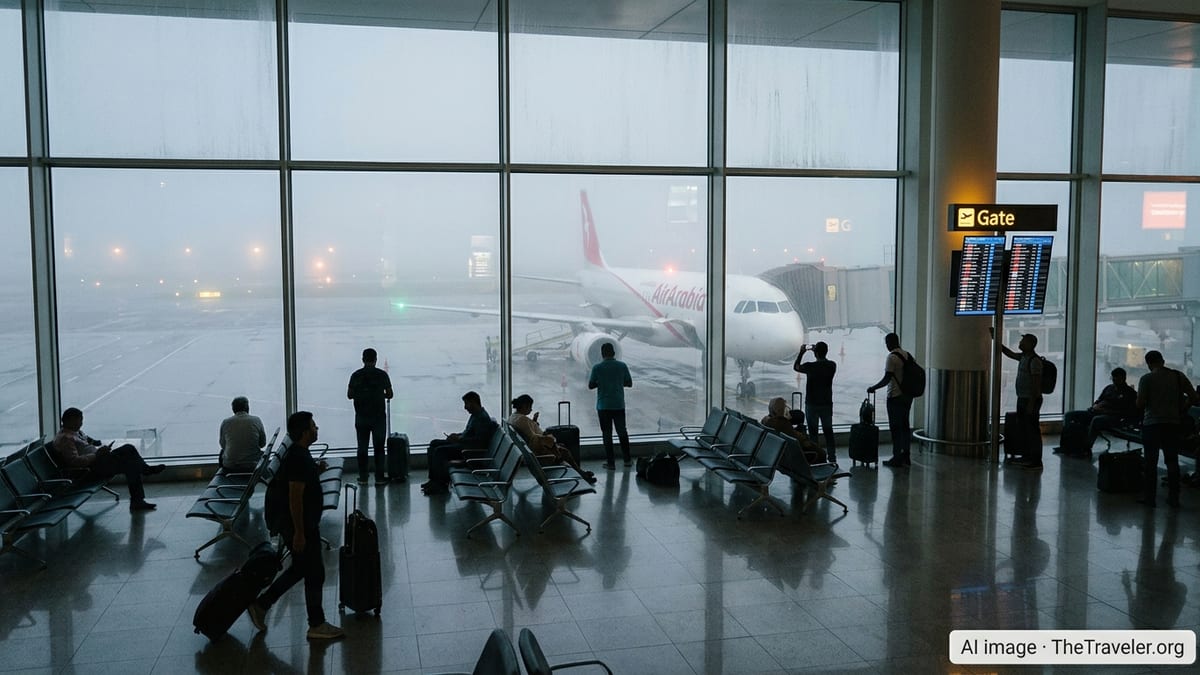
Five Cancellations Hit Oman’s Core Air Links
Publicly available flight monitoring platforms and sector reporting for the second week of May indicate that a cluster of at least five cancellations has emerged across routes touching Muscat International Airport and Salalah, Oman’s main southern gateway. The affected services include rotations normally operated by Oman Air on the Muscat–Salalah corridor and regional links used by Flydubai and Air Arabia between Oman and the United Arab Emirates.
The cancellations are concentrated on connections that feed traffic between Salalah and Muscat and onward to Dubai International Airport and Sharjah International Airport. While the overall schedules at Muscat and Salalah continue to show dozens of daily movements, the targeted withdrawal of specific flights has been sufficient to sever individual itineraries, particularly for passengers booked on tight same day connections.
Reports from recent days describe cases in which Oman Air services that typically connect Muscat with Salalah have appeared as cancelled or removed from bookings, even as other frequencies on the same city pair remain in operation. Parallel disruptions involving low cost carriers Flydubai and Air Arabia have been noted on cross border routings that rely on Muscat or Salalah as part of a wider Gulf network.
Although the number of flights directly involved is modest, the effect is amplified by the role of Muscat and Salalah as key interchange points. For many travellers moving between southern Oman, the capital, and external hubs in Dubai and Sharjah, the loss of even a handful of rotations can mean missed onward flights or forced overnight stays.
Muscat and Salalah Under Pressure as Regional Network Shifts
Muscat International Airport functions as Oman’s primary hub, hosting Oman Air alongside Flydubai, Air Arabia and other Gulf and international carriers. Salalah International Airport, while smaller, is a vital domestic and regional node linking the Dhofar region with Muscat and selected Gulf destinations. The present wave of cancellations is adding strain to an already busy north–south air corridor.
In recent seasons, Oman’s aviation authorities and airport operators have highlighted heavy demand on the Muscat–Salalah route, particularly around holiday and Khareef travel peaks. Even under normal conditions, securing last minute replacement seats can be challenging when a flight is withdrawn. The latest cancellations, though limited in absolute numbers, come against a backdrop of high load factors and limited spare capacity, constraining the ability of airlines to promptly rebook all affected passengers.
The broader regional environment has also been unsettled by periodic airspace restrictions and shifting routings across the Middle East in 2026. Sector bulletins and shipping and aviation advisories in recent weeks have pointed to temporary route suspensions and schedule adjustments by multiple carriers as they recalibrate operations around evolving security assessments and airspace availability. Within this context, selective cancellations on Oman facing routes can be seen as part of a wider regional pattern of tactical network changes.
For Oman specifically, the practical impact is that even when Muscat and Salalah airports remain open and broadly operational, passengers may still experience sudden changes to individual services operated by Oman Air, Flydubai or Air Arabia, particularly where flights intersect with sensitive air corridors or require non standard routings.
Knock On Effects for Dubai and Sharjah Connections
The latest cancellations are being felt most acutely by travellers relying on Oman–UAE links to complete longer journeys. Many itineraries between Salalah and international destinations are constructed around connections in either Muscat or major hubs such as Dubai International Airport and Sharjah International Airport. When a feeder leg operated by Oman Air, Flydubai or Air Arabia is withdrawn, the entire chain of travel can be disrupted.
Travel coverage focused on early May notes that passengers transiting between Salalah, Muscat and Gulf hubs have encountered cases where one sector of a multi segment ticket is cancelled while the remainder of the booking initially remains active. This can leave customers technically still holding onward seats from Dubai or Sharjah, but without a viable way to reach those airports from Oman on the original timetable.
In some instances, travellers report being offered rebooking on later departures or alternative routings through other Gulf cities, subject to seat availability and airline policy. However, when schedules are already compressed and load factors high, options may be limited, leading to extended layovers or forced changes to trip dates. The situation is particularly difficult for passengers starting or ending their journey in Salalah, where the choice of carriers and frequencies is narrower than in Muscat.
The pattern underscores how seemingly isolated cancellations on short haul segments between Oman and the UAE can cascade into missed long haul departures or complicated reissues of tickets, especially for those holding separate bookings on different airlines rather than a single through ticket.
What Affected Passengers Are Being Advised to Do
Consumer focused travel resources and airline policy summaries examined in recent days emphasize that passengers impacted by cancellations in Oman should monitor their bookings closely and act quickly when changes appear. Because not all itinerary adjustments trigger immediate notifications, some travellers only discover a missing flight when they proactively check airline apps or third party booking tools.
Advisory material suggests that customers whose flights on Oman Air, Flydubai or Air Arabia are cancelled are generally offered either rebooking on the next available service on the same route, re routing via another hub, or a refund, depending on fare conditions and the cause of disruption. In practice, the speed and ease of securing a satisfactory outcome can vary, particularly where call centres and airport desks are under pressure.
Passenger rights frameworks differ by jurisdiction and ticket origin, but guidance commonly encourages travellers to retain all documentation related to the cancellation, including boarding passes, booking confirmations and any written notices, in case later claims for refunds or compensation are pursued. Third party claim services and legal resources have continued to remind passengers that they may have entitlements when a carrier initiated cancellation significantly alters their plans.
Given the fluid situation, travel advisers recommend that anyone due to fly on routes touching Muscat, Salalah, Dubai or Sharjah in the coming days reconfirm departure times directly with their airline before heading to the airport. Where possible, building in longer connection windows and considering flexible or changeable tickets may reduce exposure to last minute schedule changes as regional carriers continue to fine tune operations.