

More news on this day
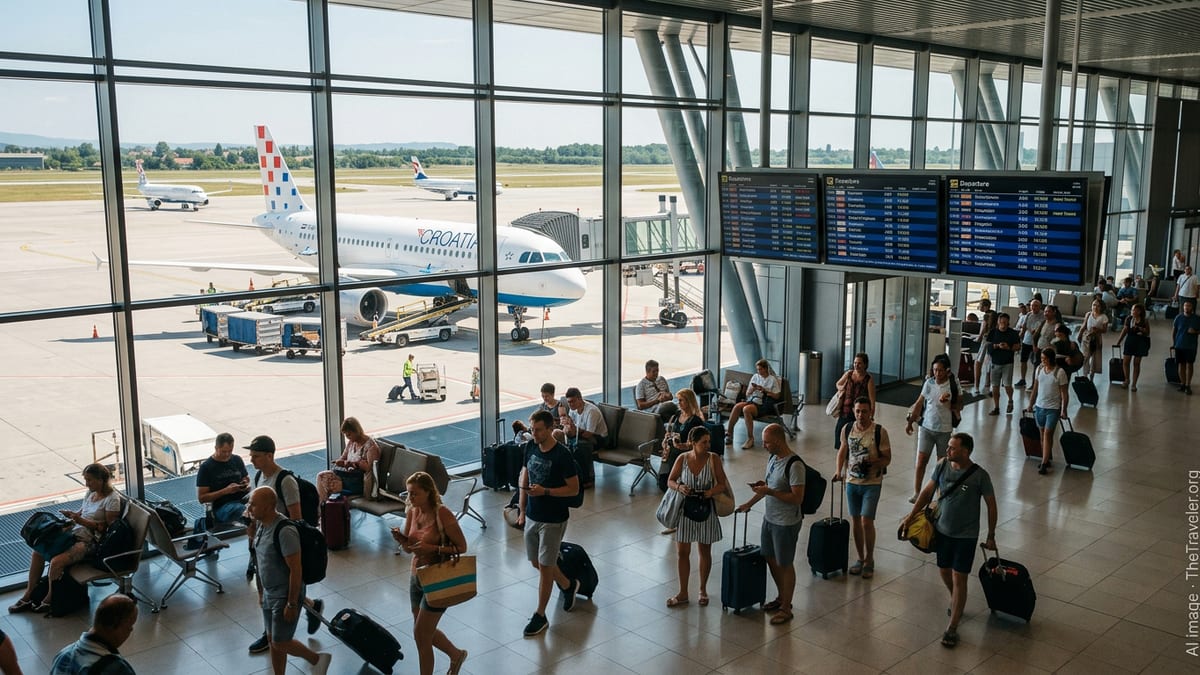
A widening conflict in the Middle East is reshaping global holiday patterns just weeks before Europe’s peak booking season, with Croatia emerging as a perceived safe alternative and Croatia Airlines moving to capture a sudden surge in last-minute demand.
Get the latest news straight to your inbox!
Security Concerns Push Travellers Back Toward Europe
The latest escalation in the Middle East has triggered fresh aviation risk alerts across large swathes of regional airspace, prompting airlines to curtail or reroute services and nudging would-be holidaymakers to reconsider itineraries that included Gulf hubs or nearby resort destinations. Travel intelligence analysis shows a rapid deterioration in perceived safety scores for several Middle Eastern markets since late February, particularly among travellers from Europe and North America who are sensitive to geopolitical shocks.
Tourism consultancies tracking booking patterns report a clear early pivot away from destinations seen as being close to the conflict zone, such as parts of the eastern Mediterranean and Red Sea, and back toward intra-European travel. Low-cost and flag carriers focused on short-haul routes inside Europe have begun to report stronger booking pipelines as customers rebook or bring forward plans for Mediterranean getaways.
Industry coverage indicates that this shift is not only about avoiding specific countries but also about reducing exposure to long-haul itineraries that rely on now-constrained Middle Eastern hubs. With some flights between Europe and Asia either suspended or forced to take longer detours, travellers who had considered multi-stop journeys via the region are increasingly opting for direct or one-stop trips within Europe’s Schengen area instead.
Croatia’s Adriatic Coast Becomes a “Safe Bet”
In this rapidly changing environment, Croatia’s Adriatic coast is gaining prominence as a comparatively stable, easily accessible alternative for summer and shoulder-season holidays. Recent European travel reporting notes that Croatia is benefiting from its Schengen membership, euro adoption and reputation for safety, all of which simplify last-minute decision-making for travellers abandoning more complex itineraries.
Analyses of tourism demand in early March highlight a noticeable uptick in interest in Mediterranean and Adriatic destinations perceived as secure, with Croatia regularly cited alongside Spain, Greece and Portugal as likely beneficiaries of diverted demand. A Schengen-focused travel report published this month points to Croatia’s coastal hubs, from Dubrovnik to Split and Zadar, as particular magnets for visitors who want sea-and-sun trips without transiting volatile air corridors.
Domestic tourism officials have publicly stressed that, despite jitters in global aviation, booking flows for Croatia remain resilient and that the country’s tourism “fundamentals” are strong. At the same time, hoteliers and local travel agencies in major coastal cities are preparing for the possibility that late spring and early summer could bring a higher share of last-minute European visitors than usual, especially from markets that traditionally combine Middle East city breaks with Mediterranean stays.
Croatia Airlines Adjusts Network and Capacity
As Croatia’s national carrier, Croatia Airlines sits at the center of this evolving demand picture. The company had already been in the middle of a strategic refresh, introducing new Airbus A220 aircraft and planning a denser network of European destinations for the 2025 and 2026 summer seasons. Recent route announcements highlight an emphasis on strengthening links from Zagreb to a broad mix of European capitals and regional centers, as well as boosting seasonal capacity into coastal airports such as Split and Dubrovnik.
Air traffic and tourism reports suggest that, in light of the Middle East conflict, airlines across Europe are reassessing capacity deployment for the upcoming season, shifting aircraft from affected long-haul routes into high-demand short-haul leisure markets. Croatia Airlines appears well placed to follow this pattern, using its growing narrow-body fleet to add frequencies on popular intra-European routes and to concentrate more seats into peak periods when late-booking holidaymakers are most likely to travel.
Financial and operational disclosures from the carrier for 2024 already flagged geopolitical uncertainty in the Middle East as a factor in planning scenarios. With the situation now deteriorating, aviation analysts expect Croatia Airlines to lean more heavily on point-to-point leisure traffic, coordination with partner networks, and schedule fine-tuning to exploit surging interest in Croatia as a substitute for more volatile destinations.
Partner Networks Help Capture Diverted Long-Haul Demand
Although Croatia Airlines is primarily a European and regional carrier, its role within wider alliance and codeshare frameworks is becoming increasingly important as long-haul itineraries are being re-routed away from the Middle East. A codeshare expansion agreed in mid-2024 with ITA Airways, along with longstanding cooperation within Star Alliance, has strengthened Zagreb’s position as a connecting point between Adriatic destinations and major European hubs.
Industry coverage suggests that as airlines in Europe and beyond adjust to changed risk assessments in Middle Eastern airspace, secondary hubs like Zagreb can gain relevance as passengers seek alternative ways to piece together intercontinental journeys. Through codeshare arrangements, Croatia Airlines can sell itineraries that connect its domestic and regional flights with long-haul services from partner carriers, effectively channelling diverted demand toward Croatian gateways.
This approach aligns with a broader pattern seen across Europe, where national and regional carriers are working with alliance partners to spread capacity, manage disruption and offer passengers more options that avoid high-risk areas. For Croatia Airlines, the current geopolitical backdrop may accelerate its transition from a predominantly point-to-point operator into a more integrated player within the European connecting network.
Tourists Face Higher Prices and Tighter Seat Availability
For travellers, the shift away from the Middle East is already translating into tighter capacity on some of Europe’s most popular leisure routes. Travel media and aviation data providers have highlighted rising fares between Europe and key Asian markets as flights are rerouted, and similar upward pressure is emerging on short-haul routes into high-demand coastal destinations, including parts of Croatia.
Market commentary from airlines and online travel agencies indicates that last-minute bookings for Mediterranean holidays have accelerated since the latest round of conflict began, with some carriers reporting that intra-European demand has outpaced initial forecasts for early spring. As a result, seats on peak weekend services into Croatian airports are filling faster, and the remaining inventory can be significantly more expensive than it was just a few weeks earlier.
Travel experts advise that passengers considering a Croatia holiday in the coming months should monitor schedules closely, as airlines like Croatia Airlines continue to tweak timetables and add extra flights where feasible. While capacity is expected to grow into the summer, the combination of re-routed long-haul flows, displaced demand from the Middle East and traditional European holiday traffic means that flexibility on dates, airports and flight times may be essential for securing affordable fares.