

More news on this day
Air travel across parts of the Middle East has been thrown into renewed turmoil as cancellations on EgyptAir, Royal Jordanian, Gulf Air and Saudia disrupt more than 20 flights on busy routes linking Cairo, Luxor, Hurghada, Amman and major Gulf hubs including Dubai, Abu Dhabi, Riyadh, Sharjah and Medina.
Get the latest news straight to your inbox!
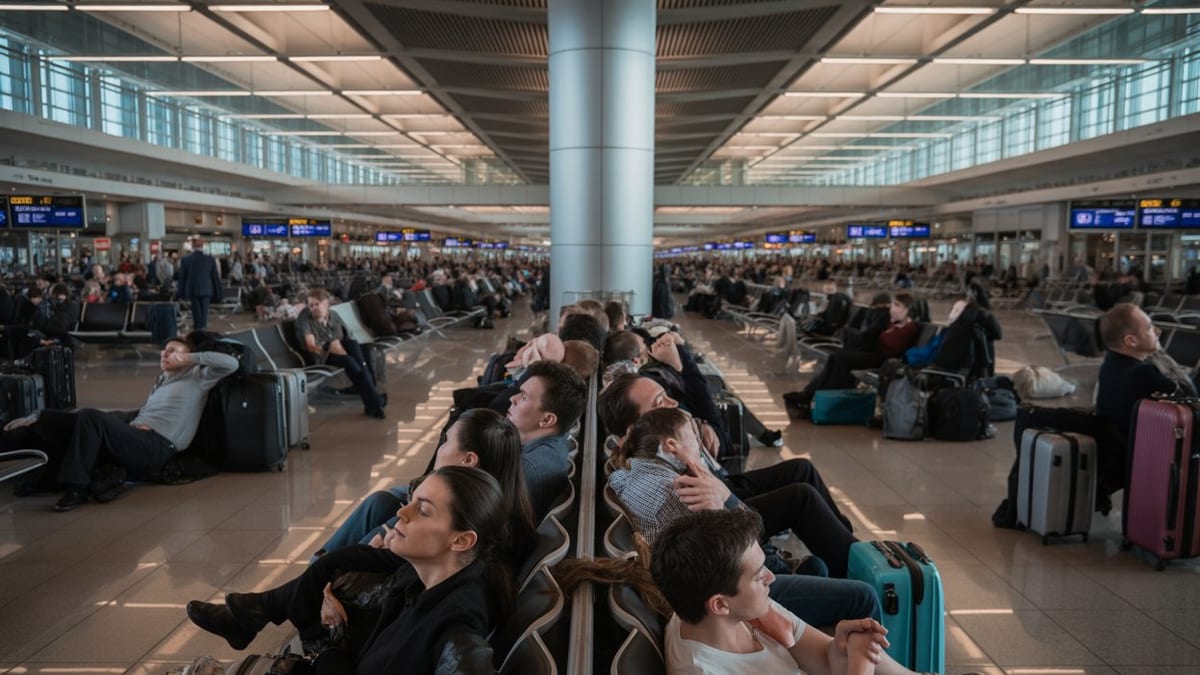
Image by Global Travel Alerts, Advisories, International Travel Alerts
Wave of Cancellations Hits Key Regional Routes
Published coverage and live timetable data indicate that a fresh round of cancellations is affecting short and medium haul services across Egypt, Jordan and the Gulf. EgyptAir, Royal Jordanian, Gulf Air and Saudia are all listed among the operators with flights removed from schedules or marked as cancelled on routes that normally connect major hubs several times a day.
The latest disruption is concentrated on services into and out of Cairo, Luxor, Hurghada and other Egyptian gateways, together with flights linking Amman to Gulf cities such as Dubai, Abu Dhabi, Sharjah, Riyadh and Medina. Regional flight trackers and airport boards show gaps where multiple daily rotations would usually appear, pointing to more than 20 individual flights scrubbed in a single news cycle, with some services also rerouted away from congested or restricted airspace.
Reports from affected travelers describe day of departure cancellations, long queues at transfer desks and last minute rebookings via alternative hubs. Some itineraries have been fragmented into multiple separate tickets as passengers try to patch together new routings through less affected airports or outside the immediate region.
The current wave of disruption follows weeks of irregular operations across the wider Middle East, where intermittent airspace restrictions and operational constraints have already led airlines to thin schedules, consolidate lightly booked flights and make rapid adjustments to aircraft rotations.
EgyptAir Adjusts Network as Passengers Seek Refunds
EgyptAir’s network has come under particular pressure on routes linking Cairo with Gulf cities, especially Dubai, Abu Dhabi and Sharjah. Publicly available information from the carrier and recent traveler accounts indicate that multiple departures on these corridors have been withdrawn or combined, with some passengers informed that their services would not operate as originally ticketed.
According to recent consumer discussions, EgyptAir has introduced temporary flexibility measures on certain Gulf bound tickets, including options for fee free refunds or date changes within a limited window for flights scheduled through early April. Travelers report mixed experiences when trying to process those changes, with some successfully securing refunds via online forms while others describe delays, lack of confirmation emails or difficulty cancelling a flight once a flight number or schedule has been altered.
On the domestic and leisure side, connections from Cairo to Luxor, Hurghada and other Red Sea and Upper Egypt destinations have also seen disruption when inbound long haul or regional services arrive significantly late or not at all. Tour operators that rely on tight same day connections are reported to be juggling coach transfers and hotel check in times as they wait for updated departure boards and revised domestic schedules.
Airline timetable documents issued earlier in the season show dense patterns of EgyptAir services across Egypt and the Gulf, underscoring the scale of the adjustment now under way when even a fraction of those departures is cancelled or retimed at short notice.
Royal Jordanian and Gulf Air Cut Back Amid Regional Strain
Royal Jordanian has also been drawn into the turbulence, particularly on its core Amman connections to Cairo, Gulf hubs and onward European destinations. Recent route maps and operational summaries list Amman Dubai and Amman Cairo among its key city pairs, but travelers monitoring their bookings report selected flights disappearing from schedules or being marked as cancelled with rebooking options offered on alternative days or departure times.
Some passengers connecting via Amman from Gulf cities to Europe and North Africa describe uncertainty over whether their intermediate segments will operate as planned, citing instances in which Royal Jordanian services were cancelled or rerouted at short notice while long haul partners continued to fly. In several cases, travelers have chosen to reroute entirely via other alliance carriers or to postpone trips until schedules appear more stable.
Gulf Air, which links Bahrain and Saudi Arabia to regional and long haul markets, has likewise trimmed parts of its network during the recent volatility. Public disruption trackers and airline advisories reference cancellations on selected services that feed religious travel and leisure flows, pushing some passengers to seek alternatives via Cairo, Jeddah or Riyadh. In turn, that additional demand has added pressure to the very airlines and routes now facing their own cancellations.
The pattern emerging across Royal Jordanian and Gulf Air suggests a cautious approach to capacity in an environment where airspace availability and demand can change quickly. Airlines appear to be concentrating resources on routes with the strongest load factors while offering waivers or flexible rebooking on thinner services that prove more vulnerable to disruption.
Saudia Services to Riyadh and Medina Also Affected
Saudia, the flag carrier of Saudi Arabia, is another key player in the current disruption, particularly for travelers heading to or from Riyadh and Medina. These cities function not only as business and government hubs but also as important gateways for religious travel, which traditionally sees a surge in demand during this period.
Recent operational updates and passenger reports show cancellations or significant retimings on certain Saudia flights linking Saudi hubs with Egypt and Jordan. Routes connecting Riyadh or Medina to Cairo, Hurghada and Amman have experienced schedule changes, with some flights removed from daily rotation patterns that had been in place earlier this year.
For travelers transiting through Saudi Arabia, the impact can be multiplied. Missed onward connections to secondary cities within the kingdom or to further Gulf destinations have led to lengthy layovers, hotel vouchers in some cases and renewed pressure on customer service channels. Some passengers report being moved to later services operated by Saudia or its codeshare partners, while others have opted to exit their trip entirely and pursue refunds.
Religious travelers and tour organizers are watching Saudia’s schedules closely, as even a small number of cancellations on peak days can ripple across tightly planned itineraries that combine charter coaches, group hotel blocks and fixed sightseeing windows.
What Travelers Should Check Before Flying
With conditions in flux, aviation analysts and consumer advocates are emphasizing that the volume of cancellations affecting EgyptAir, Royal Jordanian, Gulf Air and Saudia remains dynamic rather than fixed. While more than 20 flights have been identified as cancelled across a snapshot of routes to Cairo, Luxor, Daraw, Hurghada, Amman, Dubai, Abu Dhabi, Riyadh, Sharjah and Medina, that figure can shift rapidly as airlines restore or further cut services.
Publicly available advisories from airlines, airports and independent flight tracking services consistently stress the importance of checking flight status repeatedly in the 24 to 48 hours before departure. Many carriers in the region have also updated their travel waivers in recent weeks, allowing passengers on affected routes to change dates or request credits without standard penalties when their flights are cancelled or significantly delayed.
Travel industry observers note that passengers connecting between multiple regional carriers are at particular risk of disruption, because a cancellation on one leg can cascade into missed onward flights operated by another airline on a separate ticket. They recommend that travelers monitor all segments closely, keep boarding passes and receipts for any additional expenses and review the conditions of carriage that apply to each ticket, especially for low cost or promotional fares.
As airlines continue to recalibrate their networks in response to operational challenges and fluctuating demand, the situation for flights across Egypt, Jordan and the Gulf remains fluid. For now, the most reliable strategy for travelers appears to be active monitoring of itineraries, early engagement with airline self service tools where available and a willingness to adjust plans if new cancellations emerge on these already strained routes.