

More news on this day
Air travel across the Middle East faced fresh disruption on April 7, 2026, as Egypt, Jordan, Saudi Arabia, the United Arab Emirates and other countries reported dozens of cancellations and hundreds of delays, snarling operations at major hubs from Cairo and Jeddah to Amman and Dubai.
Get the latest news straight to your inbox!
Wide-Ranging Disruptions Across Regional Hubs
Published figures from aviation monitoring platforms and industry reports indicate that at least 30 flights were cancelled and 494 delayed on Tuesday across a swath of Middle Eastern airports, including Cairo, Jeddah, Amman, Dubai and Abu Dhabi. The disruption affected a mix of regional and international carriers, complicating itineraries for passengers using the Gulf and Levant as connection points between Europe, Asia and Africa.
The latest figures add to weeks of instability in regional aviation following airspace closures and intermittent security incidents linked to the ongoing conflict involving Iran, Israel and the United States. Flight tracking data and recent travel advisories describe a pattern of rolling delays and targeted suspensions, especially on routes traversing the Gulf airspace or connecting via the United Arab Emirates and Saudi Arabia.
While the day’s tally of 30 cancellations is modest compared with the mass shutdowns seen in early March, the 494 delays highlight how even partially reopened airspace can translate into extended ground times, missed connections and aircraft being out of position across networks.
Saudia, Gulf Air, All Nippon, SpiceJet Among Affected Carriers
According to publicly available schedules and same-day status boards compiled by travel industry outlets, the disruptions on April 7 involved a diverse lineup of airlines. Saudia and Gulf Air saw operations affected at hubs in Jeddah and other Saudi and Gulf airports, while Asian long haul operators such as All Nippon Airways rerouted or delayed selected services navigating around high risk areas.
Indian low cost carrier SpiceJet and other South Asian airlines also appeared prominently in delay and cancellation logs, as their flights to and from Dubai, Abu Dhabi and Gulf secondary cities were re-timed or held on the ground. These carriers rely heavily on Middle Eastern hubs for onward traffic to Europe and North America, amplifying the knock on effect when airport slots tighten or air corridors are restricted.
Industry commentary notes that the current pattern of disruption is less about blanket suspensions and more about continual fine tuning of schedules in response to evolving security assessments. Airlines have been adjusting flight paths, crew rotations and fleet deployment on a near daily basis, seeking to keep core services operating while avoiding overflight of areas flagged as high risk.
Cairo, Jeddah, Amman and Dubai Under Operational Strain
Large gateway airports in Egypt, Saudi Arabia, Jordan and the UAE remain under particular pressure. Reports from aviation analytics firms show Cairo International Airport contending with clusters of delayed departures and arrivals as airlines navigate altered routings and compressed turnaround windows, even though Egyptian airspace itself is generally described as open.
In Saudi Arabia, Jeddah’s King Abdulaziz International Airport has been one of the focal points of cancellations and late running services. Travel and trade publications describe limited capacity on some routes and intermittent suspensions to neighboring countries that share exposure to missile and drone overflight risks, keeping schedules in flux for both Saudia and foreign carriers that rely on Jeddah as a Red Sea hub.
Amman’s Queen Alia International Airport, meanwhile, has been operating with varying levels of constraint for more than a month, after Jordan figure prominently in early airspace closure notices. Current reports characterize the situation as partially normalized but still vulnerable to rapid change, with a noticeable share of international services running behind schedule as operators slot into alternative routings.
Dubai and Abu Dhabi continue to bear some of the heaviest operational strain. Earlier in the crisis, Dubai International temporarily halted flights after attacks targeted UAE infrastructure, and recent coverage notes that the airport is still processing a lower volume of movements than before the conflict. The accumulation of delayed flights on April 7 in both Dubai and Abu Dhabi underscores the challenges of restoring punctuality at hubs that remain central to global aviation but sit near active conflict zones.
Security Fears and Airspace Restrictions Continue to Shape Schedules
The latest wave of cancellations and delays cannot be viewed in isolation from the wider security picture. Regional bulletins from risk consultancies and maritime and aviation advisories describe a patchwork of airspace restrictions across Iran, Iraq, Israel, Jordan, Kuwait, Qatar, Bahrain, Syria and the UAE following Iranian strikes and subsequent military activity.
In some cases, airspace remains technically open but subject to routing limitations that lengthen flight times and complicate airline planning. In others, temporary closures, altitude restrictions or short notice warnings have forced carriers to divert or hold flights, resulting in knock on congestion at alternate airports. These measures are typically framed by authorities as precautionary responses to missile and drone threats rather than permanent bans.
Industry analysis indicates that the Gulf’s main hubs, particularly Dubai, Doha and Abu Dhabi, have been operating at significantly reduced capacity since late February, with a gradual but fragile recovery underway. Any new escalation or incident affecting airport infrastructure or key airways can quickly reverse progress and trigger another spike in same day disruptions similar to the April 7 figures.
Passengers Face Missed Connections, Rerouting and Uncertain Timelines
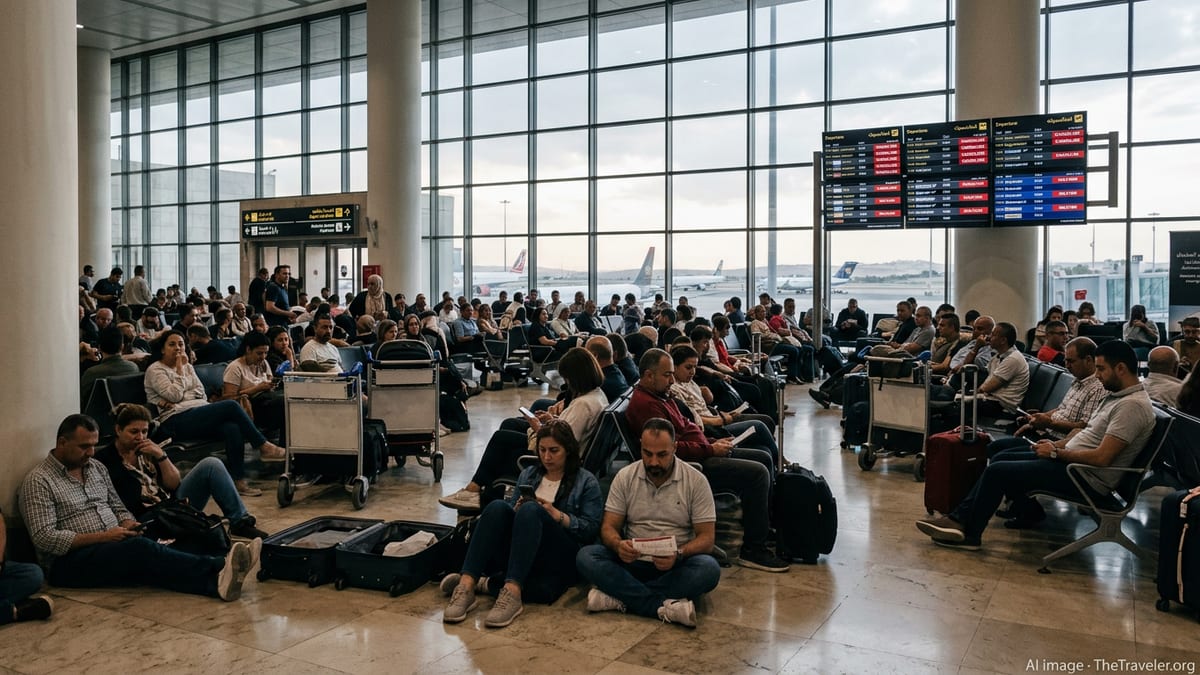
For travelers, the cumulative effect of 30 cancellations and nearly 500 delays in a single day means crowded terminals, longer waits and uncertain itineraries. Consumer oriented travel sites and airline advisories continue to encourage passengers to check their flight status repeatedly before heading to the airport, even when tickets show as confirmed, and to allow extra time for security screening and potential rebooking.
Many airlines with affected services in Cairo, Jeddah, Amman and Dubai have introduced or extended flexible policies, enabling date changes without fees, refunds on cancelled flights or the option to reroute via alternative hubs where capacity allows. However, reports of limited availability on replacement flights suggest that options may narrow quickly during peak travel times or shortly after fresh security advisories are issued.
Travel industry observers note that the Middle East’s role as a connecting bridge between continents magnifies the impact of every new restriction or delay. A single cancelled or heavily delayed departure from Dubai or Jeddah can disrupt onward journeys to Europe, Asia, Africa and the Americas, with knock on effects visible for days across airline networks.
With the broader conflict still unresolved and airspace arrangements subject to rapid change, analysts caution that irregular operations are likely to persist. Passengers planning to travel through Cairo, Jeddah, Amman, Dubai or other regional hubs in the coming weeks are being advised in public guidance to monitor updates closely and to prepare for schedules that may shift up to the last minute.