

More news on this day
Air travel across the Middle East is entering a fragile new phase as airlines begin restoring routes following a two week ceasefire between the United States, Israel and Iran, even as lingering security concerns and patchwork airspace rules keep schedules volatile for passengers.
Get the latest news straight to your inbox!
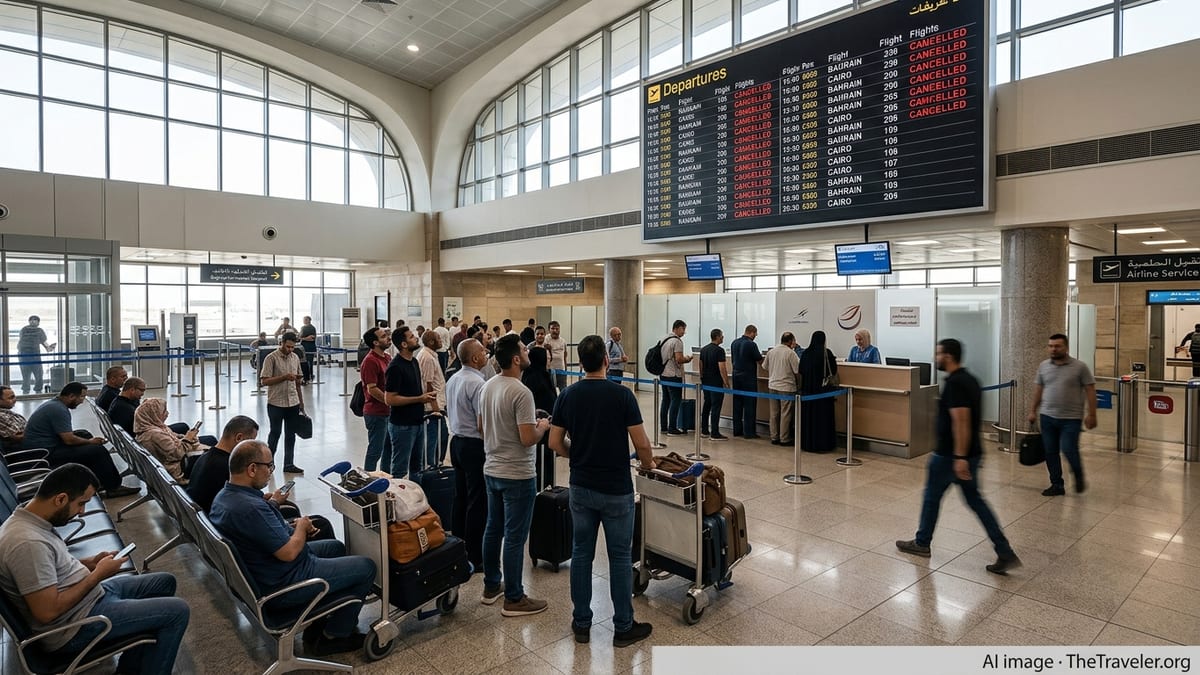
Key air corridors reopen, but not all skies are clear
One of the most significant developments for global aviation is the reopening of Iraqi airspace, announced on April 8. Publicly available information shows that Iraq has restored access to its flight information region for commercial traffic, a move that effectively reopens a central corridor linking Europe with the Gulf, South Asia and East Asia. Analysts note that this route is critical for cutting flight times and fuel burn on some of the world’s busiest long haul sectors.
According to recent industry coverage, the ceasefire has prompted several regional regulators to ease earlier restrictions, but the map remains uneven. Reports indicate that Iran’s airspace is still closed to commercial flights, while Kuwait and Bahrain also remain shut, forcing many carriers to continue flying lengthy detours around the northern Gulf.
Airline monitoring sites and specialist aviation outlets suggest that the partial reopening is already helping carriers begin to normalize schedules on routes that can safely overfly Iraq. However, the need to avoid other closed zones means flight times and operating costs remain elevated, and significant day to day timetable changes are likely as operators refine their routings.
Travel advisories reviewed by TheTraveler.org stress that passengers should not assume pre conflict timings have returned, even if their flight number is back on sale. Airlines are still adjusting block times and connection windows, and last minute reroutes around restricted airspace can lead to rolling delays.
Ben Gurion Airport ramps up cautiously after Iran Israel lull
In Israel, Ben Gurion Airport is preparing for a gradual ramp up in activity after the announcement of the ceasefire with Iran. Airport focused reports describe logistical preparations to handle more traffic while maintaining restrictions tied to the still fragile security environment and the presence of foreign military aircraft on the ground.
Domestic carriers El Al, Arkia and Israir currently anchor most of the traffic in and out of Ben Gurion. Arkia has publicly outlined plans to expand its schedule through April to destinations including Athens, Larnaca, several European capitals and long haul routes such as Bangkok and New York, with an ambition to restore a full program in early May. Other Israeli airlines are similarly rebuilding networks, but at a measured pace.
Foreign carriers are edging back more slowly. Regional operators such as flydubai and Etihad Airways have signaled interest in resuming services, according to aviation news coverage, yet most international brands appear to be waiting for a longer period of stability before committing full capacity. The experience of earlier escalations around Gaza and southern Israel, which triggered sudden mass cancellations, is shaping that caution.
For travellers, this means that while more options to and from Tel Aviv are reappearing in booking systems, frequencies are thin and schedules subject to change. Industry analysts say passengers may need to accept irregular timetables, longer connections through European or Mediterranean hubs and a higher risk of last minute aircraft swaps.
Gulf hubs juggle limited operations and ongoing suspensions
Across the Gulf, major hubs in Dubai, Abu Dhabi and Doha remain under pressure as airlines balance demand with operational and security constraints. Earlier in March, carriers at Dubai International Airport and Abu Dhabi International Airport sharply curtailed flights as airspace closures rippled across the region. More recent regional business reports indicate that some services have since resumed, but not at pre conflict levels.
Gulf based airlines have adopted different strategies. Some, including Emirates and Etihad, have restored limited schedules to select destinations while maintaining travel waivers and flexible rebooking policies for affected passengers. Others, such as Qatar Airways, have kept parts of their network on hold where airspace access remains uncertain or constrained, notably on routes that would typically overfly Iran or Bahrain.
European airlines are also taking divergent approaches to the Gulf. Coverage from the Netherlands shows that KLM is keeping its suspension of flights to Dubai, Riyadh and Dammam in place at least until mid May, citing safety assessments and route planning considerations. In the meantime, the carrier is coordinating with partners such as Air France and Delta Air Lines to reroute passengers via alternative hubs.
The result for travellers using Gulf hubs is a patchwork of options. While key long haul corridors between Europe, Asia and Australasia are open, capacity is constrained and routings more circuitous than before the conflict. Travel industry observers say that search results can change rapidly as airlines add or pull rotations, and that connecting through secondary hubs in Turkey, Egypt or southern Europe may sometimes offer more reliable itineraries than traditional Gulf stopovers.
Regional carriers and labor routes remain under strain
The ceasefire has not yet translated into a full restoration of Middle East services for all regional airlines. Philippine carriers, which operate vital links for overseas workers, illustrate the continuing strain. Recent advisories cited in business media report that Cebu Pacific has extended the suspension of its Manila Dubai flights until at least the end of April, even as conditions ease, reflecting a conservative stance on risk and route economics.
Philippine Airlines is moving in the opposite direction on some corridors, with public statements indicating plans to resume Manila Riyadh flights from April 10, albeit on adjusted routings to avoid sensitive airspace. Aviation outlets note that these services are likely to operate via longer paths and potentially with technical stops, increasing costs and journey times for passengers heading to and from the Gulf.
Elsewhere in Asia, carriers in Singapore, India and Japan continue to revise schedules to Middle Eastern destinations. Community travel forums and airline notices reviewed in recent days show ongoing cancellations to cities such as Dubai, Doha and various Saudi gateways through at least late April, with some airlines pushing full resumptions into the northern winter season.
For the millions of migrant workers who rely on these links, particularly from South and Southeast Asia to the Gulf, that means continued uncertainty. Observers warn that constrained capacity can push up fares on the limited flights that do operate, while complex reroutes through third country hubs add visa and transit challenges.
Costs, capacity and what travellers should expect next
Industry groups describe the ceasefire as a welcome step for aviation, but not a cure for all the pressures facing airlines in and around the Middle East. Comments from the International Air Transport Association highlighted in regional coverage emphasize that fuel and ticket prices are likely to remain elevated, in part because refiners in the region are still recovering from disruption and supply chains have not fully normalized.
Capacity constraints also remain a central issue. With several key airspaces still closed and airlines reluctant to base aircraft and crew in certain locations, the number of daily seats on offer across affected routes is substantially below pre conflict levels. Some carriers are prioritizing larger wide body aircraft on trunk routes to maximize available capacity, but that approach cannot fully offset the loss of frequencies and secondary city links.
Travel experts suggest that, over the coming weeks, the trajectory of flight operations will largely depend on whether the ceasefire holds beyond its initial two week window and whether regulators reopen additional air corridors. A stable security picture could see more foreign airlines return to Tel Aviv, fuller schedules at Gulf hubs and the relaxation of extended suspensions such as those maintained by KLM and several Asian carriers.
In the meantime, passengers planning trips that traverse the region are being urged by airlines and travel agents to build in flexibility, monitor booking changes closely and consider alternative routings where necessary. The Middle East’s skies may be quieter and safer than at the height of the conflict, but the journey back to fully normalized air travel is only just beginning.