

More news on this day
Key Middle Eastern aviation hubs are rapidly rebuilding regional flight schedules after days of war-related airspace closures, with Gulf carriers signaling a return to near-normal operations within days as airports in Dubai, Abu Dhabi and Doha scale back emergency procedures.
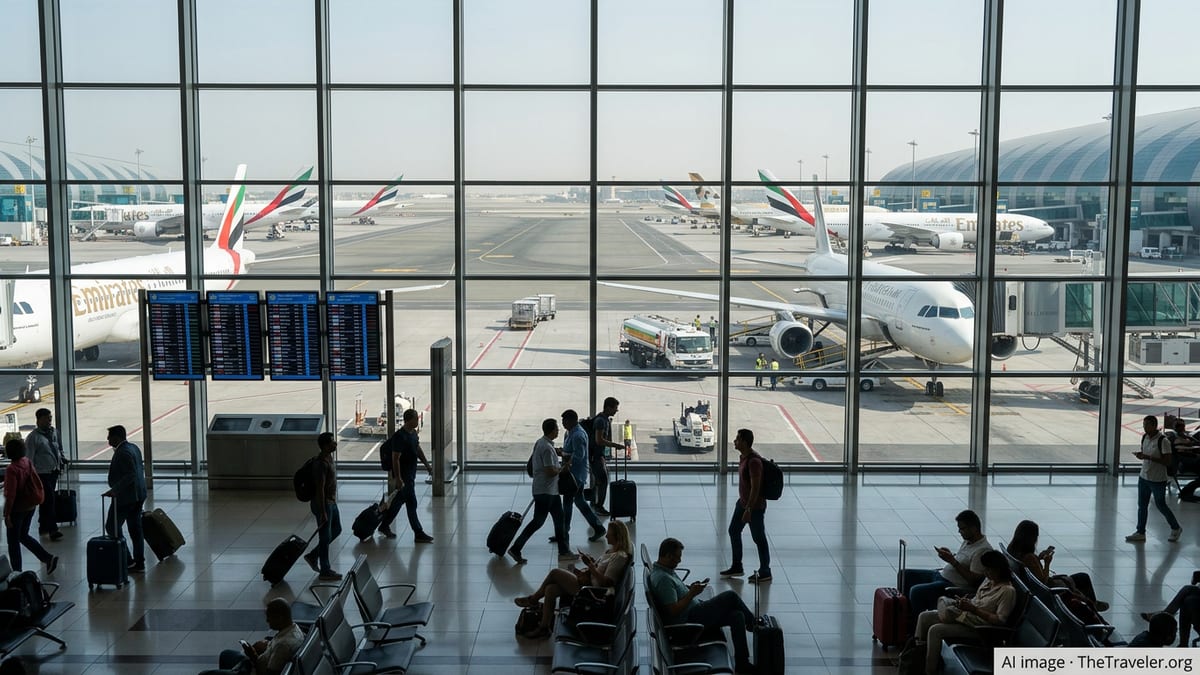
Gulf Megahubs Shift From Shutdown to Recovery Mode
Dubai International and Abu Dhabi airports have moved from crisis footing to controlled recovery, expanding the number of departures and arrivals across the Gulf after a near standstill triggered by the conflict involving Iran, the United States and Israel. Airport operators report that more than a thousand flights have been handled in recent days as runways, terminals and air traffic control centres return to routine patterns while maintaining heightened security protocols.
The restoration push follows a 48-hour halt to most commercial aviation across parts of the region, when multiple states temporarily closed their airspace as a precaution. That decision severed key east–west corridors and froze transit traffic at some of the world’s busiest connecting hubs, including Dubai, Doha and Abu Dhabi, stranding hundreds of thousands of passengers and disrupting airline networks from Europe to Asia.
Authorities now say core infrastructure remains intact, allowing a relatively swift scaling up of operations. Cleaning up the backlog of displaced aircraft, crew and passengers, however, is expected to take several more days, even as published timetables start to resemble pre-disruption schedules.
Emirates and Etihad Map Out Full Network Restoration
Dubai-based Emirates has begun adding back a dense wave of regional services to Gulf Cooperation Council and wider Middle Eastern destinations as airspace corridors reopen and regulators relax emergency restrictions. The airline has already restored a majority of its daily frequencies and has publicly targeted a return to full network coverage in the short term, contingent on stable security conditions.
Etihad Airways in Abu Dhabi is following a similar trajectory, rebuilding its schedule around core regional and South Asian markets before progressively reinstating secondary destinations. The carrier has reintroduced dozens of flights over the coming two weeks, prioritising routes with high numbers of stranded passengers and critical connectivity for labour, family and business travel.
Both airlines continue to warn that schedules remain subject to change at short notice. Operational planning teams are maintaining a higher-than-usual level of standby capacity in aircraft and crew to absorb last-minute reroutes or temporary airspace restrictions that could still emerge as the broader geopolitical situation evolves.
Qatar Airways and Neighboring Carriers Reconnect the Region
Qatar Airways, whose hub at Hamad International in Doha was among those heavily affected by airspace closures, is also reintroducing regional links as authorities authorize safe corridors. The airline has been operating a mix of repatriation and scheduled flights, gradually layering in more predictable timetables as overflight permissions expand and traffic management across the Gulf stabilizes.
In parallel, carriers in Bahrain, Kuwait and Saudi Arabia have restarted many short-haul services that feed into and out of the major hubs, restoring vital spokes that connect smaller regional cities with global long-haul networks. Low-cost operators such as flydubai have resumed operations on reduced schedules, particularly on high-demand routes across the Arabian Peninsula, to relieve pressure on full-service airlines.
Industry analysts note that the synchronized ramp-up among these carriers is crucial for regional recovery. Because Gulf hubs function as tightly integrated transfer systems, restoring isolated flights offers limited benefit unless partner airlines and neighboring airports increase capacity at the same time to rebuild viable one-stop connections.
Regional Travelers Face Gradual Normalization After Days of Chaos
For passengers across the Middle East, the restoration of regional schedules marks a welcome shift after days of cancellations, diverted flights and long airport layovers. Travel agents and airline contact centres report that rebooking efforts have moved from crisis triage to systematic rescheduling, with more customers now able to secure confirmed departures within a reasonable timeframe.
Authorities and airlines are still urging travelers not to go to the airport without a reconfirmed booking, and access controls remain in place at many terminals. Check-in cut-off times have been tightened in some hubs, while security screening and document checks are taking slightly longer as ground teams work through a combination of regular and disrupted itineraries.
Despite these frictions, regional tourism boards are cautiously optimistic that leisure and business travel flows will begin to normalize into the second half of March if no fresh security shocks hit the airspace. Hotel operators in Gulf cities report a slow but noticeable uptick in new bookings compared with the peak of the disruption, as confidence grows that flights will operate more reliably.
Operational Lessons and Preparedness for Future Shocks
The latest shutdown and subsequent restoration of regional flight schedules have prompted fresh debate within the aviation sector about resilience planning for Middle Eastern hubs that now handle a disproportionate share of global transit traffic. Airport operators and airlines are reviewing contingency protocols, including how quickly aircraft can be repositioned, how best to manage passenger care obligations, and how to coordinate real-time information across borders when airspace closures cascade through the region.
Industry groups say the episode underscores the importance of flexible routing options and pre-agreed crisis corridors that allow at least limited passenger and cargo flows even in periods of heightened tension. Some carriers are exploring additional partnerships and code-share arrangements that could offer alternative routings through secondary hubs should primary gateways again be forced to curtail operations.
While full operational stability is not yet guaranteed, the rapid rebound of Middle Eastern aviation hubs from near-total shutdown to expanding regional schedules highlights both the vulnerabilities and strengths of the current system. The coming weeks will test whether new measures and hard-won lessons can keep flights running smoothly in a part of the world where geopolitical risk is an enduring feature of the travel landscape.