

More news on this day
Spring break in Nashville is supposed to be all about hot chicken, live music, and honky-tonk nights, but a fresh spike in global oil prices tied to the Iran war is threatening to make simply getting there the most expensive part of the trip.
Get the latest news straight to your inbox!
Gas Prices Jump as Iran War Roils Oil Markets
Global oil markets have swung sharply higher in recent days as the conflict involving Iran disrupts production and shipping routes across the Middle East. International benchmark Brent crude surged above 100 dollars a barrel for the first time in more than three years after attacks and counterstrikes around key energy infrastructure and shipping lanes, according to widely cited energy market data. Publicly available information shows that crude prices climbed more than 16 percent in a single trading session as traders reacted to the risk of prolonged supply interruptions.
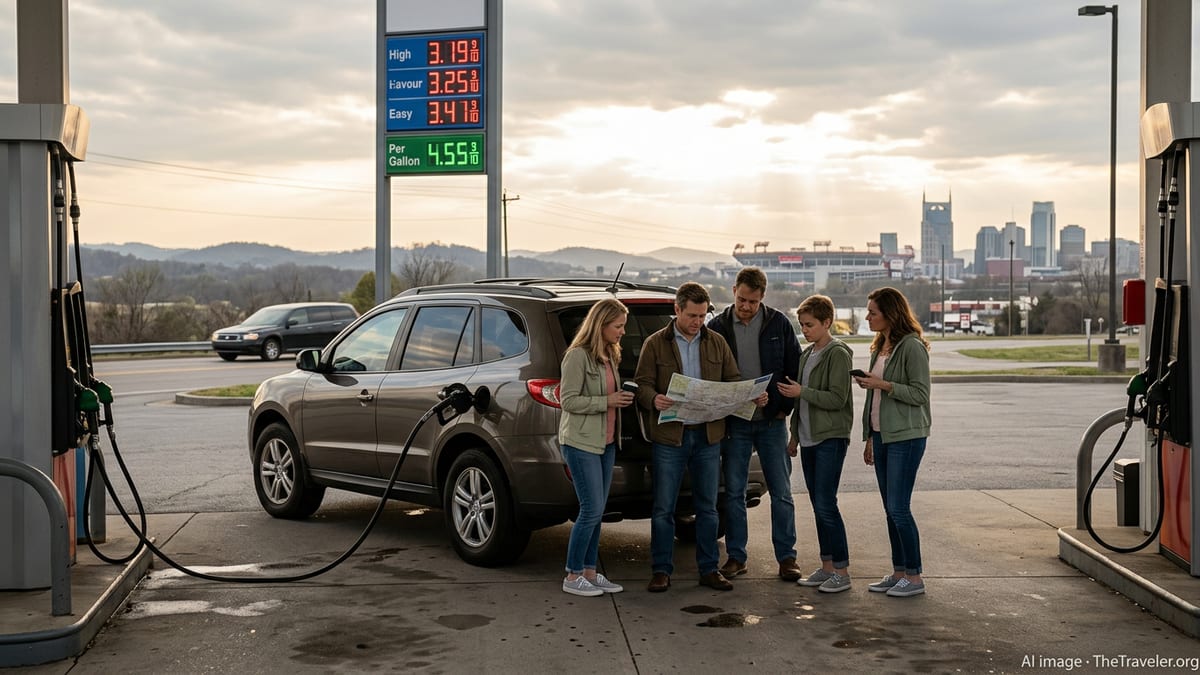
U.S. drivers are already seeing the impact at the pump. National tracking from major motor clubs and fuel analysts indicates the average price of regular gasoline has jumped well into the mid 3 dollar range per gallon within a matter of days, with some reports describing a double digit percentage increase compared with last week. In energy sensitive states such as California, average prices have moved past 5 dollars per gallon, highlighting how quickly geopolitical shocks are feeding into household budgets.
Analysts following the Iran war say the latest price shock is closely tied to threats around the Strait of Hormuz, a narrow passage that typically handles roughly one fifth of the world’s seaborne oil. Published coverage notes that tanker operators and container carriers have scaled back or temporarily suspended transits in parts of the region, adding uncertainty over how much crude and refined product can reliably reach global markets in the weeks ahead.
Why a Road Trip to Nashville Suddenly Costs More
Nashville has been one of the country’s most popular spring break and long weekend destinations, drawing drive in visitors from across the Southeast and Midwest. Tourism research and travel industry data consistently show that the majority of domestic visitors arrive by car, which leaves vacation budgets particularly exposed when gasoline prices spike just as families are planning their trips.
Travel cost calculators suggest that a family driving a midsize SUV from cities such as Chicago, Detroit, or Dallas to Nashville could now spend 30 to 60 dollars more on fuel for a round trip than they would have earlier this year, depending on the vehicle and route. For travelers coming from closer markets like Atlanta, St. Louis, or Louisville, the extra outlay may be smaller in absolute terms but still significant when layered on top of rising hotel, food, and entertainment prices in a busy tourism season.
For budget conscious visitors, these increases can quickly alter the shape of a vacation. A few unplanned tanks of higher priced fuel may lead travelers to trim nights from their stay in Nashville, opt for cheaper accommodation outside the downtown core, or scale back on ticketed attractions and dining splurges. Industry observers note that drive to destinations feel these swings more acutely than cities that rely heavily on air arrivals, because fuel is a visible, daily part of the trip for every visitor.
From Red Sea Attacks to Your Spring Break Budget
The current jump in gas prices is not happening in isolation. Over the past two years, commercial shipping in the Red Sea and surrounding waterways has already been under pressure from Houthi attacks on cargo vessels and tankers. Research from logistics analysts and maritime institutes indicates that a large share of global shipping traffic has been rerouted around Africa’s Cape of Good Hope, adding 10 to 14 days to many voyages and sharply raising fuel and insurance costs for carriers.
Those disruptions helped push up freight rates and contributed to periodic spikes in global energy prices, even before the latest escalation involving Iran and the Strait of Hormuz. Policy papers, academic work, and industry briefings describe a cumulative effect in which war risk premiums, longer routes, and targeted strikes on energy facilities all reduce the effective supply cushion in oil markets. That tight backdrop means any new disruption can translate quickly into higher prices for gasoline, diesel, and jet fuel.
For everyday travelers, this complex web of shipping lanes and geopolitical flashpoints shows up in simple ways. The same dynamics that are forcing tankers to sail farther and insurers to charge more are embedded in the pump price on the interstate leading into Tennessee. In practical terms, it becomes more expensive not only to drive to Nashville, but also to move the food, merchandise, and construction materials that support its booming tourism economy.
How Nashville Visitors Are Likely to Feel the Squeeze
Higher fuel prices tend to ripple through every stage of a trip to Nashville. Drive in travelers will confront higher costs each time they fill up on the way into town, and again as they rely on cars or ride hailing services to hop between neighborhoods like Lower Broadway, East Nashville, and The Gulch. Publicly available tourism data and travel guides indicate that parking in central areas already commands a premium, so any additional fuel or surcharges charged by transportation providers could further strain vacation budgets.
Businesses that serve visitors are also wrestling with these cost pressures. Delivery fees for food and beverages, surcharges on shuttle or tour operations, and rising expenses for everything from laundry services to building materials are often linked in part to diesel and gasoline prices. While some operators may try to absorb short term spikes, others are likely to adjust menu prices, ticket costs, or resort fees if higher energy costs persist through the spring break period.
Travel analysts say the timing is particularly sensitive, because late March and April are important months for Nashville’s hospitality industry. After an extended period of relatively moderate fuel prices, many households had penciled in road trips and weekend getaways, assuming stable costs at the pump. The sudden jump tied to the Iran war means some of those trips may now be shortened, postponed, or downgraded, reducing discretionary spending on live music venues, museums, and nightlife once visitors arrive.
Strategies to Keep Your Nashville Trip on Track
Despite the sharp move in gas prices, travel planning experts suggest there are still ways for would be visitors to keep a Nashville vacation within reach. Publicly available advice from budget travel sites and consumer groups highlights the importance of locking in flexible hotel rates early, monitoring fuel prices along the route, and considering slightly slower driving speeds or more efficient vehicles to stretch each tank.
Carpooling with friends or family, consolidating day trips to reduce backtracking, and relying on downtown friendly transportation options such as walking between clustered attractions can also trim fuel consumption once in the city. Visitors who were already weighing whether to fly or drive may want to compare total costs again, since airlines will eventually face higher jet fuel bills that can work their way into fares, but those changes sometimes lag sudden moves at the pump.
Energy market forecasters caution that geopolitical price spikes are often volatile and can ease if shipping lanes reopen or additional supplies reach the market. However, with the Iran war still unfolding and the broader Middle East already strained by years of maritime attacks and infrastructure strikes, travelers planning spring break in Nashville should be prepared for continued uncertainty at the gas station and build extra room into their budgets accordingly.