

More news on this day
As the latest war in the Middle East shuts airspace, strands travelers and drives down confidence in Gulf destinations, European holiday hotspots from Spain to Greece are bracing for a potential surge in demand ahead of the peak summer season.
Get the latest news straight to your inbox!
From Grounded Flights to Rerouted Holidays
Travel patterns began shifting within days of the escalation between the United States, Israel and Iran, as large parts of Middle Eastern airspace were restricted and thousands of flights were cancelled or diverted. Publicly available data from global booking platforms and airline schedules show that routes touching hubs such as Dubai, Abu Dhabi and Doha have been especially affected, complicating both point-to-point travel to the region and long-haul connections between Europe, Asia and Africa.
Reports from Sri Lanka, Thailand and Vietnam describe sharp drops in arrivals from Western Europe in early March 2026, attributed largely to reduced capacity and soaring fares on itineraries that usually rely on Gulf carriers. At the same time, evacuation flights and travel advisories urging foreign nationals to leave multiple Middle Eastern countries have reinforced a perception of instability that is now filtering into holiday planning.
These disruptions have created ripple effects far beyond the conflict zone. Tour operators that previously packaged winter sun escapes to Dubai, Oman or Egypt are quickly refocusing marketing on Mediterranean and Atlantic alternatives in Spain, Portugal, Greece and southern Italy, anticipating that travelers who still want warmth and beaches will look closer to home or seek routes that avoid the Gulf altogether.
Safety Perceptions Shift Demand Toward Spain and the Med
Analysis published by European travel outlets indicates that confidence scores for several Gulf states have plunged among key outbound markets in the United States, United Kingdom, Germany, France and Italy. In Bahrain, Oman and Qatar, traveler sentiment indices have reportedly fallen to some of their lowest levels in years, weakening demand not only for city breaks and resort stays but also for stopover tourism built around Gulf aviation hubs.
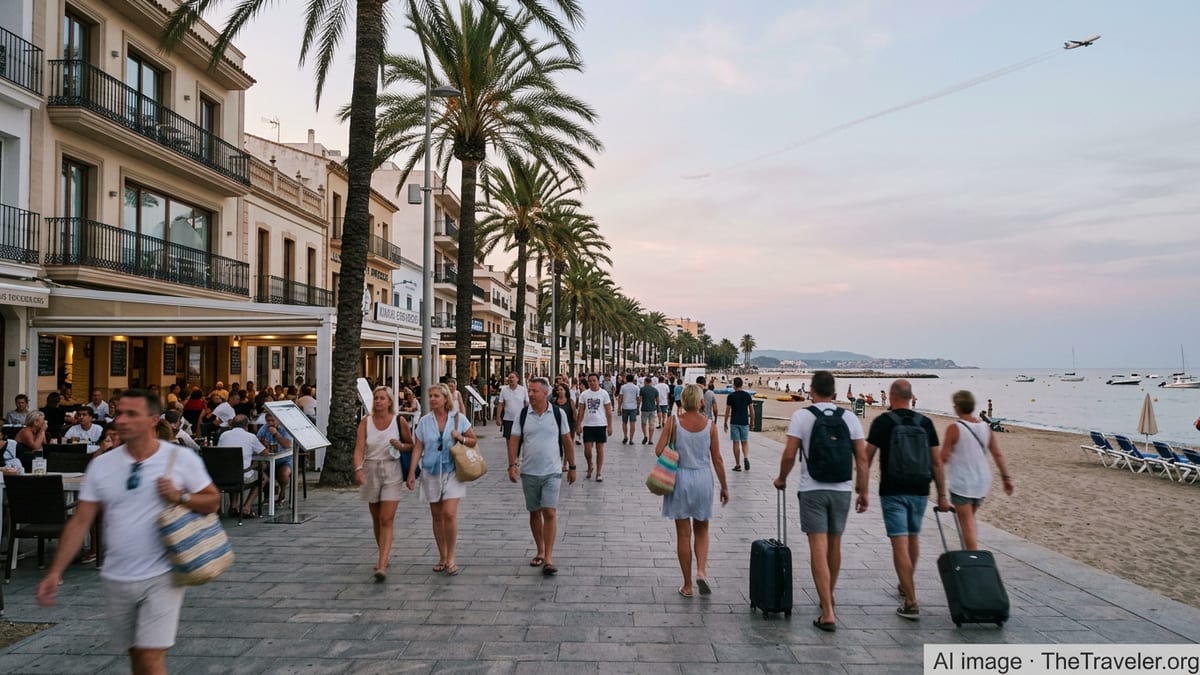
Spain emerges repeatedly in recent assessments as one of the likeliest beneficiaries of this shift. Data cited by European travel media suggest that Spain could capture redirected demand from North American and Western European travelers who are highly sensitive to security perceptions and prefer destinations seen as politically stable and within relatively easy reach. Popular coastal regions such as Catalonia, the Costa del Sol and the Balearic Islands are already core mass-market destinations and are structurally well placed to absorb additional visitors.
In Germany, a survey conducted for national media this month found that a majority of respondents intend to keep their holiday plans unchanged despite global crises, but a smaller share reported that conflicts had already forced cancellations or changes. Industry associations interpret this as a sign that travelers will continue to go on holiday, yet may quietly re-route from perceived hotspots to familiar European beach and city destinations.
Airfares, Oil Prices and the Cost of Choosing Europe
The redirection of flights around conflict zones has not made travel cheaper. Coverage by Asian and European news outlets highlights how the Middle East war has helped push up oil prices and airfares, with some airlines suspending routes altogether and others adding hours to flight times to skirt closed airspace. Travel companies across Asia report cancelling or redesigning packages that depended on competitively priced connections via Dubai or other Gulf hubs.
For Europe, this creates a mixed picture. On one hand, higher fuel costs and constrained capacity could make long-haul trips from Asia and the Americas more expensive, potentially dampening the very demand that Mediterranean destinations hope to capture. On the other hand, intra-European travel by rail or low-cost carriers may look comparatively attractive for residents of the continent who are rethinking trips to the Middle East but still want to travel.
Tourism analysts note that price sensitivity varies sharply by market segment. Affluent travelers may absorb higher fares in exchange for destinations they perceive as safer and more predictable. Budget-conscious tourists, by contrast, may trade distant winter-sun hotspots for shorter breaks within Europe or postpone larger trips altogether, adding further uncertainty to demand forecasts for summer 2026.
Winners, Losers and Overcrowded Hotspots
While Middle Eastern tourism bodies count mounting losses, some European destinations are already warning that any sudden influx will land on top of existing pressures. Spanish regional officials have repeatedly raised concerns about overtourism in Barcelona and the Balearic Islands, where resident protests over housing costs and congestion have become a regular feature in recent summers.
Forward-booking indicators from European tour operators suggest growing interest in Mediterranean mainstays such as Spain, Greece and Italy, as well as in secondary destinations along the Adriatic and Atlantic coasts. Russian travel data, for example, point to rising bookings for Spain and other European countries after a period in which Middle Eastern destinations played an outsized role for Russian holidaymakers shut out of many Western markets.
Yet the picture across Europe is far from uniform. Destinations marketed heavily to Middle Eastern or North African visitors may see fewer arrivals if residents of the Gulf choose to stay closer to home or delay trips abroad, while regions reliant on long-haul tourists using Gulf hubs as transit points could feel a downturn despite being geographically distant from the conflict.
Structural Fragilities Exposed in Global Tourism
Industry bodies and multilateral organizations have repeatedly warned that geopolitical shocks are now among the main structural risks facing global tourism. The current conflict adds to a series of recent disruptions, from the pandemic to wars and extreme weather events, that have tested the resilience of airlines, hoteliers and destination economies.
In the Middle East, estimates circulated by tourism and business councils suggest the sector is losing hundreds of millions of dollars a day in potential revenue as cancellations mount and new bookings stall. Israel’s tourism downturn since the Gaza war and the latest blows to Iran’s cultural and heritage sites underscore how quickly a thriving visitor economy can unravel when violence escalates.
For Europe’s holiday hotspots, the immediate outlook may appear buoyed by travelers looking for perceived safety and convenience. But the same dynamics that are now diverting visitors from the Gulf also highlight how dependent many destinations remain on fragile transport corridors, stable energy markets and global consumers willing to travel during uncertain times. As the war in the Middle East grinds on, Europe’s beaches and historic cities may find themselves busier, but also more exposed to the next geopolitical shock that reshapes the global tourism map.