

More news on this day
What is normally the busiest pilgrimage stretch of the year in Jerusalem has been upended as the escalating conflict involving Israel, Iran, and neighboring Jordan disrupts flights, empties holy sites, and forces religious travelers to reconsider journeys once planned years in advance.
Get the latest news straight to your inbox!
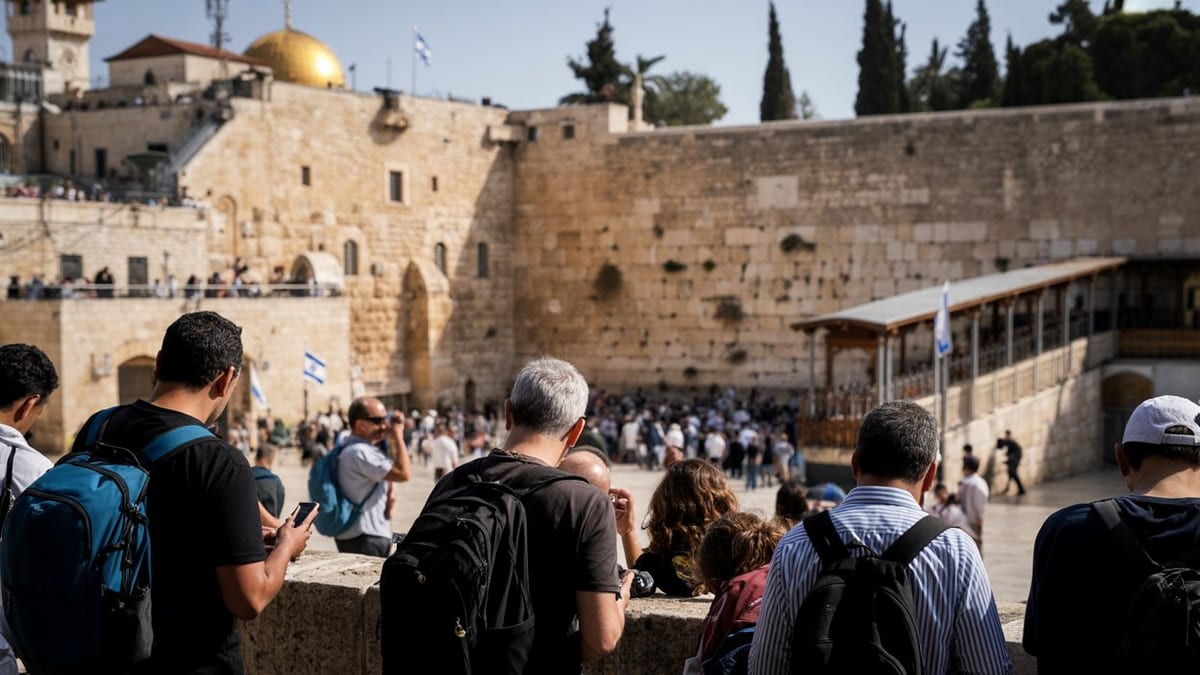
Image by Travel And Tour World
From Peak Season to Prolonged Slump
In a typical year, the weeks around Passover and Easter see Jerusalem’s Old City at capacity, with Christian, Jewish, and Muslim pilgrims sharing narrow streets and contested holy places. Recent seasons have instead been marked by rolling security alerts, sporadic missile fire, and a lingering sense of uncertainty tied to the wider confrontation between Israel and Iran layered on top of the Gaza war.
Publicly available tourism data shows that arrivals to Israel remain far below pre-war levels, even after a modest rebound from the near shutdown that followed the October 2023 Hamas attacks and subsequent fighting in Gaza. Monthly visitor entries that once reached hundreds of thousands are still measuring at a fraction of those numbers, according to figures cited by Israeli statistical agencies and local industry reports.
Faith-based tourism, long seen as relatively resilient in times of crisis, has not escaped the impact. Travel trade publications describe tour operators reshaping itineraries, shortening stays in Jerusalem, or postponing departures entirely as clients weigh the spiritual significance of the Holy Land against real-time images of regional escalation between Israel and Iran.
The result is a pilgrimage calendar that no longer follows the predictable rhythm of religious festivals, but instead moves in fits and starts with each ceasefire announcement, missile barrage, or airspace closure across the region.
Airspace Closures Turn Holy Land Trips Into Moving Targets
The war’s most immediate effect on travel has come in the air. Israel’s skies and the airspace of neighboring states, including Jordan, now open and close on a recurring basis as hostilities between Israel and Iran flare and ease. Notices to airmen and aviation tracking data show repeated shutdowns stretching from Iran and Iraq westward to Israel and Jordan during major exchanges of fire.
Reports from aviation analysts and global media detail how missiles and drones crossing Jordanian territory during Iranian strikes on Israel forced carriers to divert or turn back flights and compelled authorities to suspend traffic for hours at a time. When Israel has launched its own strikes on Iranian targets, countries across the corridor, among them Jordan, have again temporarily halted flights for security reasons, rippling disruptions well beyond the immediate battle zone.
For would-be pilgrims, that has turned a journey to Jerusalem into a logistical gamble. Travel advisories issued by several Western governments in recent weeks have urged citizens to leave the broader Middle East or avoid nonessential travel, citing the risk of sudden route closures and the suspension of passenger flights in Israel and several Gulf states. Some travelers have been stranded mid-journey as airlines rerouted around conflict zones or canceled Tel Aviv and Amman services at short notice.
Jordan’s role as a gateway to Jerusalem has made these airspace decisions especially consequential. The country’s main airport in Amman serves as an entry point for many Christian and Muslim visitors connecting onward by road to the West Bank and East Jerusalem. With Jordan now routinely closing its skies overnight and warning of rapid schedule changes, tour operators report rebooking complexities, higher costs, and growing reluctance from group organizers considering trips for 2026 and beyond.
Religious Sites Open, Restricted, or Quiet
On the ground in Jerusalem and the surrounding West Bank, public reports indicate a patchwork reality at religious landmarks. Some sites remain accessible but unusually quiet, while others face tighter security perimeters or temporary restrictions during spikes in tension tied to the Iran–Israel confrontation and the unresolved Gaza front.
Coverage in regional outlets has highlighted sharply reduced foot traffic around the Church of the Holy Sepulchre, the Western Wall, and the mosques atop the Temple Mount/Haram al-Sharif, especially on days following missile launches or cross-border strikes. Local business owners describe a spring season more reminiscent of an off-peak midwinter lull than the bustling crescendo that typically accompanies major Jewish and Christian holidays.
Restrictions in and around Jerusalem’s Old City have also affected the traditional pilgrimage routes that wind through Palestinian neighborhoods and into the West Bank. Publicly available information from Palestinian tourism authorities points to a collapse in visitor numbers to Bethlehem and other key Christian sites since late 2023, with many hotels pivoting to domestic or humanitarian clientele rather than foreign tour groups.
While formal closures of religious landmarks have generally been limited in duration, the broader pattern of checkpoints, sporadic clashes, and periodic lockdowns has made it difficult for foreign visitors to predict what access will look like weeks or months ahead. That uncertainty has fed into a wave of cancellations from churches, dioceses, and Islamic travel agencies that once treated Holy Land itineraries as a fixed feature of their annual calendars.
Jordan’s Balancing Act as Corridor and Buffer
Jordan occupies a unique position in the unfolding travel crisis: simultaneously a frontline state in the air war’s geography and a critical corridor for pilgrims seeking alternative routes into the Holy Land. Its long-standing peace treaty with Israel and custodial role over Muslim and Christian holy sites in Jerusalem have historically made the kingdom a stabilizing bridge between travelers and the city’s contested sacred spaces.
The latest phase of confrontation between Israel and Iran has strained that role. Publicly available notices from Jordan’s aviation authorities now describe recurring nightly airspace closures, while regional shipping and port advisories reference heightened security postures and travel disruptions tied to the broader conflict. Travel industry updates indicate that Royal Jordanian and foreign carriers have repeatedly adjusted schedules, reduced frequencies, or temporarily suspended routes as the security picture shifts.
At the same time, Jordan continues to market itself as a relatively calm base for regional religious tourism, promoting itineraries that combine Petra, the Baptism Site at the Jordan River, and day trips toward Jerusalem when conditions permit. Yet the country’s proximity to Israeli and Iranian military activity, including reports of intercepted missiles over its territory, has prompted some foreign governments to extend heightened travel warnings to Jordan alongside Israel.
This balancing act leaves Jordan’s tourism sector in a precarious position. Hotel bookings near Amman and at religious heritage sites have become difficult to forecast, and local operators indicate that multi-country pilgrim circuits, once a mainstay of their business, are increasingly fragmented as groups opt to limit travel to a single country or defer plans entirely.
Future Pilgrimages: Shorter Horizons, Contingency Plans
Looking ahead, the war’s impact on pilgrimage to Jerusalem appears less like a temporary pause and more like a structural reset. Industry analysis suggests that travelers are booking closer to departure dates, demanding flexible cancellation policies, and favoring smaller groups that can move more nimbly if conditions deteriorate. Large-scale diocesan, parish, or umrah-style packages that depend on long-range certainty have become riskier to organize.
Religious institutions and tour operators are responding by building contingency routing through Cyprus, Greece, and Egypt when airspace across Jordan or Israel is restricted, as well as by increasing overland segments between Amman, Eilat, and Sinai when borders are open. These backup plans, however, add travel time and cost, altering the economics of what has traditionally been a once-in-a-lifetime spiritual journey for many visitors.
For Jerusalem itself, the reshaped pilgrimage season means fewer crowds but deeper volatility. A single night of intensified strikes between Israel and Iran can empty flights and hotel blocks that took months to assemble, while even short-lived ceasefires can trigger brisk waves of late bookings from determined pilgrims.
How long this new pattern persists will depend on developments far beyond the Old City walls: ceasefire negotiations between Israel and Iran, the trajectory of the Gaza conflict, and the evolving security posture of Jordan and other transit states. Until those variables stabilize, Jerusalem’s status as a crossroads of global faith will remain intertwined with the shifting flight paths and fragile truces of a region at war.