

More news on this day
Vietnam Airlines is bracing for a sharp financial shock as the Middle East conflict sends jet fuel prices soaring to as much as three times earlier levels, a surge that the carrier estimates could drive its monthly operating costs up by 60 to 70 percent and reshape the outlook for air travel to and from Vietnam in the coming months.
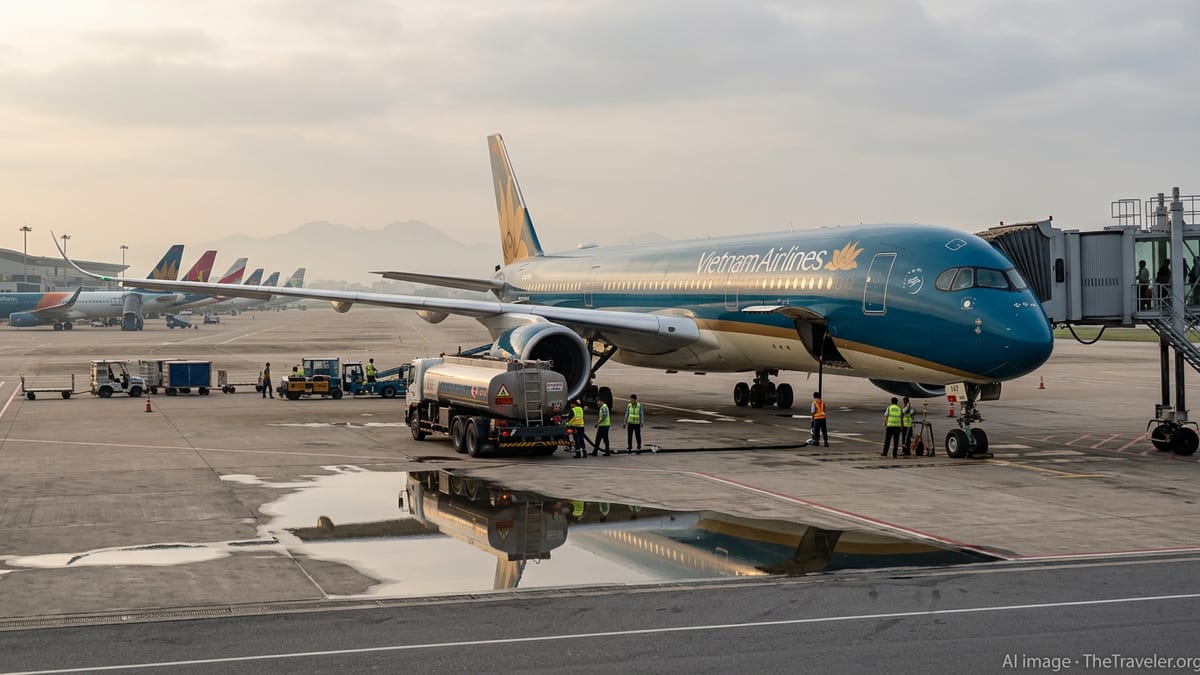
Jet Fuel Shock Ripples From Gulf Conflict to Vietnam
Vietnam’s national flag carrier is among the first in Southeast Asia to quantify the impact of the latest Middle East turmoil on its balance sheet. The military escalation around the Persian Gulf since late February has disrupted oil and refined product flows through the Strait of Hormuz, one of the world’s most important energy chokepoints. As oil benchmarks spike, the price of Jet A-1 fuel supplied to Vietnamese airports has climbed steeply, with authorities warning that current quotes are up to three times higher than average levels seen only weeks ago.
Fuel is typically one of the largest single expenses for airlines, and Vietnam Airlines is no exception. Before the current crisis, fuel already accounted for a substantial share of the carrier’s cost base. With Jet A-1 prices suddenly surging into the 200 dollar per barrel range, internal projections shared with regulators suggest overall operating costs could leap by 60 to 70 percent if the price shock persists over several months.
Industry estimates from global aviation bodies underline how sensitive carriers are to fuel volatility. Analyses indicate that when jet fuel prices remain elevated at around 200 dollars per barrel or higher, airline operating costs can rise by more than 70 percent compared with normal conditions. For a full service network airline like Vietnam Airlines, which operates long-haul and regional routes with widebody and narrowbody fleets, that kind of jump can quickly erode profits and force difficult strategic choices.
These pressures are emerging just as Vietnam’s aviation sector has been rebuilding after the pandemic, buoyed by recovering tourism and expanding international networks. The sudden return of extreme fuel price volatility presents a new headwind that could slow growth plans, affect route economics and test the financial resilience of both national and private carriers.
Regulators Race to Contain Cost Surge and Protect Passengers
Vietnam’s Civil Aviation Authority convened emergency meetings in Hanoi over the past week with airlines, fuel suppliers and other aviation businesses to assess the scale of the shock and craft a short term response. Officials said domestic suppliers have secured enough aviation fuel to maintain operations through at least the end of March, easing immediate fears of outright shortages, but emphasized that price risk rather than physical scarcity is now the dominant concern.
Regulators are exploring a toolkit of fiscal and pricing measures designed to cushion airlines while limiting the impact on travelers. Proposals on the table include a temporary exemption from environmental protection tax on jet fuel, reductions in value added tax specifically for aviation fuel, and targeted relief on certain aviation charges and fees. Authorities are also debating whether to allow a fuel surcharge on domestic tickets that could be adjusted in line with Jet A-1 price movements.
Any move to add surcharges or lift fare caps is highly sensitive in a market where domestic air travel has become a key driver of tourism and regional mobility. Policymakers have stressed that while airlines must remain financially viable, ticket prices should not spiral beyond the reach of average Vietnamese travelers, especially ahead of the upcoming public holidays and peak summer season. The government is therefore weighing how far to go in relaxing current airfare ceilings if the conflict driven fuel spike proves prolonged.
For now, authorities are urging carriers to intensify cost saving efforts and maintain transparent communication with passengers. They have also called for closer coordination with the tourism sector so that any route cuts, schedule changes or surcharges are clearly signposted and do not catch travelers by surprise during an already volatile period.
Vietnam Airlines Turns to Fuel Saving and Network Adjustments
Inside Vietnam Airlines, managers are moving quickly to blunt the impact of the fuel price shock on day to day operations. Executives say the carrier is drawing on fuel reserves built up in March and accelerating fuel efficiency measures across its fleet. These include more precise flight planning, optimized cruising speeds and altitudes, and tighter weight management, all aimed at trimming consumption on each sector without compromising safety or service.
The airline is also reviewing its route network and schedule to prioritize the most profitable and strategically important services. Long haul flights, especially those linking Vietnam with Europe, North Asia and Australia, are particularly exposed because fuel accounts for a larger share of operating costs on extended sectors. Some marginal routes could see reduced frequencies, aircraft downgrades or seasonal suspensions if the economics deteriorate sharply under higher fuel prices.
At the same time, Vietnam Airlines is working with travel partners and tourism boards to sustain demand by promoting advance purchase deals and coordinated marketing campaigns. The carrier wants to avoid sudden, steep fare hikes that could undermine Vietnam’s appeal as a value oriented destination, particularly for regional visitors from other parts of Asia who have helped drive the post pandemic recovery.
Management has indicated that its overarching goal is to protect network connectivity and service quality while navigating the cost shock. However, they acknowledge that if jet fuel prices remain at current elevated levels or rise further, some combination of surcharges, selective fare increases and capacity adjustments will likely be unavoidable.
Travelers Brace for Higher Fares and Potential Disruptions
The prospect of a 60 to 70 percent jump in operating costs at Vietnam Airlines is ringing alarm bells for frequent flyers and travel agents, who have only recently seen fares stabilize after the turbulence of the past several years. While the full impact on ticket prices is not yet clear, international experience suggests that airlines facing a sudden tripling of fuel prices eventually pass at least part of the burden on to passengers.
In the short term, travelers may see tighter availability of the lowest fare buckets, especially on popular domestic trunk routes and international leisure services. Carriers can also introduce or expand fuel surcharges as line items separate from base fares, a mechanism that allows them to respond more flexibly as fuel prices move. For passengers, this can make price comparisons more complicated and may require closer attention to the fine print when booking.
Beyond higher fares, the fuel shock raises the risk of schedule changes as airlines adjust capacity. Some thin routes could lose nonstop service, forcing travelers onto connecting itineraries, while off peak flights may be consolidated. Travel agents in Ho Chi Minh City and Hanoi report advising clients to lock in key holiday and business trips early, anticipating that prices are more likely to rise than fall over the next several months if Middle East tensions persist.
Despite the uncertainty, demand for travel to Vietnam remains robust, underpinned by strong tourism interest, expanding MICE and business travel segments, and growing diaspora traffic. How much of that demand is dampened will depend on the trajectory of both fuel prices and the wider regional economy as households and companies adjust to costlier energy.
Testing the Resilience of Vietnam’s Aviation and Tourism Recovery
The fuel price shock comes at a delicate moment for Vietnam Airlines and the broader aviation ecosystem. The carrier had recently returned to profitability, helped by booming international arrivals and a more favorable fuel environment. Airport operators, ground handling firms and tourism businesses across the country have been investing on the assumption of steady growth, supported by new infrastructure such as the first phase of Long Thanh International Airport.
The Middle East conflict has abruptly altered those assumptions, highlighting how exposed a tourism dependent economy is to energy and geopolitical shocks originating thousands of kilometers away. A prolonged period of elevated fuel prices could slow fleet expansion plans, delay the launch of new routes and put pressure on service providers that rely on high aircraft utilization and passenger throughput.
At the same time, the crisis is accelerating conversations about long term resilience, including diversified fuel sourcing, greater use of fuel hedging and a more systematic approach to cost management. For Vietnam Airlines, which is already facing additional expenses related to sustainable aviation fuel mandates on European routes and participation in global carbon offset schemes, the current spike adds another layer of complexity to its energy and emissions strategy.
For travelers, the message is clear: Vietnam remains open and eager to welcome visitors, but the era of ultra cheap airfares in the region is under renewed pressure. How Vietnam Airlines and its peers manage the current storm will help determine not only the price of a ticket, but also the pace at which Vietnam’s skies and resorts continue to fill in the months ahead.