

More news on this day
Emergency flights pushed back from Dubai and Abu Dhabi just before midnight this week, offering rare lifelines to stranded travelers as the United Arab Emirates’ flagship hubs pivoted from global transit gateways to evacuation corridors in the midst of an unprecedented regional airspace shutdown.
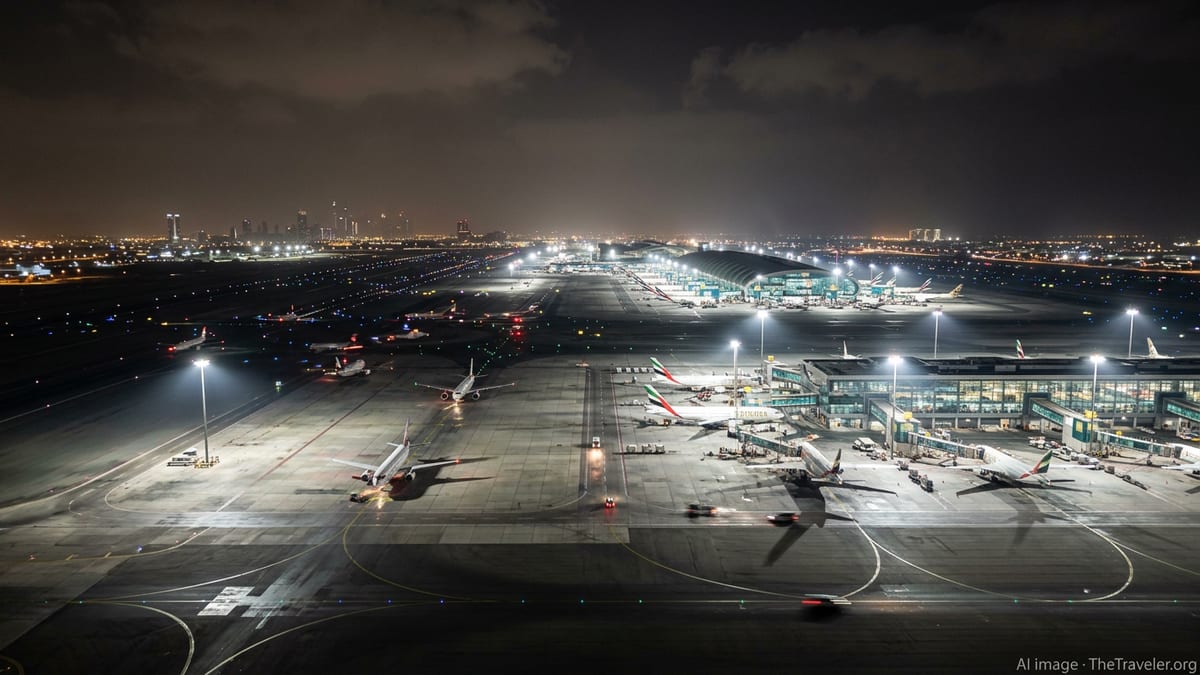
Safe Air Corridors Turn Mega-Hubs Into Evacuation Gateways
Dubai International and Abu Dhabi’s Zayed International Airport, normally among the world’s busiest transfer points, have become tightly controlled departure gates as authorities authorize only a limited number of “exceptional” flights to move people out of the region. After days of near-total shutdown triggered by strikes and missile fire linked to the widening conflict with Iran, the UAE’s civil aviation regulator approved restricted movements using newly designated safe air corridors.
Officials say those corridors are being reserved primarily for emergency, repatriation and repositioning services, with capacity capped at a fraction of normal traffic. Airlines are prioritizing citizens returning home, vulnerable passengers and those with onward long-haul connections, leaving many others still in limbo. The stark shift underscores how quickly the Gulf’s aviation model has been upended, with meticulously timed banked connections replaced by one-off nighttime departures assembled at short notice.
While some daytime operations have resumed, much of the evacuation effort is unfolding late at night and in the early hours, when airspace coordination is marginally less complex and security teams can concentrate resources. Passengers lucky enough to secure seats describe receiving last-minute messages instructing them to head to the airport immediately for overnight flights that often route far to the north or south to skirt affected skies.
Authorities continue to urge travelers not to approach airports unless their airline has explicitly confirmed a seat on a specific departure. With ground access still disrupted and check-in areas heavily controlled, officials say turning up unannounced risks compounding congestion and could prevent those on confirmed evacuation lists from reaching security in time.
Passengers Plucked From Terminals After Days of Uncertainty
Inside the terminals, the mood has swung from frustration and fatigue to cautious relief as names are called for outbound services. Travelers who had spent nights sleeping on terminal floors, in transit hotels or in hastily extended stopovers describe being summoned with little warning, bundled onto buses to remote stands and boarded onto widebody jets operating as special services to Europe, Asia and North America.
Many of the midnight and pre-dawn flights are operating off-schedule and off-pattern, sometimes using aircraft and crews repositioned from other bases. In Dubai, passengers report flights to hubs such as London, Frankfurt, Mumbai and Sydney departing hours after their original slots, their flight numbers unchanged but their routing and timing dramatically altered. In Abu Dhabi, Etihad-operated services are reported to be lifting out in small waves, often grouped around the late-night window.
For those left behind, the sense of uncertainty remains acute. Airline call centers and digital channels are overwhelmed, with travelers complaining of jammed phone lines and app notifications that change from “scheduled” to “cancelled” and back again within hours. Hotel rooms close to both airports are heavily booked, forcing some passengers to remain airside in transit zones where seating, food and power outlets are under pressure.
Despite the strain, passengers have also shared accounts of airport staff improvising to keep people moving: manual boarding passes, handwritten gate changes and in-person briefings replacing the usual automated systems. Volunteers and consular teams from multiple countries have set up help desks near information counters in Dubai and Abu Dhabi to triage cases, with priority often going to families with children, elderly travelers and those with medical needs.
Carriers Juggle Limited Capacity, Rerouting and Government Demands
For the UAE’s home carriers, the overnight evacuation push has become a complex exercise in crisis scheduling. Emirates and flydubai in Dubai, and Etihad in Abu Dhabi, are running only a fraction of their normal networks, focusing on routes where airspace is reliably open and where governments are pressing for seats to bring citizens home. Services that do operate are frequently extended in duration as aircraft divert around closed corridors over parts of the Gulf and neighboring states.
Global airlines are also adjusting on the fly. Some European and Asian carriers have opted to operate limited services into Dubai and Abu Dhabi to extract stranded passengers, while keeping regular schedules to other Gulf points suspended. Others have chosen to keep crews and aircraft away from the region entirely, placing the burden of evacuation on local hubs that still retain partial operational capability.
Behind the scenes, government-to-government discussions are shaping which flights receive scarce slots. Officials say they are working with foreign embassies, international organizations and airline partners to prioritize routes serving large numbers of stranded nationals. That has produced nighttime clusters of departures to specific cities on certain days, effectively turning midnight banks into rolling airlifts rather than standard commercial operations.
At the same time, carriers are wrestling with customer obligations and revenue realities. Flexible rebooking policies have been extended, with fees waived for many passengers whose trips touch the Gulf over the coming weeks, but refund processing is slower than usual given the scale of disruption. Airline executives insist the immediate focus is on safety and controlled departures, warning that any rush to normalize timetables could jeopardize those emergency flows.
Authorities Balance Security, Capacity and Traveler Expectations
The UAE’s aviation and security agencies are walking a tightrope as they seek to expand movements without compromising interception and monitoring capabilities. Officials emphasize that airspace remains heavily managed, with real-time threat assessments dictating when and where flights can be slotted. That means departure waves, including the now-characteristic midnight pushes, may appear and disappear with little public notice.
Airport operators in Dubai and Abu Dhabi have introduced crowd-control measures that would have seemed unthinkable just weeks ago. Entrance checkpoints, police-managed queues outside terminal doors and frequent public announcements reminding people not to enter without confirmed bookings are now common features. Inside, boarding gates for evacuation flights are often kept closed until minutes before boarding, with passengers held in controlled waiting zones.
For many travelers, the experience has rewritten expectations of Gulf hub efficiency. The polished transfers and tight minimum connection times that defined the pre-crisis era have given way to manual processes and extended layovers. Yet some passengers also note a strong sense of solidarity among those waiting, with strangers swapping information, sharing phone chargers and pooling snacks as they listen for updates on the next wave of departures.
Officials warn that the situation remains fluid, with the possibility that renewed security incidents could prompt further temporary halts. Even as more midnight evacuation flights appear on departure boards, the overarching message from authorities and airlines is that normal travel patterns through Dubai and Abu Dhabi are unlikely to resume quickly.
Uncertain Road to Normality for the Gulf’s Aviation Giants
Looking ahead, industry analysts say the crisis will leave a lasting imprint on the Gulf’s role in global aviation. The mass cancellations and the sudden pivot to emergency overnight flights have exposed the vulnerability of highly centralized hub models to geopolitical shocks in their own backyards. For Dubai and Abu Dhabi, rebuilding confidence will depend not just on restoring frequency, but on demonstrating that contingency plans can keep people moving even when regional skies are tightly constrained.
Airlines are already sketching out phased restoration strategies, starting with key trunk routes and cities that can be reliably reached via re-routed flight paths. Yet network planners caution that demand may lag supply, as corporate travel managers and tour operators reassess itineraries that rely on transiting the Gulf. In the short term, evacuation and repatriation missions are expected to continue to dominate nighttime schedules, with commercial expansion kept deliberately modest.
For stranded travelers finally rolling down runways at midnight, those strategic debates feel distant. What matters, they say, is that the long lines, the anxious hours watching departure boards and the repeated rebookings end with the thud of wheels lifting off from Dubai and Abu Dhabi. With each emergency departure, the packed terminals thin slightly, but for now the United Arab Emirates’ aviation powerhouses remain at the center of a crisis that has reshaped global air travel in a matter of days.