

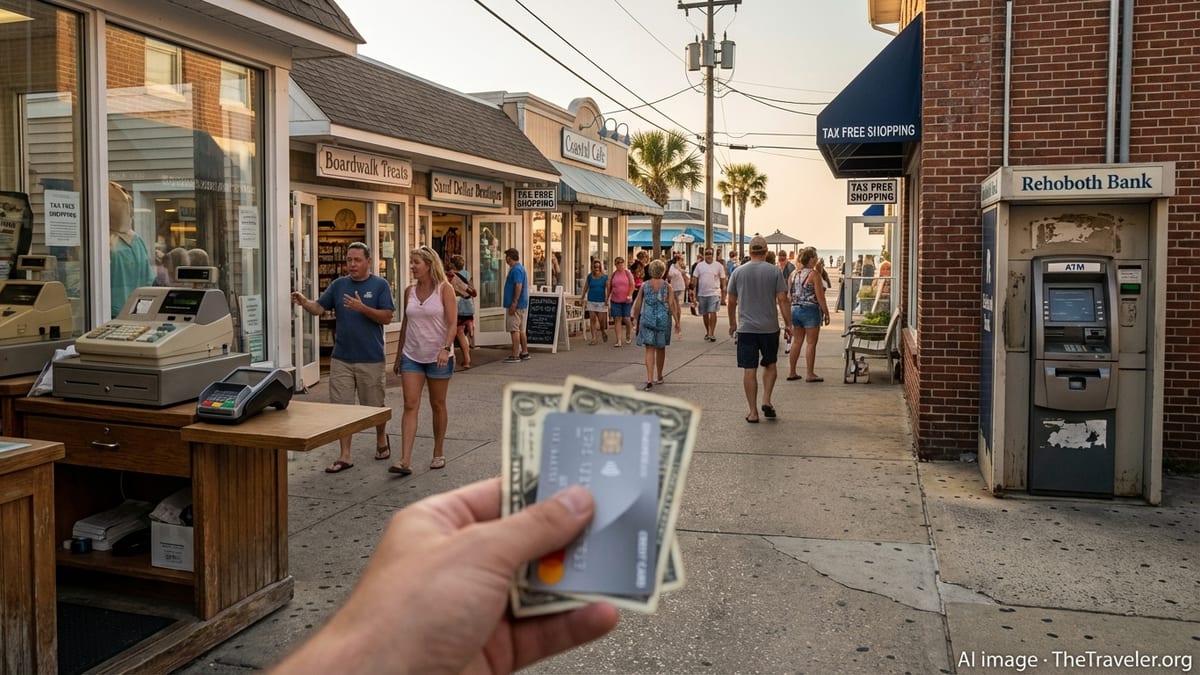
Delaware is a compact state with a big financial reputation, home to tax free shopping, corporate headquarters and major highways linking the Mid Atlantic. For travelers, that mix creates a money landscape where modern digital payments sit comfortably alongside old fashioned cash. Understanding how to pay, withdraw and manage money in Delaware will help you move smoothly from beaches to outlet malls and highway toll plazas without surprise fees.
Understanding Delaware’s Money Landscape
Delaware uses the U.S. dollar and its payment habits mirror much of the northeastern United States. Visitors will find that major credit and debit cards are widely accepted in cities such as Wilmington and Dover, at the coastal resorts around Rehoboth Beach and in most chain hotels, restaurants and gas stations. Contactless payments through mobile wallets are increasingly common, especially at national brands and newer independent businesses.
Compared with many European or Asian destinations, Delaware still shows a mild preference for cards over cash in urban and tourist areas, but you should not assume every transaction can be handled digitally. Small family run diners, farm stands, seasonal beach vendors and some independent service providers may prefer cash or add a small surcharge for card use. Having a modest emergency cash reserve in your wallet remains practical.
Because Delaware is located between major economic hubs such as Philadelphia, Baltimore and Washington, highway travel and tolls are an important part of its financial landscape. Drivers encounter pay points on Route 1, I 95, U.S. 301 and the Delaware Memorial Bridge, where different payment methods can result in different prices. Understanding those systems before you arrive can save both time and money.
Delaware’s reputation as a corporate and tax haven does impact travelers in one very visible way. The state has no general sales tax, which makes it a popular destination for regional shoppers seeking deals on clothing, electronics and household goods. That lack of sales tax can meaningfully reduce your total bill at the register compared with neighboring states, even if individual prices appear similar on the shelf.
Cash, Cards and Everyday Payments
Practically every traveler in Delaware can rely on cards for day to day spending. Visa, Mastercard and American Express are widely accepted at hotels, chain restaurants, supermarkets, gas stations and larger attractions. Many places now accept tap to pay via physical cards or mobile wallets like Apple Pay and Google Pay, especially in urban areas and along major travel corridors. Discover is also common but not universal, so having at least one backup card from a different network is wise.
Debit cards linked to major international networks usually work without issue at payment terminals that support credit cards. In the United States, debit cards are processed either as debit, often requiring a PIN, or as credit, where you may simply sign or approve on a screen. If a cashier asks whether to run your debit card as credit or debit, either will typically work, though international visitors may prefer credit style processing if their PIN is occasionally problematic.
Cash remains useful, but you can travel through much of Delaware while using it sparingly. Urban centers such as Wilmington and Newark, university areas, outlet malls around Rehoboth Beach and the main highway service plazas are highly card friendly. Cash is most valuable for tipping bell staff and housekeeping, paying for parking meters that have not yet been updated to app systems, buying at farmers’ markets or craft fairs, and riding certain local buses if you choose not to use mobile tickets.
Travelers concerned about security sometimes choose to carry a travel friendly credit card for most purchases and keep a debit card primarily for ATM withdrawals. This approach can help limit the potential impact of card skimming at gas pumps or unattended terminals, a risk present across the United States. Using chip readers and contactless payments where available offers an extra layer of protection.
ATMs, Bank Access and Fees
ATMs are easy to find across Delaware, particularly in the more populated north of the state and around coastal resort areas. Major national and regional banks operate branches and cash machines in cities and larger towns, while independent ATMs appear in convenience stores, gas stations, bars and hotel lobbies. At peak beach season, temporary or additional ATMs often appear near boardwalks and popular events to handle higher cash demand.
Out of network ATM fees in the United States can be substantial, often combining a fee charged by the ATM operator with a fee from your own bank. Delaware is no exception, especially when using machines owned by non bank operators inside convenience stores or bars. To keep costs down, try to use ATMs belonging to your own bank or to a partner network. Many U.S. online banks and some international banks refund a portion of ATM fees, so check your account terms before travel.
For international visitors, ATMs are usually the most cost effective way to obtain U.S. dollars, since exchange counters are rare in Delaware outside a few bank branches that offer foreign currency services for account holders. When using a foreign card, consider declining any dynamic currency conversion offered at the ATM or payment terminal in favor of being charged directly in U.S. dollars, which is often cheaper.
If you are driving long stretches of Route 1 or I 95, plan your cash withdrawals for towns and service plazas rather than small rural exits, where ATM options may be limited and fees higher. In smaller communities, local banks often provide the most reliable ATMs, with clearer fee disclosures and better maintenance than stand alone machines in retail outlets.
Tax Free Shopping and What It Means for Travelers
One of Delaware’s biggest draws for visitors is the lack of a general state or local sales tax. For travelers, this typically means that the price you see on the shelf at most stores is very close to what you pay at the register. Shoppers from neighboring states often travel to Delaware specifically for large purchases such as electronics, jewelry, home goods or extensive clothing shopping, where saving several percentage points can add up quickly.
Popular shopping hubs such as the outlet centers near Rehoboth Beach, malls in the Wilmington area and big box clusters along major highways market themselves heavily on this tax advantage. For international travelers, Delaware can be an appealing destination for stocking up on U.S. brands, since you avoid the additional layer of sales tax that you would encounter elsewhere. Shipping services based in Delaware also leverage the tax environment for online shoppers, though most casual tourists will simply enjoy the lower in store totals.
It is important to remember that tax free does not mean free of all extra charges. Certain categories, such as lodging, car rental or specific services, may still carry separate taxes or fees set at state or local levels. Hotel bills, for example, typically include lodging or occupancy taxes that are unrelated to retail sales tax. Always review your final invoice to understand the full cost of a stay or rental.
Because so many visitors come to Delaware for tax free bargains, some stores near state borders and tourist corridors can become crowded on weekends and during major sales periods. If you plan a significant shopping excursion, traveling on weekdays or early mornings can make for a more relaxed experience. Regardless of timing, your payment experience should remain straightforward, with card terminals and cash registers well used to handling high transaction volumes.
Transport, Tolls and Getting Around
Getting around Delaware involves a mix of driving, public transit and, in some areas, regional rail. Many visitors arrive by car or rental vehicle and use the state’s highways to reach beaches or cross between neighboring states. Understanding how tolls work is crucial, because payment options and prices vary by route, and cash lanes are no longer universal on all exits.
Key toll points in Delaware include Route 1, the I 95 Delaware Turnpike, U.S. 301 and the Delaware Memorial Bridge. These facilities accept electronic payment through E ZPass, which is widely used throughout the northeastern United States. In recent years, Delaware has expanded toll by plate invoicing so that drivers without E ZPass who pass through certain lanes receive an invoice for the toll amount rather than an immediate violation. Cash remains available at some mainline toll plazas on highways like Route 1 and I 95, but many exit ramps and specific routes are now fully cashless.
For travelers using a rental car, it is important to clarify how tolls are handled when you pick up the vehicle. Some rental companies include E ZPass transponders for a daily fee, while others require you to use toll by plate billing, which can incur administrative surcharges on top of the basic toll. If you are driving your own vehicle and plan to spend extended time in Delaware or neighboring states, obtaining an E ZPass account can yield lower toll rates and reduce the chance of missed payments. Delaware’s system offers frequent user discounts on certain highways, rewarding regular travel.
Public transportation is most relevant in the northern part of the state and along major corridors. The state supported bus system allows passengers to pay with exact change in cash or through a mobile app that generates digital passes and tickets. This mix makes it possible to ride without carrying much cash, provided you have a smartphone and data access. On board, drivers generally do not provide change, so if you choose cash be prepared with small bills and coins.
Local Customs, Tipping and Small Transactions
Tipping norms in Delaware align with broader United States customs. In full service restaurants with table service, leaving a tip calculated as a percentage of the pre tax bill is standard. Many travelers aim for a range that reflects service quality, with higher amounts for exceptional attention. In bars, small per drink tips are customary, or a percentage for larger tabs. Fast casual counters, coffee shops and bakeries may present digital tip prompts on card readers, but tipping in these contexts remains discretionary.
Hotel staff such as bell attendants, valets and housekeeping commonly receive cash tips, although some people now tip through hotel apps or digital wallets where available. At the beach, attendants who rent chairs and umbrellas or lifeguards who provide extra assistance might also be tipped. In taxis and ride share vehicles, tips are usually added within the app when paying by card, though you can offer cash if you prefer a more direct gesture.
For small transactions at markets, fairs or roadside stands, vendors may operate as cash only or may accept mobile card readers that connect to phones or tablets. Because internet connectivity can be uneven in some rural or seaside stretches, card payment terminals may occasionally fail, and vendors might temporarily revert to cash. Keeping a modest stash of small bills allows you to navigate these situations without stress and supports local businesses that operate on thin margins.
When paying in cash, expect exact change in U.S. coins and bills. Pennies and small coins are still in circulation and used, though many prices are rounded to more convenient amounts. If you are unfamiliar with U.S. cash, take a moment to organize your wallet so that smaller denominations are easily accessible, which reduces fumbling at busy counters.
Security, Scams and Practical Safety Tips
Delaware is generally a safe destination for handling money, but the same precautions that apply elsewhere in the United States remain wise. Card skimming, where devices capture card data at gas pumps or ATMs, occasionally occurs along highway corridors and in urban areas. Whenever possible, use fuel pumps close to a station’s main building, choose indoor ATMs or those attached to well known banks, and inspect card slots for loose or unusual attachments before inserting your card.
Digital payments introduce their own risks, especially for travelers connecting through unsecured public Wi Fi in hotels, cafes or rest stops. To reduce the chance of compromised financial information, avoid accessing online banking or entering card details over open networks unless you use a trusted virtual private network. Mobile wallets that use tokenized transactions can offer added security by reducing the amount of card data exposed in each payment.
As in any busy tourist destination, petty theft can occur in crowded outlets, beach boardwalks or event venues. Keeping wallets zipped inside bags, using money belts if you carry significant cash and separating cards across different pockets or bags can limit the impact of a loss. Consider carrying photocopies or digital scans of passport identity pages stored separately from the originals in case you need to report theft.
Beware of simple overcharging scams or unofficial parking attendants near popular attractions who demand cash without issuing a proper ticket. Official parking lots and garages clearly display rates, accept cards or structured payments and are associated with municipalities or recognized businesses. If something feels irregular or a payment method seems improvised, it is reasonable to step back and confirm details before handing over cash.
The Takeaway
Traveling through Delaware from the corporate high rises of Wilmington to the sandy stretches of the Atlantic coast is straightforward from a money perspective. You can expect a card friendly environment, widespread ATMs and a public transportation system that increasingly supports mobile ticketing. Cash still has a place for tipping, small vendors and occasional backup, but you are unlikely to rely on it for most everyday purchases.
The state’s lack of general sales tax offers a tangible bonus, especially for visitors planning major shopping trips, while its evolving toll and transit systems reward a bit of advance planning around payment methods. Paying attention to toll rules, choosing ATMs wisely and following basic security habits helps keep surprise fees and frustrations to a minimum.
With a mix of digital convenience and traditional options, Delaware lets you handle money in the way that best fits your travel style. Arrive with at least one global credit card, a backup payment method and a small cash cushion, and you will be well prepared to enjoy both the tax free bargains and the coastal calm that define this small but financially significant state.
FAQ
Q1. Do I need to carry a lot of cash when visiting Delaware?
Most travelers can rely on cards for the majority of payments in Delaware. Carry a modest amount of cash for tips, small vendors, markets or backup when card systems are unavailable, but large cash reserves are usually unnecessary.
Q2. Are credit cards widely accepted across the state?
Yes, major credit cards such as Visa, Mastercard and American Express are widely accepted at hotels, restaurants, gas stations, supermarkets and attractions. Smaller independent businesses may occasionally prefer cash, but this is less common in major tourist and urban areas.
Q3. Is Delaware really tax free for shopping?
Delaware does not charge a general state or local sales tax on most retail purchases, so the price on the shelf is often close to what you pay at the register. However, certain services like lodging and car rental can still include separate taxes and fees.
Q4. How should I pay tolls when driving in Delaware?
Electronic payment through E ZPass is the most convenient option and often offers lower rates. Some mainline toll plazas still accept cash, while many exits and certain routes rely on toll by plate billing where you receive an invoice by mail if you do not have E ZPass.
Q5. Are ATMs easy to find, and are there high fees?
ATMs are common in cities, towns, highway service plazas and beach areas. Fees can be high at out of network or independent machines, so using ATMs from your own bank or partner networks helps minimize costs. International travelers should also check their home bank’s foreign withdrawal fees.
Q6. What are typical tipping expectations in Delaware?
Tipping customs follow general U.S. norms. Restaurant servers, bartenders, hotel staff, taxi drivers and ride share drivers regularly receive tips, usually calculated as a percentage of the bill or as small cash amounts for discrete services.
Q7. Can I use mobile payments and digital wallets?
Many businesses, especially chains and newer establishments, accept contactless payments from mobile wallets such as Apple Pay and Google Pay. Acceptance is not universal, particularly among very small or rural businesses, so always have a physical card or some cash as backup.
Q8. Is it safe to use my card at gas stations and small ATMs?
Most transactions are safe, but card skimming can occasionally occur. Prefer pumps near station staff, ATMs attached to major banks or located indoors, and inspect card readers for unusual attachments before inserting your card.
Q9. How can international visitors get U.S. dollars in Delaware?
ATMs are the most convenient way for international visitors to obtain cash in Delaware. Exchange desks are rare, so using a debit card linked to an international network is usually better. When prompted, choosing to be charged in U.S. dollars instead of your home currency often results in a better exchange rate.
Q10. Are there any payment issues I should watch for with rental cars?
When renting a car, ask how tolls are handled and whether the vehicle includes an E ZPass device. Some rental firms charge daily fees or administrative surcharges for toll processing. Clarifying these policies upfront helps you avoid unexpected charges on your final bill.