

Indiana is an easy state to navigate when it comes to money. Sales tax is simple, cards are widely accepted, and tipping customs follow familiar United States norms. Still, a few local details can help you avoid surprises on your bill and handle everyday payments with confidence, whether you are visiting Indianapolis, exploring small river towns, or driving across the state.
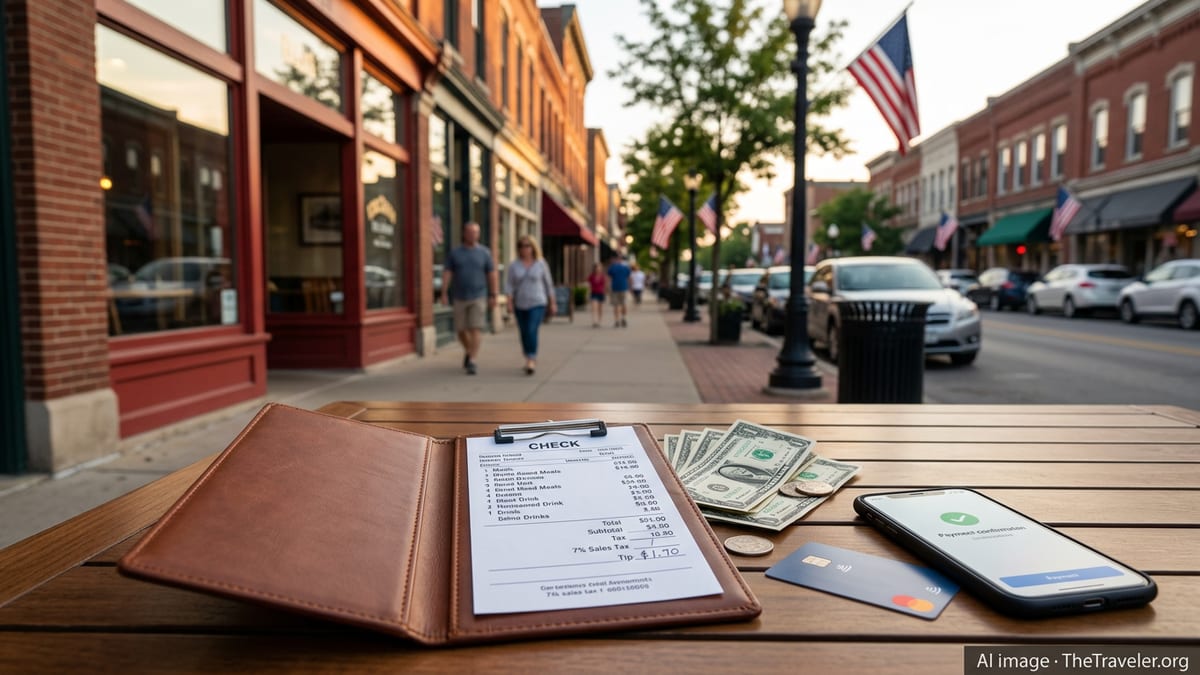
Understanding Money Basics in Indiana
Indiana uses the United States dollar, and day to day spending looks much the same as in most of the Midwest. Travelers will find a mix of national chains and independent businesses, from highway gas stations to small family restaurants. Prices on shelves and menus are almost always shown before sales tax, and tipping expectations resemble those in the rest of the country, especially in restaurants, bars, and service businesses.
In practical terms, that means you will usually pay a little more than the listed price at the register, once sales tax is added, and you will often be expected to add a voluntary tip on top of that total. Most residents pay with debit and credit cards for everything from coffee to groceries, but cash is still useful in certain situations, particularly in rural areas, small markets, or older establishments that may set minimums for card use.
Indiana is considered an affordable state by United States standards, which can offset some of the extra cost that tipping and tax add to your final bill. Hotel rates, meals outside big sports or festival weekends, and everyday shopping can feel reasonable compared with coastal cities. For visitors used to tax being included in sticker prices or to service charges replacing tipping, taking a moment to understand how bills are structured in Indiana will make your trip smoother.
Sales Tax in Indiana: What You Really Pay
Indiana has a straightforward statewide sales tax rate of 7 percent, and that rate is uniform across the state. Unlike many other United States states, there are no general local add on sales taxes layered on top of the state rate for most purchases. That means an item listed at 10 dollars in a shop in Indianapolis, Bloomington, or a small town will typically cost 10 dollars and 70 cents at the register once sales tax is added.
There are, however, a few important nuances for travelers. Certain local governments in Indiana can levy separate food and beverage taxes, particularly in larger cities and tourism oriented counties. These extra percentages usually apply to restaurant meals and sometimes to takeout food or prepared drinks. They are not technically part of the statewide sales tax, but they have a similar effect: your meal might cost slightly more than the menu price suggests. The exact rate varies by locality, but the difference is typically modest on a single meal and becomes more noticeable only over several days of dining out.
As of early 2026, Indiana has also begun phasing out the use of the one cent coin in cash transactions, introducing official guidance for rounding totals that include the 7 percent sales tax. For card payments, the exact total including every cent is still charged, but when you pay with cash, the amount due is now rounded up or down to the nearest five cents. Over many transactions, the small gains or losses from this rounding are absorbed by the retailer, not the customer, and taxes still have to be paid in full to the state. In daily life, this change slightly simplifies cash payments without materially affecting what a traveler pays.
Most everyday goods and services that interest visitors, including clothing, electronics, souvenirs, restaurant meals, and hotel stays, are subject to the 7 percent state sales tax. Some grocery items may be taxed differently, but this has limited impact on short term visitors who mainly purchase ready to eat food or dine out. The main takeaway is that adding roughly 7 percent to sticker prices is a reliable rule of thumb when budgeting in Indiana, with the understanding that restaurant food in some places can carry a modest extra local food and beverage tax.
Tipping Culture Across Indiana
Tipping in Indiana follows general United States customs. In full service restaurants where a server takes your order at the table and brings food and drinks, a tip in the range of roughly 15 to 20 percent of the pre tax total is widely expected when service is at least acceptable. Many residents now consider 18 to 20 percent standard for good service, with slightly lower amounts reserved for slower or less attentive experiences. Leaving no tip at all in this type of restaurant is considered a sign of strong dissatisfaction and is likely to be taken as rude.
At bars, it is common to tip one to two dollars per drink for simple orders, or about 15 to 20 percent of the total when you keep a tab open for multiple rounds or order more complex cocktails. For coffee shops and counter service restaurants where you order at a counter and either collect your food yourself or have it brought to your table without much interaction, tipping is more flexible. Many places now present digital screens with suggested tip amounts, but in these settings, smaller tips are typical and tipping is more clearly optional. Some locals round up the bill or leave around 10 percent for friendly, efficient service, while others tip only occasionally.
Travelers should also be aware of automatic service charges. In Indiana, as in other parts of the United States, some restaurants add a set service charge, often around 18 to 20 percent, especially for large groups. This charge may or may not fully replace a tip. Sometimes, it is shared among staff and is intended to stand in for the gratuity, in which case additional tipping is not necessary unless you wish to reward exceptional service. On other bills, a service charge might cover only part of staff compensation, and there may still be a separate line for a tip. Reading the fine print on menus and receipts and asking your server if you are unsure will help you avoid double tipping.
Outside of food and drink, tipping expectations are softer but still present. For hotel housekeeping, it is customary, though not universal, to leave a few dollars per night, ideally in cash with a short note indicating that it is for housekeeping. Bellhops who help with luggage may receive one or two dollars per bag. Taxi and rideshare drivers, hair stylists, spa therapists, and tour guides also generally receive tips, usually around 15 to 20 percent for good service. None of these amounts are legally required, but they are part of how many service workers in Indiana earn a living and are considered polite by local standards.
Paying by Card, Contactless, or Cash
Visitors to Indiana will find card payments widely accepted and convenient. Debit and credit cards from major networks are standard at hotels, chain restaurants, supermarkets, gas stations, and most attractions. Contactless payments through phones and watches are increasingly common, especially in cities and at national brands. You can comfortably rely on cards for the majority of your transactions, including small purchases like coffee and snacks.
However, cash still plays a role, particularly in smaller towns, independent shops, and older establishments. Some small businesses may offer discounts for cash, set minimum purchase amounts for card use, or not accept certain card types. Farmers markets, seasonal festivals, and flea markets in Indiana often use a mix of cash and mobile payment apps, and the acceptance of international cards can be uneven. Carrying a modest amount of cash in small bills is therefore a sensible backup, especially if you will be driving through rural areas or attending local events.
When you pay by card in restaurants and bars, you will usually receive a printed receipt with a line to add a tip and sign. On digital payment terminals, especially in casual places, a screen may display suggested tip percentages or dollar amounts before you finalize the payment. You can select one of the suggestions, enter a custom amount, or choose not to tip, depending on the situation and your preferences. For hotel stays and some tours, you may have the option to add a gratuity when you settle the final bill at checkout, which can be convenient if you prefer to keep tipping consolidated.
For international travelers, it is worth checking with your bank about foreign transaction fees, dynamic currency conversion, and contactless limits before your trip. Some businesses in Indiana may offer to charge your card in your home currency instead of United States dollars, but this option often comes with a less favorable exchange rate. In most cases, choosing to be charged in United States dollars and letting your home bank handle the conversion yields a better effective rate, although it may still incur a percentage fee from your card issuer.
Managing Cash, ATMs, and Rounding Rules
With the gradual phase out of the one cent coin for cash transactions in Indiana, cash handling has become slightly simpler. When you pay in cash, totals after tax are rounded to the nearest five cent increment. For example, a bill of 10 dollars and 72 cents might be rounded to 10 dollars and 70 cents, while a bill of 10 dollars and 73 cents would be rounded to 10 dollars and 75 cents. Over many purchases, these tiny differences tend to balance out, and the underlying taxes are still calculated to the cent behind the scenes for business reporting.
Travelers should remember that this rounding rule applies only to cash. If you pay by card, your receipt will usually show the unrounded total including every cent, and that exact amount will be charged. When tipping in cash, you can simply adjust your tip to a round figure that feels appropriate. If, for instance, the final cash amount due after rounding is 19 dollars and 75 cents and you wish to tip around 20 percent for a restaurant meal, you might leave four dollars in cash for a total payment of 23 dollars and 75 cents.
ATMs are common in Indiana, especially in urban areas, shopping centers, and near banks. They dispense only paper bills, typically in denominations of 20 dollars or higher. If you plan to rely on cash, withdraw during banking hours when possible so you can ask for smaller bills at a teller if you need them. Small denominations are particularly useful for tipping housekeeping staff, bellhops, and valets, and for paying small entry fees, parking meters, or rural vendors. Avoid using standalone ATMs in bars or convenience stores when possible, as they often charge high withdrawal fees.
For safety, carry only the cash you expect to use in a day and keep the rest in a secure place at your accommodation. Indiana is generally safe, but basic precautions are wise anywhere. Split cards and cash between different pockets or bags so that losing one wallet or pouch does not leave you entirely without funds. Most travelers find that a mix of cards for primary payments and a small cash reserve for tips and incidental purchases strikes a good balance.
Common Bill Surprises and How to Read Receipts
Many of the small money related surprises that catch visitors in Indiana occur when reading restaurant checks and hotel bills. Menu prices almost never include sales tax, and they never include tips. After your meal, the bill will usually list the subtotal for food and drinks, then the 7 percent state sales tax, any applicable local food and beverage tax, and sometimes a separate service charge. Only after all of that will you see a blank line or a digital prompt for a discretionary tip.
If you see a line item labeled “gratuity,” “service charge,” or “service fee,” take a close look at the percentage. If it is around 18 to 20 percent and the restaurant indicates that it goes to staff, you are typically not expected to add a full additional tip on top of that amount. Some diners in Indiana still add a small extra amount, such as a few dollars, for outstanding service, while others leave only the included charge. When in doubt, you can always ask the server whether the service charge functions as the tip.
At hotels, additional charges can appear for resort style amenities, parking, local taxes on accommodations, and voluntary charges such as donations to environmental or community programs. These are usually itemized on the folio you receive at checkout. While room tax and mandatory fees are not negotiable, optional line items can sometimes be removed on request if you did not intend to participate. Housekeeping and bellhop tips left in cash will not typically appear on your final bill, so if you prefer all expenses recorded on a single account, ask whether gratuities can be added to your room charge.
For tours, excursions, and activities, it is common practice for operators in Indiana to mention recommended tipping ranges at the end of printed confirmations or during pre trip briefings. These suggestions are often framed as a percentage of the tour cost or as a flat amount per person. Again, they are voluntary, but most participants follow them if they feel they received good value. Checking these details ahead of time can help you budget more accurately for your day trips and experiences.
The Takeaway
Spending money in Indiana is relatively simple once you understand a few core principles. The state uses a uniform 7 percent sales tax, cards are accepted almost everywhere, and tipping culture closely resembles that of the broader United States. Local food and beverage taxes and occasional service charges can add a little complexity to restaurant bills, but they are easy to navigate once you know to look for them.
For most travelers, the most helpful habits are to mentally add around 7 percent to sticker prices, budget an extra 15 to 20 percent for tips in full service dining and other personal services, and carry a modest amount of cash in small bills for tips and rural or small vendor purchases. The recent move to round cash totals to the nearest five cents removes some of the friction involved in handling coins without significantly changing what you pay.
With this framework, you can focus less on decoding bills and more on enjoying Indiana’s cities, college towns, state parks, and quiet backroads. A basic grasp of taxes, tipping, and payment methods will keep your trip running smoothly and help you interact comfortably and respectfully with the people who serve you along the way.
FAQ
Q1. What is the sales tax rate in Indiana, and does it change by city?
Indiana has a statewide sales tax rate of 7 percent, and that rate is uniform across the state for most purchases. Some local areas impose separate food and beverage taxes on restaurant meals, but there are no general local sales tax add ons that change the basic 7 percent rate on typical retail goods.
Q2. How much should I tip in Indiana restaurants?
In full service restaurants, a tip of roughly 15 to 20 percent of the pre tax bill is customary for acceptable to good service. Many locals now view 18 to 20 percent as standard, with slightly lower amounts for slower or less attentive service. Leaving no tip at all in this setting is usually seen as a sign of strong dissatisfaction.
Q3. Do I need to tip at fast food or counter service places?
At fast food restaurants and simple counter service spots where you order at the counter and collect your own food, tipping is more clearly optional. Tip screens may suggest amounts, but many people either skip tipping entirely or leave a smaller amount, such as rounding up the total or adding a modest percentage for friendly, efficient service.
Q4. Are credit and debit cards widely accepted in Indiana?
Yes, credit and debit cards from major networks are widely accepted throughout Indiana at hotels, chain restaurants, supermarkets, gas stations, and most attractions. Contactless payments by phone or watch are increasingly common. Some very small or rural businesses may prefer cash or have minimum amounts for card payments, so it is still wise to carry a little cash.
Q5. Should I carry cash, and how much is reasonable?
Carrying a modest amount of cash in small bills is helpful for tips, small purchases, markets, and situations where cards are not accepted or there is a minimum. The exact amount depends on your spending habits, but many travelers find that the equivalent of one day’s small expenses plus expected cash tips is a comfortable level.
Q6. How does the new rounding rule for cash payments work?
As Indiana phases out the use of one cent coins in cash transactions, totals including the 7 percent sales tax are rounded to the nearest five cents when you pay with cash. Amounts ending in one or two cents are rounded down, and those ending in three or four cents are rounded up, with a similar pattern for six to nine cents. Card payments are still charged to the exact cent.
Q7. What should I do if I see a service charge or gratuity on my bill?
If your restaurant bill or hotel check includes a line labeled service charge or gratuity, check the percentage and, if needed, ask a staff member whether it replaces a tip. If the percentage is around 18 to 20 percent and is described as compensating staff, you generally do not need to add a full separate tip unless service was exceptional.
Q8. Are ATMs and banks easy to find in Indiana?
ATMs are common in cities, towns, shopping centers, and near bank branches in Indiana. They typically dispense 20 dollar bills or higher. In smaller communities, access may be more limited, so it can be helpful to withdraw some cash in advance or when you are passing through larger towns.
Q9. Can I use foreign credit cards and mobile wallets in Indiana?
Most businesses that accept cards can process foreign credit and debit cards from major networks, and many allow mobile wallet payments from international visitors. However, a few smaller merchants may only accept domestic cards or prefer cash. Check with your card issuer about foreign transaction fees and, when offered a choice, opt to be charged in United States dollars rather than your home currency.
Q10. How should I budget for tips overall during a trip to Indiana?
As a rough guide, you can plan to add around 15 to 20 percent to your budget for full service restaurant meals, 10 to 20 percent for taxis, rideshares, and personal services like haircuts or spa treatments, and a few dollars per night for hotel housekeeping and bellhops. Counter service and fast food tips are usually smaller and more discretionary, so you can treat them as a flexible part of your daily spending.