

More news on this day
Passengers traveling through Montreal-Trudeau International Airport on Friday are facing a fresh wave of disruption, with 61 delayed flights and seven cancellations rippling across key routes to Toronto, New York and several major U.S. cities, affecting operations at both Air Canada and American Airlines.
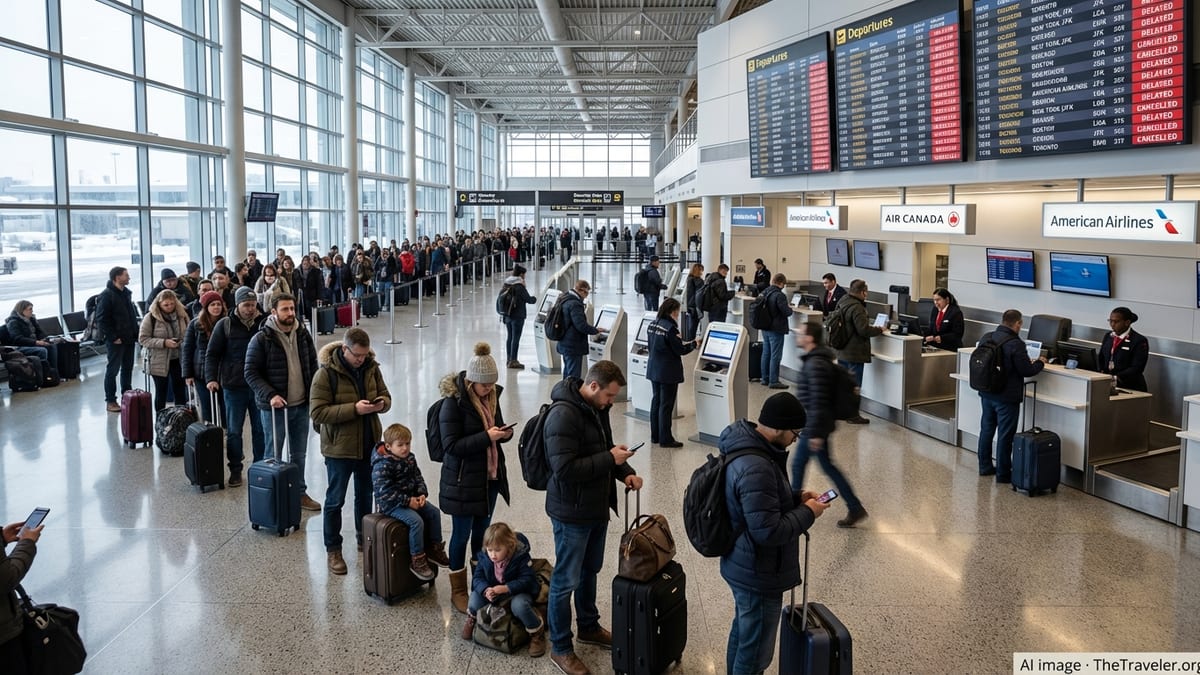
Ripple Effects Across Canada–U.S. Flight Corridors
The latest disruption at Montreal-Trudeau comes at a busy point in the winter travel calendar, amplifying the impact of every schedule change. With 61 services delayed and seven flights canceled, travelers on both sides of the border are experiencing missed connections, extended layovers, and last-minute rebookings on already busy services.
Core transborder corridors are among the hardest hit. Flights linking Montreal with Toronto Pearson, New York’s airports, and other major hubs in the northeastern United States are experiencing cascading knock-on effects, as delayed departures in Montreal lead to late arrivals and tighter turnaround times in the U.S. and elsewhere in Canada.
While the majority of affected flights are eventually departing, often one to three hours behind schedule, the level of disruption is enough to throw off carefully planned itineraries for business travelers, families on school-break trips, and passengers making long-haul connections via Toronto and major American hubs.
In practical terms, the delays are also placing added pressure on airport infrastructure. Gate changes, ramp congestion, and longer lines at security and border clearance points are now common features of the peak operating hours at Montreal-Trudeau as crews work to move aircraft and passengers through the system as efficiently as possible.
Air Canada and American Airlines at the Center of the Turbulence
Air Canada, Montreal-Trudeau’s dominant carrier, is bearing much of the operational burden. With a dense schedule of flights linking Montreal to Toronto, New York, Chicago and other major North American cities, even modest disruptions quickly become magnified as aircraft and crew rotate through multiple legs in a single day.
Several of the day’s delayed services involve Air Canada flights connecting Montreal to Toronto Pearson and onward to New York and other U.S. markets. Even when those flights eventually depart, the late running complicates aircraft positioning for subsequent departures, which can in turn force schedule adjustments well into the evening and overnight periods.
American Airlines is also affected on its Montreal routes, particularly where aircraft and crews are scheduled to turn quickly at Montreal-Trudeau before returning to U.S. hubs. A late inbound from cities such as New York, Philadelphia or Dallas can leave insufficient time for standard ground operations, inviting further delay or, in some instances, forcing cancellations when duty-time limits for crews become a factor.
Despite the operational stress, both carriers are attempting to preserve as much of the schedule as possible. Airline staff at Montreal-Trudeau have been moving passengers onto alternative flights where seats are available, prioritizing same-day connections for those with onward international segments and rebooking others onto next-day departures.
Weather, Congestion and Operational Strain Drive Disruptions
The immediate causes of the latest round of delays and cancellations at Montreal-Trudeau are a familiar mix for winter flyers. Seasonal weather remains a persistent wildcard, with fast-changing conditions around Quebec and Ontario periodically slowing arrivals and departures, reducing runway capacity, and requiring additional time for de-icing procedures.
Even when Montreal’s skies are relatively clear, conditions en route or at destination airports can still trigger disruption. Low visibility, brisk winds or snow bands along strategic corridors to Toronto and the U.S. Northeast periodically force air traffic managers to meter arrivals more cautiously, resulting in airborne holding, slower departure flows and inevitable knock-on delays to schedules based in Montreal.
Operational strain is another key element. Airlines are juggling tight aircraft rotations, high demand and limited spare capacity after years of restructuring and schedule rebalancing. When a single flight departs late from Montreal, the same aircraft may be assigned to subsequent legs from Toronto, New York or another U.S. hub, spreading the disruption across multiple routes over the course of the day.
Staffing challenges, particularly in specialized roles such as ground handling, maintenance and air traffic control, continue to compound the problem. While outright shortages are less severe than in the immediate post-pandemic period, even small gaps in staffing during peak waves or inclement weather can slow the pace of operations enough to trigger system-wide delays.
Impact on Key Routes to Toronto, New York and Major U.S. Cities
Flights between Montreal and Toronto remain among the most strategically important routes in the Canadian network, serving as a critical bridge for passengers connecting to long-haul services in Europe, Asia and the United States. Delays on this corridor rapidly translate into missed onward flights, particularly for travelers with tight connections in Toronto.
On Friday, multiple departures on the Montreal–Toronto route have been listed as delayed, with some leaving more than an hour behind schedule. For passengers heading onward to major hubs such as New York, Chicago, Dallas, Denver, Los Angeles and San Francisco, this means a higher likelihood of rerouting, overnight stays, or longer than planned waits in connection terminals.
Links between Montreal and New York City are also under pressure. These flights, which are popular with both business and leisure travelers, play a dual role as point-to-point services and as feeders into the extensive U.S. domestic networks operated from New York-area airports. When departures from Montreal run late, passengers risk missing narrow connection windows to secondary U.S. destinations, from mid-sized Midwestern cities to busy Sun Belt leisure markets.
Elsewhere, disruptions have affected services between Montreal and other major U.S. cities, including Chicago and key hubs in the U.S. Northeast. While not all of these flights have been delayed, the irregular pattern of disruptions makes it more challenging for travelers to plan reliable same-day journeys involving multiple segments, particularly when traveling with checked baggage.
Stranded Passengers, Lengthy Queues and On-the-Ground Challenges
Inside Montreal-Trudeau’s terminals, the operational disruption is translating into visible stress for passengers. Long queues have formed at airline customer service desks as travelers seek information, alternative routes, and compensation options. Self-service rebooking tools have absorbed some of the demand, but many affected passengers still prefer to speak directly with an agent when their plans are severely disrupted.
Families traveling with children, elderly passengers and those with mobility challenges are particularly vulnerable to the extended waits and uncertainty that accompany rolling delays. Airport seating areas near heavily impacted gates have remained crowded for much of the day, with passengers closely monitoring departure boards and waiting for updated departure times.
The baggage system is also feeling the strain. When passengers are rebooked onto different carriers or through different hubs, bags must often be pulled from original flights and retagged, adding complexity behind the scenes. While outright baggage misrouting appears limited, the volume of changes increases the risk that some passengers will arrive at their destination ahead of their luggage.
Airport support services, including food and retail outlets, ground transportation providers and nearby hotels, are experiencing a secondary wave of demand. With more people spending longer than planned in the terminal, restaurants and cafes have faced heavier than usual traffic, while local hotels are preparing for a potential uptick in last-minute overnight stays from travelers who could not be rebooked the same day.
Montreal’s Role in a Wider Pattern of Canadian Travel Disruptions
The situation at Montreal-Trudeau is part of a broader pattern of travel disruption across Canada in recent weeks. A series of weather-related events, operational constraints and schedule adjustments have led to repeated spikes in delays and cancellations at major hubs including Toronto, Vancouver, Calgary and Ottawa.
Montreal, as one of the country’s primary international gateways, sits at the intersection of multiple long-haul and regional networks. It links eastern Canada to Europe, the Caribbean, Mexico and the United States, making it particularly sensitive to external shocks. When disruptions occur elsewhere in the system, whether due to weather in Western Canada or congestion at crowded U.S. hubs, Montreal often feels the ripple effects.
Recent data from flight-tracking services has highlighted that Canadian carriers, including Air Canada and its regional partners, have periodically ranked among those with higher percentages of delayed flights on certain days, particularly during storm systems or cold snaps affecting large portions of the country. Friday’s figures at Montreal-Trudeau, with 61 delays and seven cancellations, fit within that pattern of episodic but significant disruption.
For policymakers and industry stakeholders, the recurring congestion highlights ongoing questions about resilience in Canada’s aviation network. The balance between lean operations and the need for spare capacity, particularly during the volatile winter months, remains central to ongoing debates about how to improve reliability for travelers.
What Affected Travelers Are Being Offered
Passengers on delayed or canceled flights at Montreal-Trudeau are being provided with a mix of options depending on their ticket type, route and the specific circumstances of each disruption. Airlines are prioritizing same-day reaccommodation where possible, moving passengers onto later departures on the same route or rerouting them through alternative hubs when capacity allows.
In cases where cancellations or lengthy delays leave travelers stranded overnight, carriers have in some cases arranged hotel vouchers and meal credits, particularly when the disruption is within the airline’s operational control rather than being solely weather-related. However, the availability and extent of such support can vary, and passengers are being advised to keep all receipts in case they need to file reimbursement claims later.
Many travelers are also turning to digital tools such as mobile apps and automated notifications for real-time updates. These platforms can sometimes offer self-service rebooking options that are faster than waiting in line at the airport, especially during peak disruption periods when customer service counters are overwhelmed.
Travel insurance has become a key factor for some passengers navigating the delays. Policies that specifically cover missed connections, trip interruption and additional accommodation costs are proving valuable, allowing travelers to claim reimbursement for expenses that fall outside the support offered by airlines and airports.
Advice for Upcoming Travelers Using Montreal-Trudeau
For passengers scheduled to travel through Montreal-Trudeau over the coming days, preparation and flexibility are crucial. Industry experts consistently recommend that travelers build in extra time for connections, particularly when using Toronto, New York or other major U.S. hubs as transfer points after departing Montreal.
Travelers are being encouraged to monitor their flight status closely in the 24 hours leading up to departure, using airline websites, mobile apps and airport displays to watch for schedule changes. Checking in as early as possible and arriving at the airport with sufficient time to clear security and border formalities can also help minimize stress if lines are longer than expected.
Where feasible, passengers may benefit from booking earlier flights in the day, which tend to be less affected by the cumulative effect of rolling delays that build up over the afternoon and evening. Those with critical same-day connections, such as long-haul flights or important business commitments, might also consider leaving a wider buffer between segments or even traveling a day earlier.
Finally, experts suggest that travelers keep essential items, including medication, valuables, chargers and a change of clothes, in their carry-on baggage. In the event of an unplanned overnight stay or a missed connection, having these basics at hand can make a significant difference in comfort and peace of mind while waiting for the network at Montreal-Trudeau and its connected hubs to recover.