


More news on this day
Thousands of airline passengers across the United States faced hours-long waits and missed connections after more than 3,600 flights were delayed and at least 83 were canceled during a fresh wave of nationwide travel disruptions.
Get the latest news straight to your inbox!
Severe storms and bottlenecks ripple across the network
The latest bout of flight chaos unfolded as a potent summer storm system swept across Texas and the central United States on July 15, 2026, bringing torrential rain, flash flooding and thunderstorms to one of the country’s busiest aviation regions. Publicly available flight-tracking data indicates that 3,636 flights were delayed and 83 were canceled nationwide as the disruptions cascaded across major hubs.
Reports indicate that airports in North Texas, including Dallas Fort Worth International Airport and Dallas Love Field, were particularly hard hit. A ground stop affecting traffic into Dallas Fort Worth combined with lightning and strong storms to trigger more than 600 delays at that airport alone, with additional knock-on effects at Love Field as average delay times climbed.
Although the most intense weather was concentrated in Texas, the interconnected nature of airline schedules meant that passengers far from the storms also felt the impact. Aircraft and crews scheduled to operate later flights around the country were left out of position, forcing carriers to delay or cancel departures from East Coast and Midwest airports as they attempted to reset their operations.
The disruptions arrived in the heart of the busy summer travel season, when load factors are typically high and spare seats are scarce. With many flights already near capacity, airlines had limited options to rebook stranded customers, amplifying crowding and frustration in terminals from Chicago to Atlanta and New York.
Summer travel strains an already fragile system
The surge of delays comes against a backdrop of mounting pressure on the U.S. aviation system during peak travel months. Federal data for recent months shows that roughly one in five flights experiences a delay, with weather identified as a leading cause, followed by congestion in the national airspace system, airline-related issues and late-arriving aircraft.
Recent government statistics also show that the overall cancellation rate in the United States has hovered under 1 percent in 2026, but that national average can mask sharp spikes on days when storms or operational problems target key hubs. On days like July 15, when severe weather parks over Texas, the combination of ground stops, reroutes and crew time-limit rules can quickly turn an otherwise manageable schedule into a patchwork of rolling delays.
Industry analysts note that strong summer demand adds another layer of complexity. Because airlines are operating tighter schedules to maximize capacity, there is less slack in the system to absorb localized shocks. When a major hub such as Dallas Fort Worth slows or stops accepting arrivals, the strain is felt up and down the route map as airlines work through backlogs of aircraft and passengers.
In addition, staffing levels in key roles such as air traffic control and ground operations remain a concern at some facilities. Publicly available information from federal agencies has highlighted ongoing efforts to bolster controller ranks ahead of the summer, but pockets of staffing stress can exacerbate delays when storms interrupt normal traffic flows.
Travelers face missed connections and overnight stays
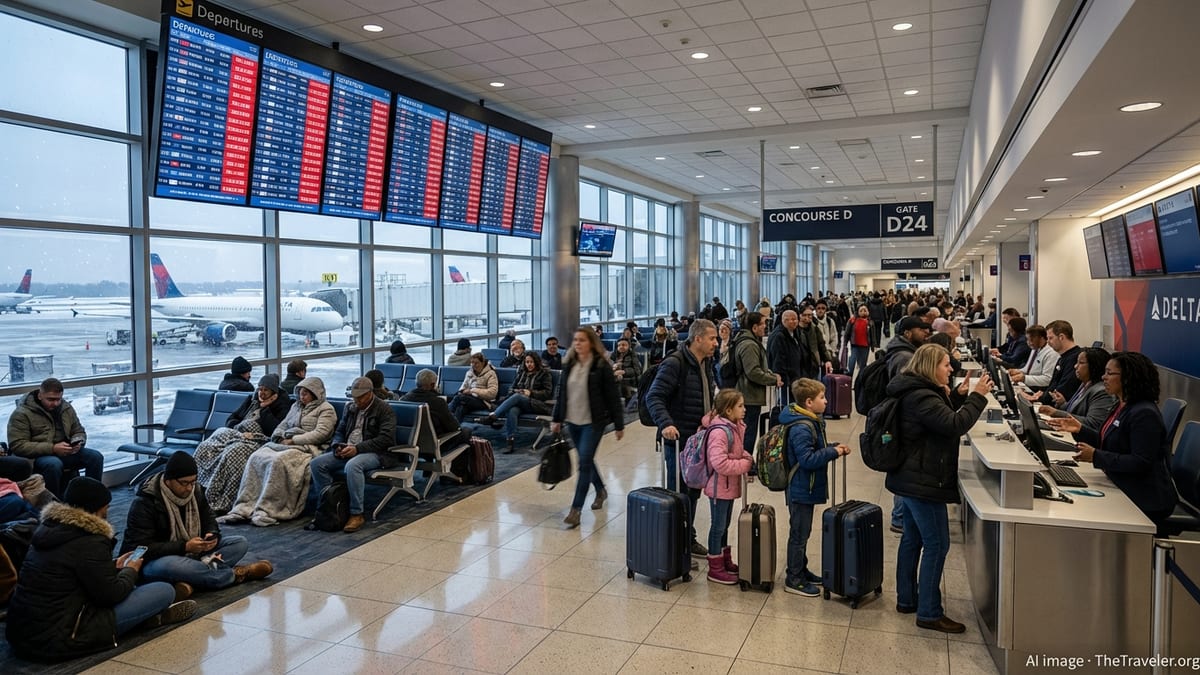
The immediate human impact of the latest disruption was evident in crowded departure halls and long customer-service lines. With nearly 3,700 flights pushed off schedule, many travelers missed onward connections or arrived at their destinations hours later than planned, while some were forced to seek last-minute hotel rooms after late-night cancellations.
Reports from major hubs indicated that passengers bound for international destinations were among those most affected, as missed domestic feeder flights broke complex itineraries. In some cases, travelers who reached their long-haul gateways discovered their connecting flights had already departed, leaving them waiting for rebooking on services that operate only once per day.
The severe weather and high load factors also limited the ability of airlines to accommodate passengers on rival carriers. While some travelers were able to secure seats on alternative routes, many were rebooked for departures one or two days later, stretching family vacations and business trips and adding unplanned expenses for meals and lodging.
Even customers whose flights ultimately departed faced extended time on the tarmac or in holding patterns as air traffic controllers managed congested arrival and departure corridors around storm cells. Those delays, in turn, contributed to late-arriving aircraft that then departed behind schedule for subsequent legs.
Understanding what is driving delays and cancellations
Data from the U.S. Department of Transportation’s Air Travel Consumer Report and related statistics provides a broader context for the spike in disruptions. Over the past year, weather-related delays have consistently accounted for a significant share of late arrivals, while national airspace constraints, such as volume and routing limits, and airline-related factors, including maintenance and crew issues, round out the main causes.
National metrics for spring 2026 show that the on-time arrival rate has generally stayed in the high 70 percent range, but that roughly 20 percent of flights arrive at least 15 minutes behind schedule. Cancellations remain lower in absolute terms, yet concentrated events like the July 15 storms can quickly push hundreds of flights off the schedule in a single day.
Analysts also point to the compounding effect of late-arriving aircraft, which federal statistics track as a distinct category of delay. When one flight runs behind schedule, the aircraft, crew and gate needed for the next departure are delayed as well, leading to a chain reaction that can extend well beyond the original weather or operational trigger.
These dynamics help explain why a storm system centered on one region can generate nationwide disruption. As aircraft cycle through hubs across the country, any interruption in their planned sequence can reverberate for hours, particularly when airlines have little spare capacity to swap in backup planes or crews.
What passengers can do during major disruptions
Consumer advocates emphasize that U.S. rules distinguish between delays and cancellations when it comes to traveler rights and compensation. Public guidance from the Department of Transportation notes that passengers are generally entitled to a refund if their flight is canceled or significantly changed and they choose not to travel, even when the cause is weather.
For delays, airlines have more discretion. Many carriers publish customer-service commitments outlining when they may offer meal vouchers, hotel accommodations or rebooking assistance, but these policies vary by airline and are often applied on a case-by-case basis. During large-scale weather events, airlines typically focus on waiving change fees and fare differences so travelers can adjust plans without penalty.
Travel experts recommend that passengers monitor their flight status frequently through airline apps and subscribe to alerts, especially during unstable weather. When disruptions appear likely, rebooking proactively for earlier flights or alternative routings can sometimes prevent missed connections. Arriving at the airport with extra time during peak periods can also help travelers navigate longer security and check-in lines.
As peak summer travel continues, publicly available forecasts suggest that bouts of severe weather will remain a recurring threat to smooth operations. For now, the latest figures on delays and cancellations serve as a reminder that even a relatively resilient aviation system can quickly become strained when storms and high demand collide.