


More news on this day
From fjord-carved coasts to Arctic plateaus, Norway combines striking landscapes with one of the world’s wealthiest welfare states, creating a destination where natural drama meets high living standards.
Get the latest news straight to your inbox!
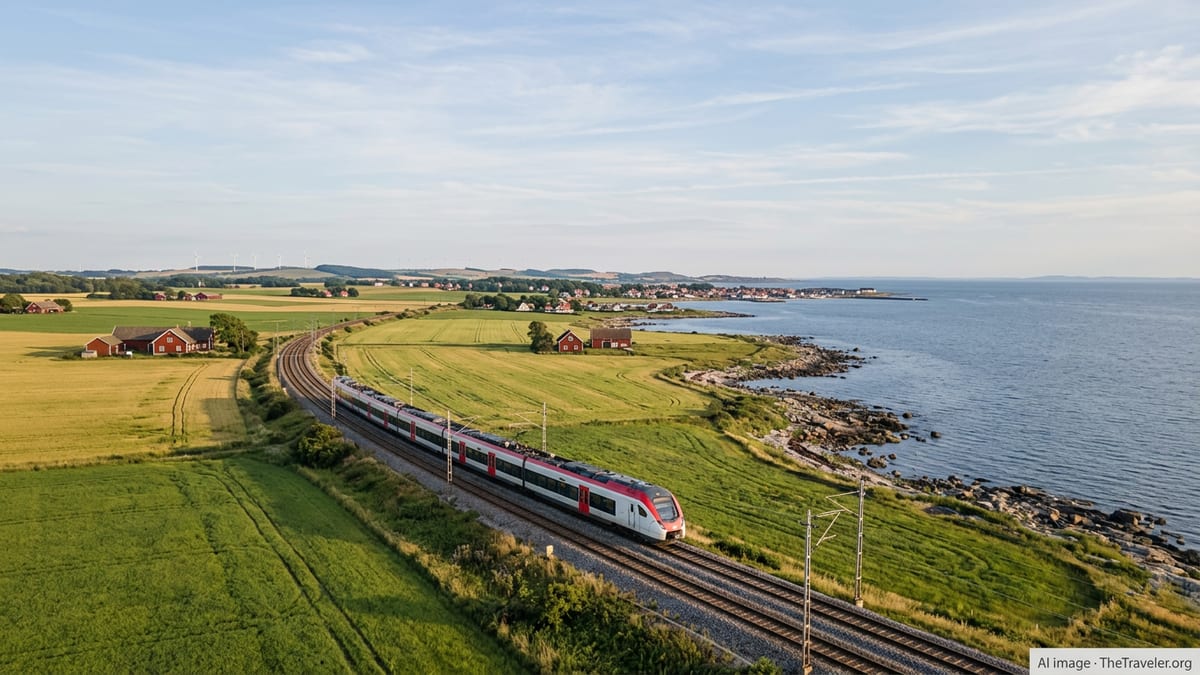
Geography and people at Europe’s northern edge
Norway occupies the western and northern flank of the Scandinavian Peninsula, stretching from its southern coastline on the Skagerrak to Arctic islands in the Barents Sea. The country shares land borders with Sweden, Finland and Russia, while the North Sea and Norwegian Sea open it to Atlantic weather systems and maritime trade. Long, deep fjords cut into a mountainous backbone, leaving only limited lowland but creating some of Europe’s most recognisable seascapes.
Publicly available demographic data shows that Norway’s population is about 5.6 million, with a relatively low average density compared with most European states. The population is heavily urbanised along the southern and western coasts, particularly around Oslo, Bergen, Stavanger and Trondheim, while many northern communities remain small and scattered. International migrants account for a significant share of residents, contributing to population growth and increasingly diverse urban neighbourhoods.
Life expectancy is among the highest in the world, and Norway continues to rank near the top of global indices tracking political stability, human development and institutional quality. The country operates as a parliamentary constitutional monarchy, with regular elections and a strong emphasis on transparency and consensus-based policymaking shaping its domestic and international profile.
Climate contrasts are pronounced. Coastal areas benefit from the moderating effects of the Gulf Stream, while inland and northern regions see long, cold winters and brief, bright summers marked by midnight sun. These extremes, together with reliable snow in many regions, underpin Norway’s reputation as a winter-sport powerhouse and an all-season nature destination.
A high-income mixed economy built on energy and oceans
Norway’s economy is frequently described as a mixed model in which a dynamic private sector coexists with extensive state ownership in strategic industries. Official economic assessments for 2026 highlight gross domestic product per capita well above the OECD average, supported by large sovereign wealth assets built from petroleum revenues and a diversified mainland economy.
Oil and gas extracted from the Norwegian continental shelf remain central to export earnings, even as long-term policy aims to manage a gradual green transition. Energy exports, fisheries and maritime services help sustain a strong external position, with current-account surpluses and one of the world’s largest sovereign wealth funds reinforcing financial resilience. Shipping, aquaculture, advanced manufacturing and technology services add additional pillars beneath the broader economic structure.
The labour market is characterised by relatively high participation, especially among women, and comparatively low overall unemployment. A strong tradition of collective bargaining, combined with substantial public investment in education, health and childcare, supports what analysts describe as an inclusive model, though rising costs of living and housing in major cities are drawing closer scrutiny.
Norway is not a member of the European Union but participates in the single market through the European Economic Area. This arrangement, combined with robust public finances and an active climate policy, shapes debates over competitiveness, green industry development and the pace of decarbonisation in sectors from transport to heavy industry.
Tourism trends: record interest and capacity strains
Tourism has become an increasingly prominent part of Norway’s economic and international profile. National statistics and recent OECD tourism reports indicate that overnight stays reached or approached record levels over the past two years, reflecting strong demand from European neighbours and long-haul markets for both summer and winter experiences. Travel trade bodies describe high occupancy in popular fjord areas and a marked rebound in cruise and city visits.
Visit-oriented coverage for 2026 points to renewed promotion of year-round travel, including city culture, food experiences and northern lights viewing beyond the traditional peak months. Industry analyses highlight growing interest in rail-based itineraries, coastal voyages and multi-day hiking routes, as visitors look for lower-impact options and more immersive stays. Domestic travel remains important, with Norwegians themselves contributing significantly to mountain cabin use, festival attendance and coastal holiday traffic.
At the same time, several destinations are confronting the limits of their carrying capacity. Reports from regional tourism organisations and local media describe congestion in narrow fjord villages, strains on waste and transport systems, and concerns about housing availability in parts of Northern Norway and along the western fjords. The debate mirrors wider European discussions about managing cruise ship volumes, regulating short-term rentals and safeguarding everyday life for residents.
In response, policy documents and destination strategies emphasise dispersing visitors beyond the most famous viewpoints, extending the season into spring and autumn, and encouraging longer stays with higher average spending. Sustainability certifications, visitor caps on sensitive hiking routes and new booking systems for popular attractions are being explored or expanded as Norway seeks to preserve the appeal of its landscapes while moderating pressure on communities.
Signature landscapes and experiences shaping Norway’s image
Norway’s international image is closely tied to its dramatic natural features. The deep fjords of Western Norway, coastal archipelagos such as Lofoten and Vesterålen, and vast mountain plateaus draw travellers in search of scenic drives, hiking, paddling and skiing. Several fjord and mountain areas are inscribed on UNESCO’s World Heritage list, and they continue to feature prominently in global travel rankings and campaigns.
In the north, Arctic Norway offers winter experiences centred on polar nights, aurora borealis viewing and dog sledding, while summer brings midnight sun and accessible hiking above the Arctic Circle. Coastal voyages along the length of the country remain a flagship experience, connecting port towns and remote settlements and showcasing shifting light and weather across multiple climate zones.
Cities contribute their own attractions. Oslo’s redeveloped waterfront, contemporary museums and emphasis on design and architecture reflect a broader push to present Norway as a creative as well as a nature-based destination. Bergen, Trondheim and Stavanger promote combinations of historic quarters, seafood-driven dining scenes and proximity to outdoor activities, appealing to visitors who want both culture and scenery in a single stop.
New openings and infrastructure upgrades planned for 2026 and beyond underline the continued investment in cultural and nature-based tourism. Publicly available announcements reference expanded museum facilities, improved mountain rail connections and upgraded ski infrastructure in key resorts, all framed within national strategies that seek to balance access, safety and environmental protection.
Environmental stewardship and the future of travel in Norway
Norway’s extensive use of hydropower gives it one of the world’s highest shares of renewable energy in electricity production, a factor that shapes its environmental reputation. National climate targets commit the country to further emissions reductions, and authorities have promoted electric vehicles through tax incentives and charging networks, leading to rapid adoption in the domestic car fleet.
For tourism, this backdrop has encouraged experimentation with low- and zero-emission transport solutions, from electric ferries on some fjord routes to pilot projects in cruise and aviation. Destination plans increasingly reference emissions budgets, sensitive wildlife areas and the need to protect fragile Arctic and alpine environments from erosion and disturbance.
Analysts note that success in this area depends on how quickly infrastructure can adapt, especially in remote regions where seasonal visitor numbers are high but permanent populations are small. Managing trail wear, waste and traffic through fees, quotas or reservation systems is likely to remain a topic of debate, as is the question of how to ensure that tourism income directly supports local services and conservation.
As global travel demand continues to recover and evolve, Norway’s challenge will be to sustain its appeal as a high-cost, high-quality destination while keeping its social contract and natural assets intact. How the country balances petroleum wealth with green innovation, resident well-being with visitor access, and iconic hotspots with lesser-known regions will shape its travel profile in the years ahead.